
Baize is a durable, woven fabric best known for its use as a covering on gaming tables, such as those for billiards, snooker, and card games. Recognizable for its smooth yet slightly fuzzy surface, baize has been used for centuries to provide a uniform playing field, reduce noise, and protect surfaces. Its history dates back to at least the 16th century in Europe, where it was valued both for practical household use and for its association with leisure and gaming culture.
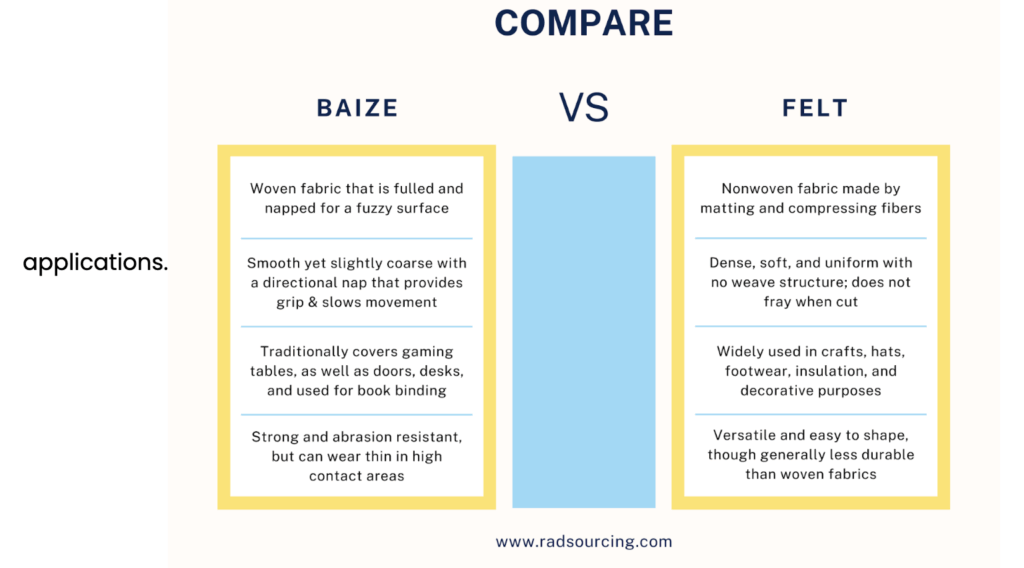
Traditionally, baize is made from wool or a wool blend, woven in a plain or twill weave, and then heavily fulled (a finishing process that mats the fibers together). After weaving, the surface is brushed or sheared to create a soft nap, giving it a texture similar to felt, though baize is woven rather than pressed. This nap is what helps slow rolling objects, such as billiard balls or dice, and provides grip for playing cards. While green is the most iconic color, symbolizing traditional gaming and resembling grass, baize can also be dyed in other shades, particularly in modern settings.

The properties of baize make it particularly suited for its long-standing role in gaming and table coverings. It is durable, abrasion-resistant, and noise-dampening, helping reduce the sound of objects placed or moved on the surface. The fabric’s nap provides slight friction, keeping cards and game pieces in place while still allowing smooth movement when needed. In addition to gaming, baize has historically been used in bookbinding, door coverings (for soundproofing), and protective linings.
In terms of sustainability, baize reflects the strengths and weaknesses of wool-based textiles. Wool is a renewable, biodegradable, and long-lasting material, making traditional baize a relatively sustainable option. However, cheaper modern versions of baize are often made with synthetic fibers such as polyester or acrylic, which are less environmentally friendly due to their petrochemical origins and non-biodegradability. High-quality wool baize remains the gold standard, particularly in professional gaming and luxury furniture applications.
Baize production continues in both Europe and Asia, with the United Kingdom having a long tradition of producing high-quality baize for snooker and billiards. British manufacturers in particular are known for maintaining strict quality standards for professional gaming tables. Other regions produce more affordable synthetic or blended versions for casual use and broader applications.
Applications of baize extend beyond gaming tables. It is used in law courts to cover desks and benches, providing a dignified appearance and noise reduction. In bookbinding, baize serves as a durable and decorative covering for volumes. It is also used in upholstery and as a lining for boxes, drawers, and cabinets, where its soft texture protects delicate items.
Baize remains an enduring fabric associated with tradition, craftsmanship, and leisure. Its functional properties and cultural symbolism ensure it continues to play a role in both practical and ceremonial contexts, from gaming halls to courtrooms.