
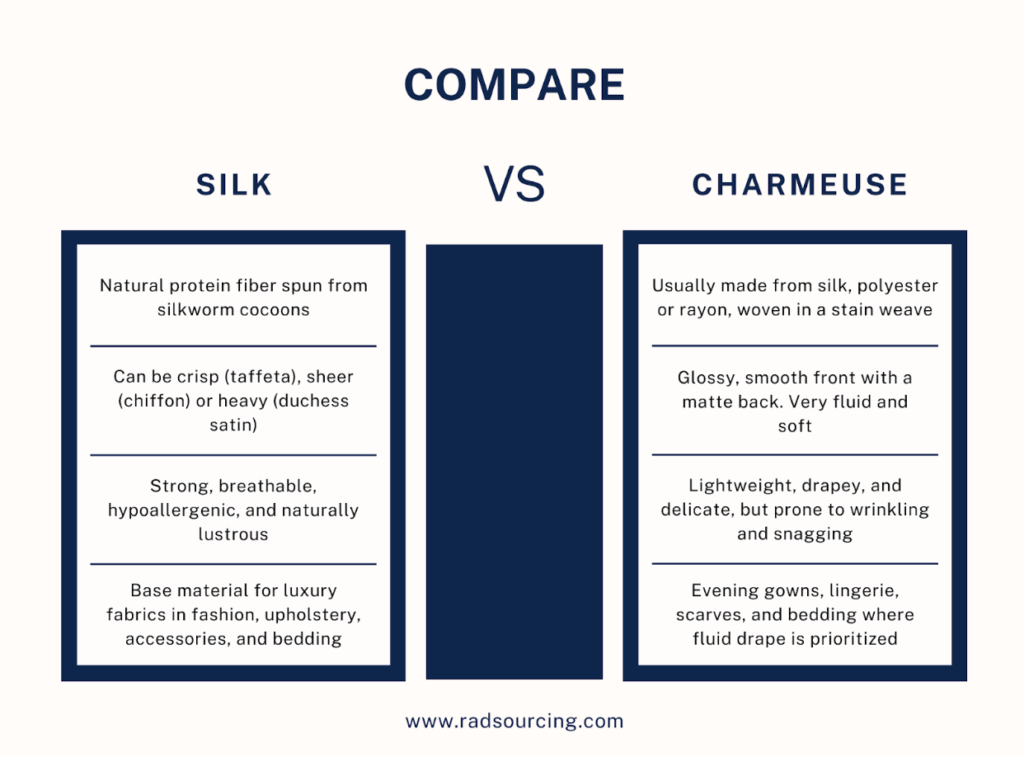
Charmeuse is a luxurious fabric celebrated for its smooth, glossy surface and fluid drape, making it a favorite for elegant fashion and eveningwear. The word charmeuse derives from the French verb “charmer,” reflecting its association with glamour and seduction. Traditionally made from silk, charmeuse is now also produced from polyester, rayon, or acetate, creating more affordable alternatives. Its soft, flowing quality and high sheen distinguish it from other satins, making it particularly versatile in both apparel and décor.
Charmeuse is produced using a satin weave, in which warp threads float over multiple weft threads before interlacing with them. This technique exposes more of the warp yarns’ surface area, creating the fabric’s signature sheen on the front. The reverse side of charmeuse is matte, making it easy to distinguish from the glossy face. While charmeuse is often grouped with satin fabrics, it is lighter, softer, and more fluid than heavier satins used for upholstery or structured garments.
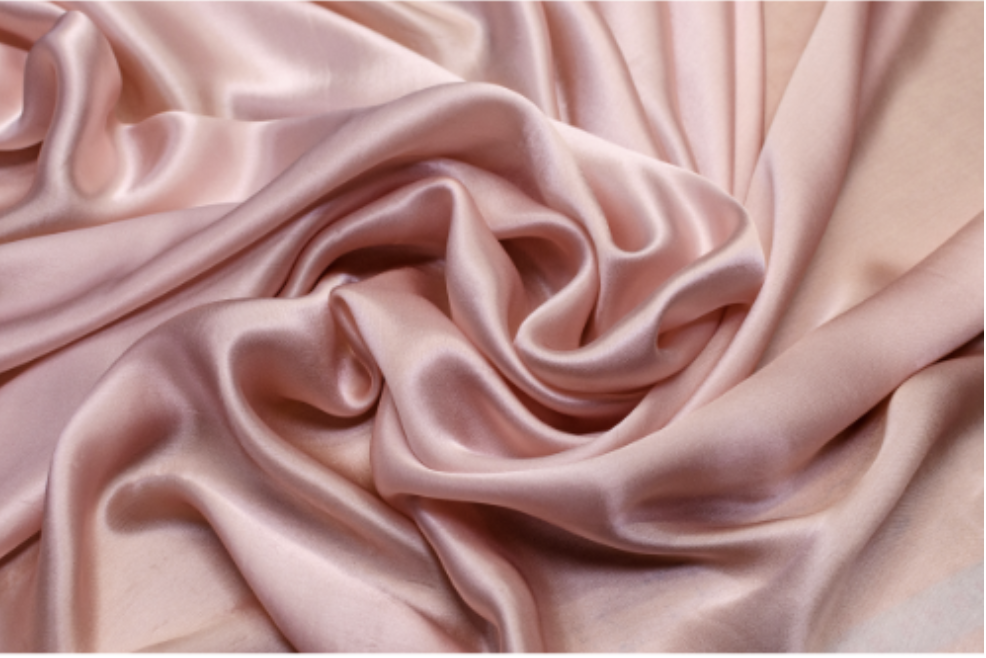
The properties of charmeuse are what make it so prized in the fashion industry. It has a lustrous, mirror-like surface that reflects light beautifully, giving garments an air of sophistication. Its soft, draping quality allows it to flow gracefully around the body, enhancing silhouettes with elegance. At the same time, charmeuse is delicate and prone to snagging, fraying, and wrinkling. Silk charmeuse, in particular, requires gentle handling and is often dry-clean only. Synthetic versions, such as polyester charmeuse, are easier to care for and more durable, though they may lack the same luxurious feel.
Charmeuse has long been associated with glamour and intimacy. In fashion, it is used for evening gowns, cocktail dresses, blouses, lingerie, and sleepwear, where its sheen and drape create a sensual, elegant look. Bridal gowns and bridesmaid dresses also frequently incorporate charmeuse for its smooth finish and graceful movement. Beyond apparel, charmeuse is used in accessories like scarves and in home textiles such as pillowcases and sheets, where its softness is appreciated for comfort and luxury.
Historically, silk charmeuse was reserved for the wealthy due to the expense of silk production. The introduction of synthetic fibers in the 20th century made charmeuse more widely accessible, fueling its popularity in mass-market fashion. Polyester charmeuse became especially popular in the late 20th and early 21st centuries for its affordability and ease of care. However, silk charmeuse remains the gold standard in luxury fashion houses and couture.
From a sustainability perspective, charmeuse has a mixed profile. Silk charmeuse, although natural and biodegradable, requires intensive labor and incurs environmental costs associated with sericulture (the cultivation of silkworms). Polyester charmeuse, on the other hand, is derived from petrochemicals and is not biodegradable, though it is more affordable and widely available. Rayon charmeuse offers a middle ground: it’s semi-synthetic and plant-based, but it still requires chemical processing. As with other fabrics, durability and responsible sourcing play key roles in evaluating the environmental footprint of charmeuse.
Global production of charmeuse centers in China and India for silk versions, while synthetic charmeuse is widely produced in textile hubs across Asia, including China, South Korea, and Taiwan. Italy and France continue to produce high-end silk charmeuse for the luxury fashion industry.
Charmeuse embodies luxury and allure, offering a fabric that combines lightness, sheen, and elegance. Whether made from silk or synthetics, its ability to elevate garments and interiors with sophistication ensures that charmeuse will remain a timeless textile in fashion and design.