
Chiffon is a lightweight, sheer fabric celebrated for its delicate, airy texture and elegant drape. The word “chiffon” comes from the French word for “cloth” or “rag,” but the fabric itself has long been associated with luxury, evening wear, and high fashion. First popularized in 18th and 19th-century Europe, when it was made exclusively from silk, chiffon became more accessible in the 20th century with the introduction of synthetic fibers such as polyester and nylon, which replicated silk’s properties at a lower cost.
Chiffon is characterized by its plain weave construction, in which highly twisted yarns are woven in a crisscross pattern. This tight twisting of the fibers creates a slightly rough, crepe-like texture while maintaining a sheer, transparent appearance. Because the yarns alternate between S and Z twist directions, the fabric gains its signature subtle crinkled effect and fluid movement. Chiffon can be woven from silk, polyester, nylon, or rayon, with silk chiffon remaining the most luxurious and synthetic chiffon being the most affordable and durable.
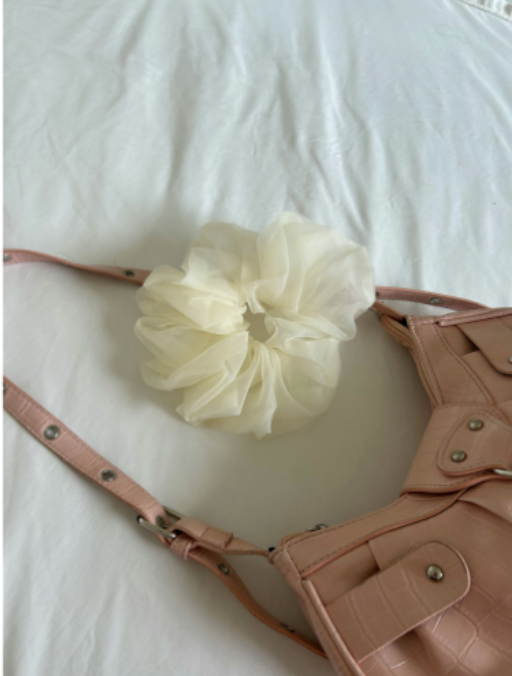
One of chiffon’s defining properties is its lightweight and translucent quality, which makes it ideal for layering. It drapes beautifully, creating flowing silhouettes that have long been used in gowns, blouses, scarves, and lingerie. While elegant, chiffon is also delicate; it frays easily, snags on rough surfaces, and can be challenging to sew. The fabric’s sheerness often requires layering or lining, especially in dresses and skirts.
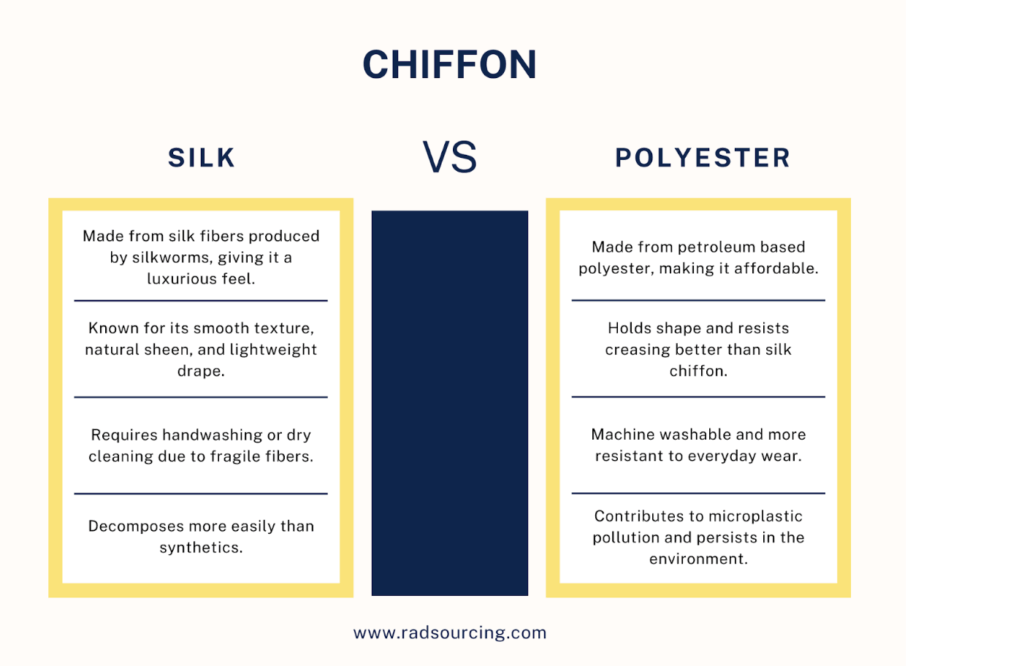
Silk chiffon is still highly prized in the couture and luxury markets for its softness, luster, and natural breathability. However, polyester chiffon dominates mass-market production because it is more affordable, wrinkle-resistant, and durable. Polyester chiffon can also be machine-washed, unlike silk chiffon, which requires more delicate care.
From a sustainability perspective, chiffon presents a mixed picture. Silk chiffon is natural and biodegradable, though silk production is resource-intensive and often criticized for its reliance on silkworm cultivation. Synthetic chiffon (made from polyester or nylon) is derived from petrochemicals and is not biodegradable, contributing to plastic waste and microplastic pollution. However, recycled polyester chiffon is becoming increasingly common, offering a more environmentally friendly alternative. Rayon chiffon, made from regenerated cellulose, is another option, but its environmental impact depends on whether it is produced through conventional viscose processes or more sustainable closed-loop methods.
Chiffon is produced worldwide, with significant manufacturing taking place in China, India, and other parts of Asia, where silk and polyester production are well established. European mills also produce high-end silk chiffon for the luxury fashion industry.
The uses of chiffon extend far beyond evening gowns. It is popular in summer dresses, lightweight blouses, bridal wear, and scarves. In interior design, chiffon is often used for sheer curtains, adding elegance while allowing natural light to pass through. Its floaty, ethereal quality makes it a favorite for garments that emphasize movement, softness, and romance.
Chiffon embodies both delicacy and drama, making it one of the most enduring fabrics in fashion. Whether in silk for luxury couture or in polyester for everyday wear, chiffon remains celebrated for its elegance, versatility, and its timeless association with softness and sophistication.