
Corduroy is a durable, ridged fabric recognized for its raised vertical ribs, or “wales,” which give it a distinctive texture and visual depth. The name likely derives from the French phrase “corde du roi” (“cloth of the king”), reflecting its association with nobility, although its modern form developed in England during the 18th century. By the 19th century, corduroy had become a staple fabric for workwear, prized for its toughness and warmth, and later evolved into a versatile textile for fashion, interiors, and casual wear.
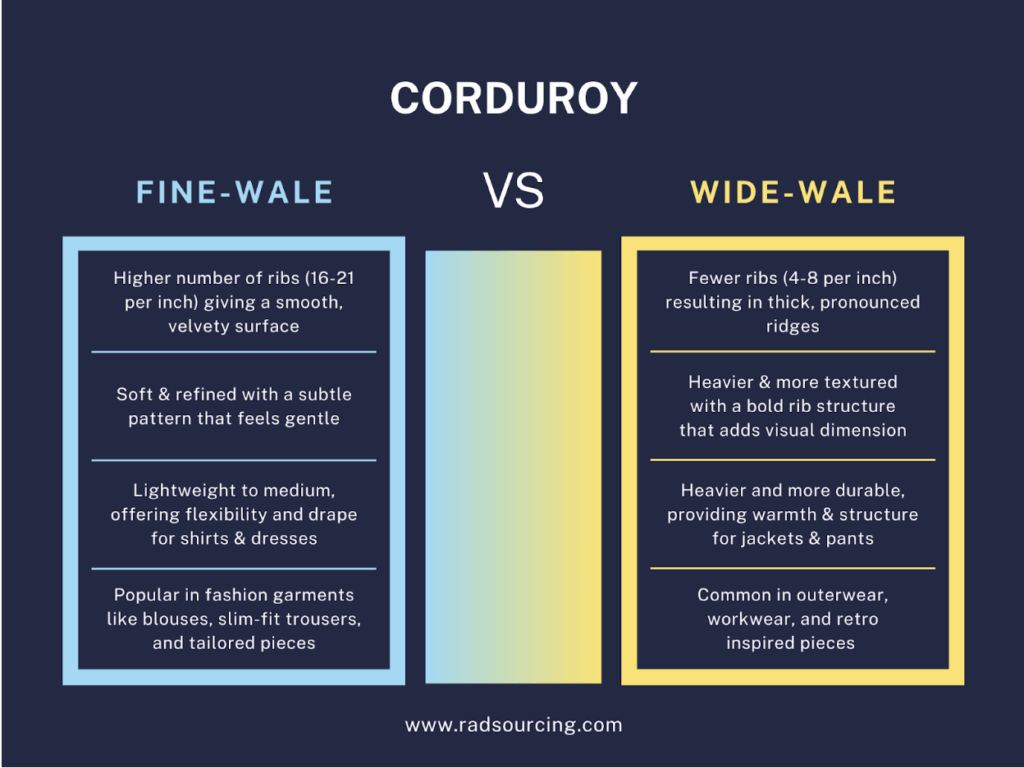
Corduroy is constructed as a woven fabric with a cut-pile weave. Additionally, extra weft yarns are woven into the base fabric and then cut to create the raised ridges that form parallel lines across the surface. The thickness and spacing of these ribs are referred to as the wale count: fine corduroys may have up to 21 wales per inch, while wide-wale varieties can have fewer than 8. This variation allows corduroy to range from lightweight shirting fabric to heavy-duty textiles suitable for jackets and upholstery.
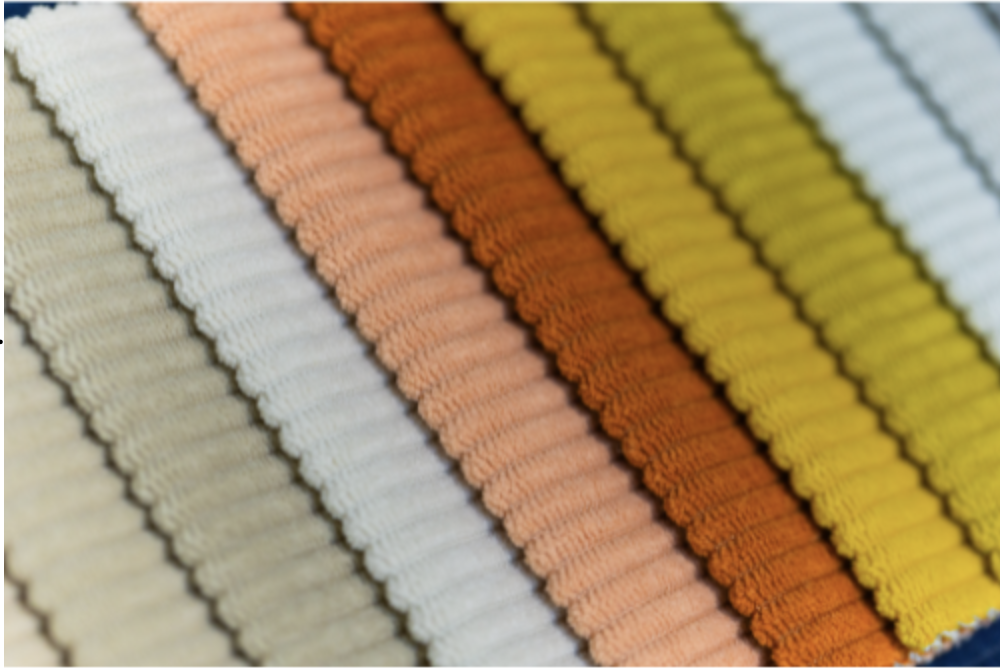
Corduroy is highly functional. It is soft to the touch yet durable, offering warmth and comfort. The ribs create a subtle sheen as they catch the light, giving corduroy a unique aesthetic that is casual yet refined. Its insulating qualities make it especially popular in fall and winter apparel. However, corduroy can be prone to wear along the ridges, and its pile texture may flatten over time. It also tends to show marks or shading where the nap is brushed in different directions.
Corduroy’s uses are diverse. In fashion, it is a popular choice for trousers, jackets, skirts, and shirts, offering a retro yet timeless appeal. It is also used in children’s clothing for its durability and comfort. In interiors, corduroy appears in upholstery, cushions, and drapery, adding visual richness. Historically, it was a fabric of practicality, favored by workers, hunters, and students, but in the 20th century, it became associated with intellectual and bohemian subcultures, particularly in Europe and the United States.
Culturally, corduroy has experienced waves of popularity. It became an everyday workwear staple in the 1800s, shifted to student and artistic circles in the mid-20th century, and enjoyed a fashion revival in the 1970s with wide-wale styles in earthy tones. Today, corduroy continues to cycle in and out of mainstream fashion, often resurfacing as a nostalgic or heritage-inspired fabric.
From a sustainability perspective, corduroy inherits the qualities of its fibers. Cotton corduroy, the most common form, shares the environmental challenges of conventional cotton, including water use and pesticide application. Organic cotton corduroy offers a more sustainable alternative. Synthetic blends, such as polyester corduroy, add durability and wrinkle resistance but reduce biodegradability. Corduroy’s strength and long lifespan, however, make it a more sustainable option than many short-lived fast-fashion fabrics.
Corduroy is produced worldwide, with major textile hubs in Asia, including China and India, as well as in Europe for premium varieties. Its versatility in wale count and fiber blends makes it adaptable for markets ranging from high fashion to affordable utility clothing.
Corduroy embodies the balance between practicality and style. Its tactile ridges, warmth, and durability have secured its place as a fabric of enduring appeal, equally at home in rugged workwear, retro fashion, and contemporary interiors.