
Crepe is a versatile fabric known for its distinctive crinkled or pebbled texture, graceful drape, and wide range of applications in both fashion and interiors. The name “crepe” refers not to a specific fiber, but to a weaving or finishing technique that creates a textured surface through twisting, heat, or chemical treatments. Crepe fabrics can be made from silk, wool, polyester, rayon, or blends, and they range from sheer and lightweight to dense and structured. Elegant yet practical, crepe is valued for its subtle sophistication and fluid movement.
The origins of crepe date back centuries, with silk crepe fabrics produced in China as early as the Tang Dynasty (7th–10th centuries). The technique spread to Europe during the 19th century, where it became especially popular in England and France for mourning dress and refined wear. Over time, new varieties emerged as textile technology advanced, including wool crepe, rayon crepe, and polyester crepe, each offering distinct textures and price points. Today, crepe remains a staple across luxury and everyday fashion due to its timeless appeal and adaptability.
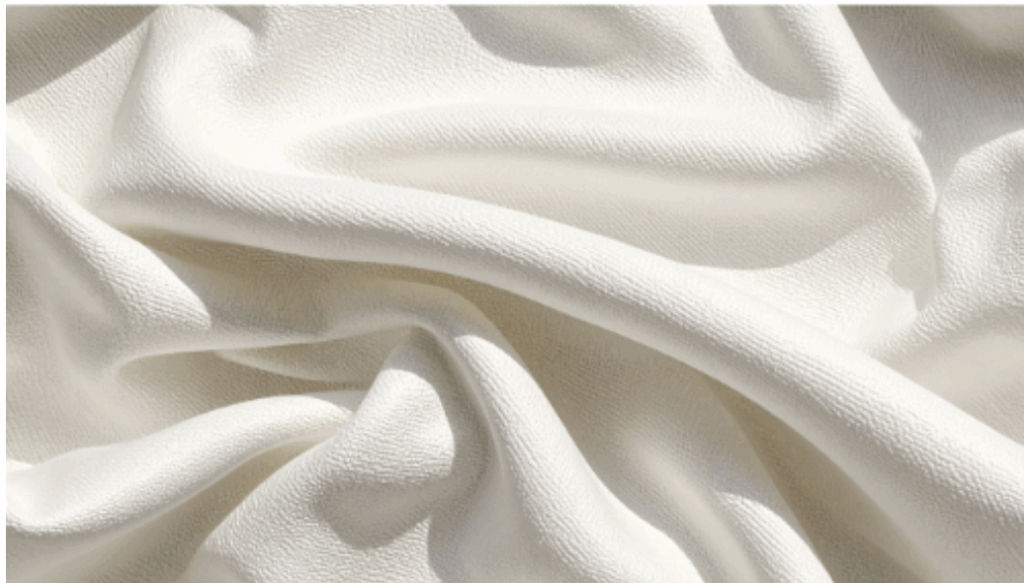
The signature texture of crepe comes from the high-twist yarns used in its construction. These yarns are tightly twisted before weaving or knitting, creating internal tension that causes the fabric to pucker slightly when finished. Depending on how it’s made, crepe can be woven, knitted, or chemically treated to enhance its surface texture. Silk crepe de Chine and georgette are fine, lightweight varieties with delicate wrinkles, while wool crepe has a more pronounced grain and elasticity. Synthetic crepes (such as polyester crepe) replicate this effect at a lower cost, and are often used for easy-care garments.
Crepe’s properties make it one of the most versatile fabrics in fashion. It is soft to the touch yet slightly crisp, with a natural elasticity that resists wrinkling. The textured surface allows garments to drape beautifully without clinging to the body, creating flattering silhouettes. Crepe also absorbs dyes exceptionally well, producing rich, even colors. While silk and rayon crepes are smooth and fluid, wool and polyester crepes tend to be more structured and durable, making them suitable for both tailoring and draped designs.
In fashion, crepe is used in dresses, blouses, skirts, trousers, scarves, and formal wear, prized for its ability to move gracefully and maintain its shape. Crepe de Chine and georgette are popular for eveningwear and bridal designs, while wool crepe is favored for suiting, dresses, and outerwear due to its soft resilience. In home décor, crepe is occasionally used for draperies, upholstery, and cushion covers, where its texture adds depth and sophistication.
Culturally, crepe has also held symbolic meaning. During the Victorian era, black crepe was traditionally used for mourning attire, chosen for its matte, subdued appearance. Over time, it transitioned into mainstream fashion, admired for its elegance and subtle texture. In the 20th century, crepe became synonymous with chic, understated style, used by designers such as Coco Chanel and Madeleine Vionnet, who valued its ability to drape and move naturally with the body.
From a sustainability standpoint, crepe’s environmental impact depends on its fiber source. Silk crepe is a renewable, biodegradable luxury fabric, but it requires intensive labor and resources. Wool crepe is a natural, durable material, though animal welfare and land-use considerations are also important. Rayon (viscose) crepe is derived from plant cellulose but can be chemically intensive to produce, while polyester crepe offers affordability and easy care at the cost of biodegradability. As eco-conscious fashion grows, recycled polyester and responsibly produced viscose crepes are emerging as more sustainable alternatives.
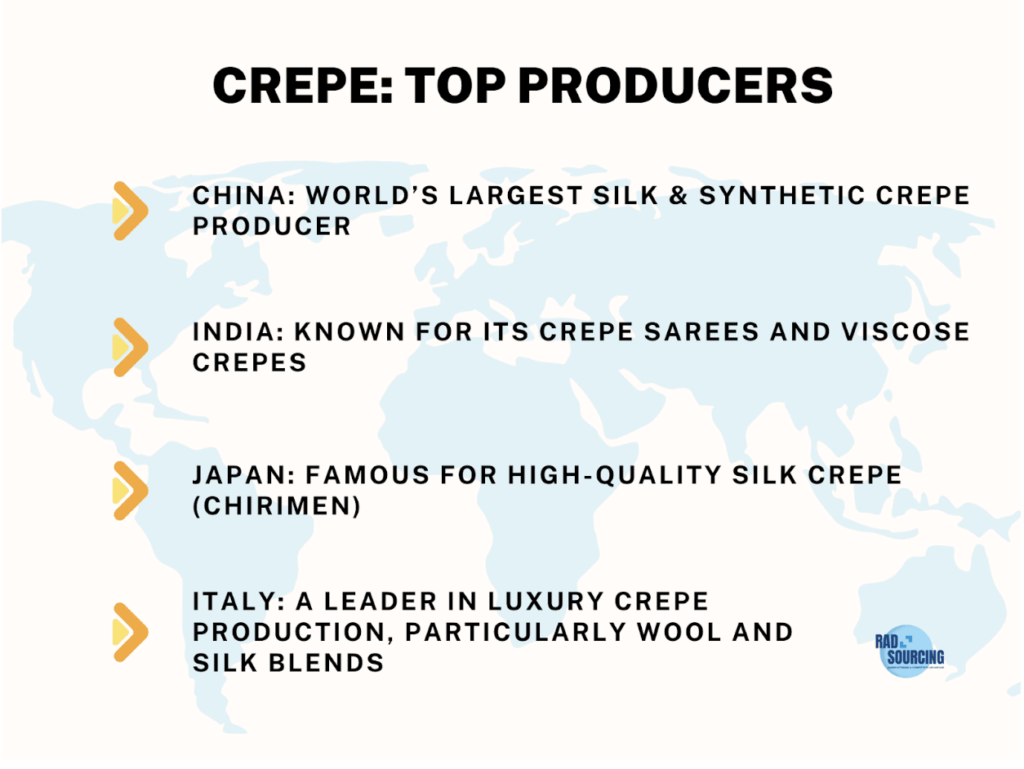
Global production of crepe fabrics is widespread, with China, India, and Italy leading in silk and synthetic crepe production, and the United Kingdom and Japan being known for their fine wool crepe production. Each region brings distinct expertise: Italian mills specialize in luxury fashion crepes, Chinese factories focus on volume production, and Japanese producers excel in technical and textured innovations.
Crepe embodies a balance of texture, movement, and elegance. Its ability to flow gracefully while maintaining structure has made it a cornerstone of sophisticated design for centuries. Whether soft and ethereal or dense and tailored, crepe continues to captivate designers and wearers alike with its timeless blend of comfort, versatility, and quiet luxury.