Denim is a sturdy cotton twill fabric best known for its diagonal weave, durability, and iconic place in fashion history. Traditionally dyed with indigo to achieve its distinctive blue hue, denim has evolved from a utilitarian workwear material into a global fashion staple worn by people of all ages and styles. Its unique combination of strength, comfort, and aging character makes denim one of the most recognizable and beloved textiles in the world.
The origins of denim trace back to 16th-century Europe, particularly to the cities of Nîmes, France, and Genoa, Italy. The word “denim” is derived from serge de Nîmes (“fabric from Nîmes”), while “jeans” comes from Gênes, the French name for Genoa, where sailors wore sturdy cotton trousers made from similar fabric. Denim as we know it today rose to prominence in 19th-century America, when Levi Strauss and tailor Jacob Davis patented riveted denim work pants in 1873, creating the first blue jeans for miners and laborers. These pants, combining durability with comfort, quickly became the uniform of the working class.
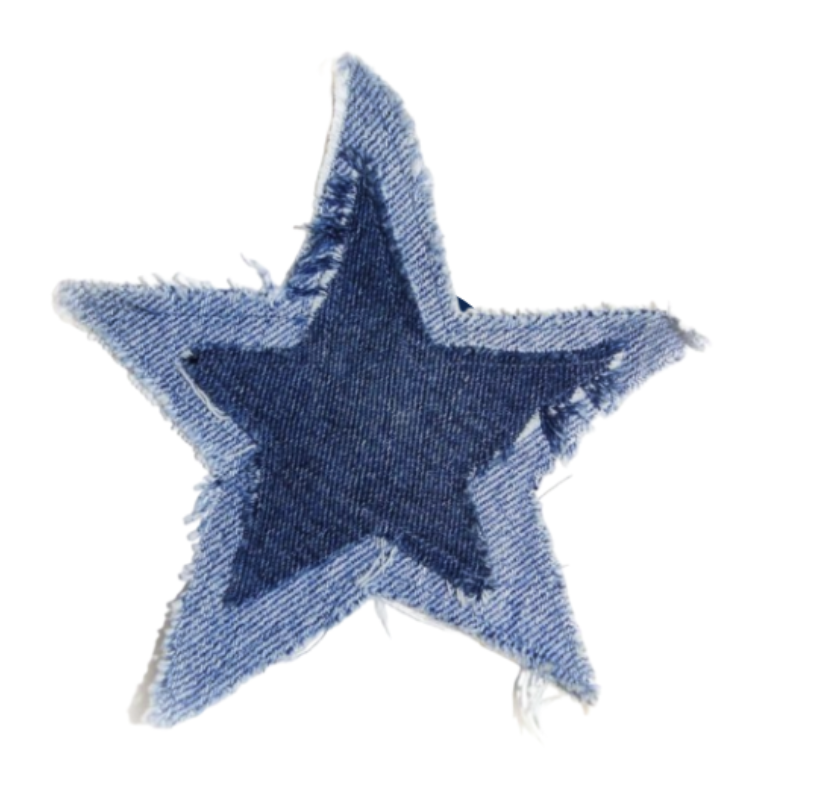
Denim is woven using a twill weave, in which the weft thread passes under two or more warp threads, creating a diagonal rib pattern visible on the fabric’s surface. The warp yarns are traditionally dyed with indigo, while the weft yarns remain undyed, producing the signature blue exterior and white interior. This construction contributes to denim’s strength and flexibility while allowing the fabric to fade beautifully over time. The number of warp and weft threads per inch, as well as the yarn weight, determines the heaviness and texture of denim, ranging from lightweight shirting denim to heavyweight jeans fabric.
The properties of denim make it exceptionally durable and versatile. It is strong, resistant to tearing, and softens with age, developing a personalized patina through wear and washing. The indigo dye’s unique fading patterns, such as whiskers, honeycombs, and stacks, have become a hallmark of aesthetic in denim culture. Depending on its composition, denim can be rigid (made from 100% cotton) or stretchy when blended with elastane or other fibers. This adaptability allows denim to suit both rugged workwear and refined fashion applications.
Denim’s uses are vast and enduring. The most iconic application is, of course, the blue jean, but denim is also used in jackets, skirts, shirts, overalls, dresses, and accessories. In interiors, denim appears in upholstery, home décor, and even art installations. Modern denim extends beyond blue; variations include black, gray, white, and colored washes achieved through dyeing and finishing techniques. Specialty treatments, such as stone-washing, sandblasting, enzyme washing, and laser distressing, have expanded denim’s visual and tactile possibilities.
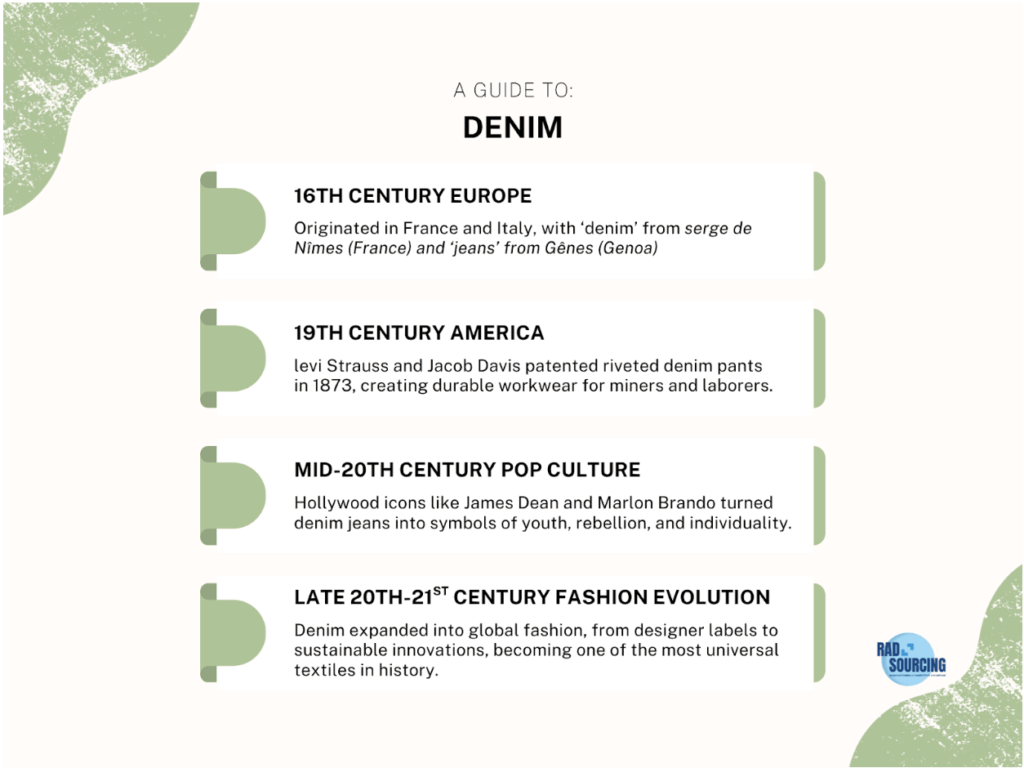
Culturally, denim represents both practicality and rebellion. It began as a symbol of labor and durability, worn by miners, farmers, and soldiers. In the 1950s, Hollywood icons such as James Dean and Marlon Brando transformed jeans into symbols of youth and defiance. The 1970s and 1980s brought designer denim and global fashion recognition, while the 1990s and 2000s saw denim diversify into countless styles—from grunge to luxury streetwear. Today, denim continues to bridge class and culture, remaining one of the most democratic fabrics in history.
From a sustainability perspective, denim’s legacy is complex. Traditional denim production, particularly indigo dyeing and finishing, is resource-intensive, requiring substantial amounts of water, energy, and chemicals. The growing demand for sustainable fashion has led to innovations like organic cotton, plant-based or synthetic indigo dyes, ozone and laser finishing, and waterless washing technologies. Recycled denim and circular design initiatives are also helping reduce waste in the denim industry. Many premium brands now emphasize eco-friendly production and transparency, signaling a shift toward responsible denim manufacturing.
Denim production is a global industry, with significant hubs located in China, Bangladesh, India, Pakistan, Turkey, and Italy. Japan is renowned for its artisanal selvedge denim, which is woven on vintage shuttle looms that produce tightly woven edges and a distinct, premium quality. Italy and Turkey lead in high-fashion and luxury denim production, while the United States and Europe maintain smaller-scale mills specializing in heritage and sustainable denim.
Denim’s story is one of resilience and reinvention. From rugged labor uniforms to designer runways, it has transcended its origins to become a cultural icon, representing craftsmanship, comfort, and individuality. As technology and sustainability reshape the fabric’s future, denim remains timeless: a durable thread woven through both history and everyday life.