
Flannel is a soft, warm, woven fabric known for its slightly fuzzy texture and exceptional comfort. Traditionally made from wool and later from cotton or synthetic fibers, flannel is best known for its cozy feel and association with cold-weather apparel. The fabric’s characteristic softness is derived from a special finishing process, known as napping, which raises fine fibers on the surface, creating warmth, softness, and a slightly brushed appearance. Over centuries, flannel has evolved from a practical material for workers and farmers into a fashion staple with enduring appeal.
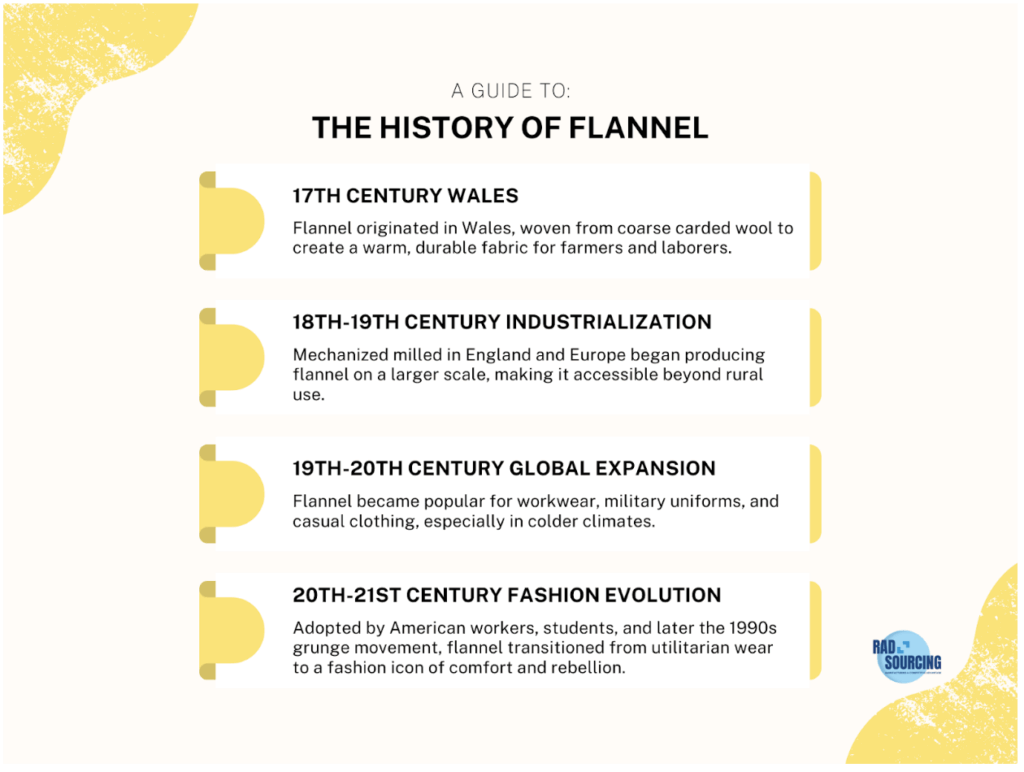
The origins of flannel date back to 17th-century Wales, where local weavers produced it from coarse carded wool to create a fabric that was both warm and durable enough for daily labor in damp, cool climates. As textile technology advanced during the Industrial Revolution, flannel production spread throughout Europe, particularly in England, and later to North America. By the 19th and 20th centuries, flannel had become a popular material for work shirts, trousers, and undergarments. Its versatility and comfort made it a favorite among outdoor workers, soldiers, and eventually mainstream consumers.

Flannel is typically made using a plain or twill weave. Twill flannel, identifiable by its diagonal ribbing, tends to be softer and more durable than plain-weave varieties. After weaving, the fabric is brushed with fine metal brushes, which lift the fibers to create a fuzzy nap on one or both sides. Wool flannel tends to have a smoother finish, while cotton flannel is thicker and cozier, often featuring a double-sided nap for added warmth and comfort. Modern flannel may also be blended with polyester for wrinkle resistance and durability.
The properties of flannel make it a perfect cold-weather textile. It is soft, warm, and breathable, offering excellent insulation without feeling heavy. The raised nap traps air, enhancing its thermal properties while maintaining moisture absorbency. Cotton flannel is particularly prized for its comfort and ease of care, while wool flannel offers superior insulation and drape for tailored garments. Flannel’s brushed surface also gives it a matte finish, lending a casual, approachable aesthetic that remains timeless.
Flannel’s versatility is reflected in its wide range of uses. In apparel, it is used for shirts, pajamas, robes, skirts, and jackets, providing both warmth and comfort. Wool flannel is a classic choice for tailored trousers, blazers, and suiting, favored for its softness and refined texture. Cotton flannel dominates casual wear, particularly the iconic plaid or tartan flannel shirts popularized in North America. Beyond clothing, flannel is used in bedding, blankets, and sleepwear, where its warmth and softness make it ideal for winter use.
Culturally, flannel has become emblematic of both rugged workwear and laid-back style. It was worn by lumberjacks and farmers in the 19th century, adopted by soldiers in World War I for warmth, and reimagined in the 1990s as part of the grunge movement, when plaid flannel shirts became a global fashion symbol of rebellion and casual authenticity. Today, flannel remains a staple in both heritage workwear and contemporary fashion, valued for its comfort and versatility.
From a sustainability perspective, the impact of flannel depends mainly on its fiber content. Wool flannel is a renewable, biodegradable, and long-lasting material, although it raises concerns about animal welfare and land use. Cotton flannel, when made from conventional cotton, can be resource-intensive due to water and pesticide use; however, organic cotton flannel offers a more sustainable option. Synthetic flannel blends improve durability and reduce cost but are not biodegradable. Because flannel garments tend to be long-wearing, their extended use can help offset environmental impact.
Global production of flannel continues across major textile regions. Portugal, Italy, and Japan are renowned for their premium cotton and wool flannels, while India, Pakistan, and China produce large quantities for the global apparel and bedding markets. The plaid and tartan flannel patterns associated with Scottish heritage remain particularly iconic worldwide.
Flannel’s enduring popularity lies in its balance of comfort, warmth, and adaptability. Whether in a lumberjack’s shirt, a tailored wool suit, or a cozy winter blanket, flannel continues to embody both practicality and comfort, an ever-reliable fabric that feels like home.