
Mesh fabric is a lightweight, porous textile characterized by its open-hole structure and net-like appearance. Known for its breathability, flexibility, and durability, mesh is utilized across a wide range of industries, including fashion and sportswear, as well as industrial filtration and medical textiles. Depending on its construction and fiber composition, mesh fabric can be soft and stretchy for clothing or rigid and highly durable for technical applications. Its versatility and performance make it one of the most adaptable materials in modern design and manufacturing.
The origins of mesh date back to the 19th century, when European lace makers and textile innovators began experimenting with open-weave patterns. The first industrially produced mesh fabrics appeared in the early 20th century, but it was not until 1939 that mesh gained commercial prominence with the invention of nylon by DuPont. Nylon mesh was quickly adopted for stockings and military gear during World War II, and post-war innovations led to the creation of polyester-elastane blends, which expanded its use into sportswear, footwear, and technical textiles.
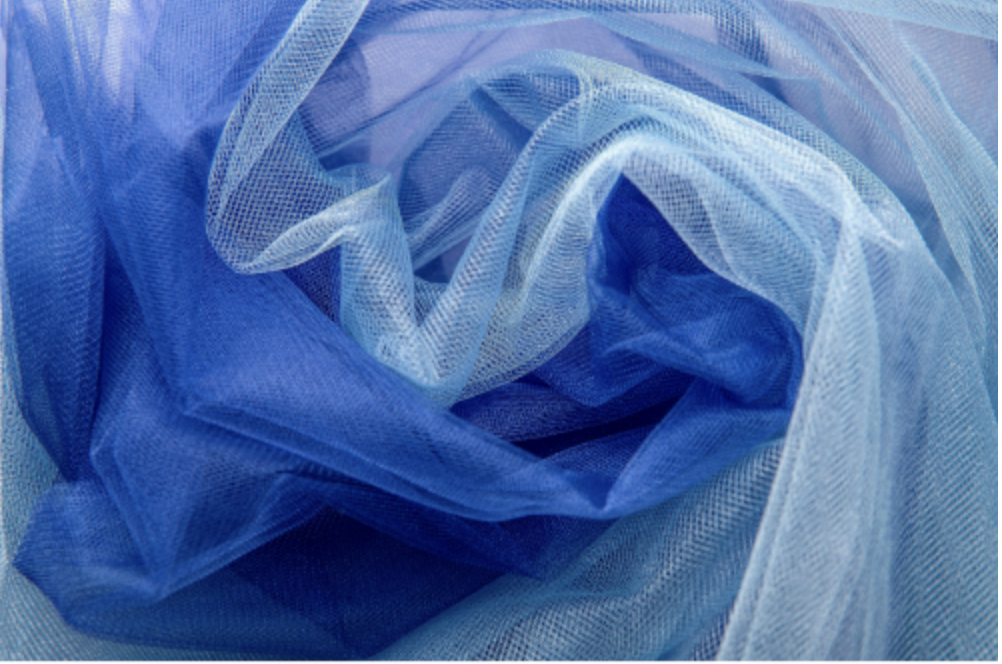
Mesh fabric is defined by its structure rather than its fiber type. It can be woven, knitted, or extruded (in plastic forms), but what sets it apart is its pattern of uniform holes that allow air and moisture to pass freely. The most common types are warp-knit tricot mesh, used for apparel; leno weave mesh, used in utility fabrics like bags and screens; and tulle or netting, used in fashion and décor. The openness of the mesh can vary from very fine to wide, depending on the intended use.
The production process depends on the desired texture and strength. For woven mesh, fibers such as polyester or nylon are interlaced at fixed angles to create a stable grid-like pattern. For knitted mesh, loops of yarn interlock to form a flexible, stretchable surface, ideal for activewear. Synthetic fibers, such as polyester, nylon, and spandex, are most common due to their strength, elasticity, and resistance to shrinkage and wrinkling. However, cotton and linen meshes are also used for softer, more breathable applications, particularly in casual apparel and home textiles.
The properties of mesh fabric make it an ideal choice for both comfort and performance. Its porous design promotes air circulation, keeping the wearer cool and dry. It is lightweight and fast-drying, which makes it a staple in sportswear, lining fabrics, and summer apparel. The fabric is also durable, tear-resistant, and easy to care for, while synthetic versions resist mold and mildew. Depending on the fiber choice, mesh can also offer stretch and moisture-wicking capabilities, making it ideal for dynamic, high-movement garments such as athletic jerseys and sneakers.

In the fashion and apparel industry, mesh is widely used for sportswear, athleisure wear, lingerie, outerwear panels, and accessories. Designers value it for its ability to combine function and style; its semi-transparent structure adds breathability and a modern aesthetic to garments. In technical and industrial applications, mesh is used in filters, screens, medical implants, and safety vests, where its airflow and strength are crucial. In home goods, mesh is used in laundry bags, organizers, and mosquito nets, striking a balance between practicality and ventilation.
From a sustainability perspective, the environmental profile of mesh depends on its fiber content. Synthetic meshes, particularly those made from polyester or nylon, are durable and long-lasting, but they are derived from petrochemicals and contribute to microplastic pollution. However, innovations such as recycled polyester (rPET) mesh and bio-based nylon are helping to reduce environmental impact. Natural-fiber meshes, such as cotton or hemp, are biodegradable but generally less durable and more prone to shrinkage. Sustainable alternatives include organic cotton mesh and recycled nylon mesh, both of which offer improved circularity and lower carbon footprints.
Another sustainability concern lies in textile waste and recyclability. While many mesh fabrics are recyclable in theory, mixed-material meshes (for example, polyester blended with spandex) complicate the recycling process. To address this, brands and manufacturers are developing mono-material meshes that can be reused or chemically recycled, aligning with the principles of circular fashion.
Globally, major producers of mesh fabric include China, India, Taiwan, South Korea, and Italy, each specializing in different market segments. China and Taiwan lead in sports and industrial mesh manufacturing, while Italy is renowned for its high-end fashion mesh, used in couture and lingerie. Advances in 3D knitting and laser-cutting technologies have also enabled designers to create precision-engineered mesh structures with minimal waste.
Mesh fabric embodies the perfect balance between functionality and design innovation. Its structure delivers unmatched breathability and strength, while its adaptability allows it to cross seamlessly from utilitarian use to high fashion. As textile technology continues to evolve, mesh remains an essential and ever-evolving material, proof that the simplicity of its structure can yield extraordinary versatility and enduring relevance.