
Microfiber is a synthetic textile celebrated for its softness, lightness, and versatility, often used in cleaning cloths, sportswear, upholstery, and fashion. The term “microfiber” refers not to a specific material but to the fineness of the fibers themselves. A microfiber is any fiber thinner than one denier (a measurement of fiber thickness), making it finer than silk. Most microfibers are produced from polyester, polyamide (nylon), or a blend of the two; however, other synthetic materials may also be used. First commercialized in Japan in the 1970s, microfiber quickly gained popularity across a wide range of applications due to its unique combination of strength, softness, and exceptional performance.
The production of microfiber involves extruding synthetic polymers through spinnerets with extremely fine nozzles, creating filaments much thinner than human hair. These fibers are then woven or knitted into fabrics with dense constructions that feel smooth and soft while remaining strong and durable. In cleaning applications, microfibers are often split during production to create wedge-shaped cross-sections, increasing their surface area and improving their ability to trap dust, dirt, and liquids. For apparel, microfibers can be woven into lightweight, breathable, and water-resistant fabrics that offer both comfort and functionality.

Microfiber fabrics have several notable properties. They are exceptionally soft and lightweight, making them comfortable for clothing and upholstery. They are also durable, wrinkle-resistant, and quick-drying. Microfiber can be engineered to be both water-repellent and breathable, making it a useful material for outerwear and performance gear. In cleaning cloths, microfiber’s split fibers can hold up to seven times their weight in water and attract dust and oils more effectively than cotton. These properties make microfiber a versatile material across industries.
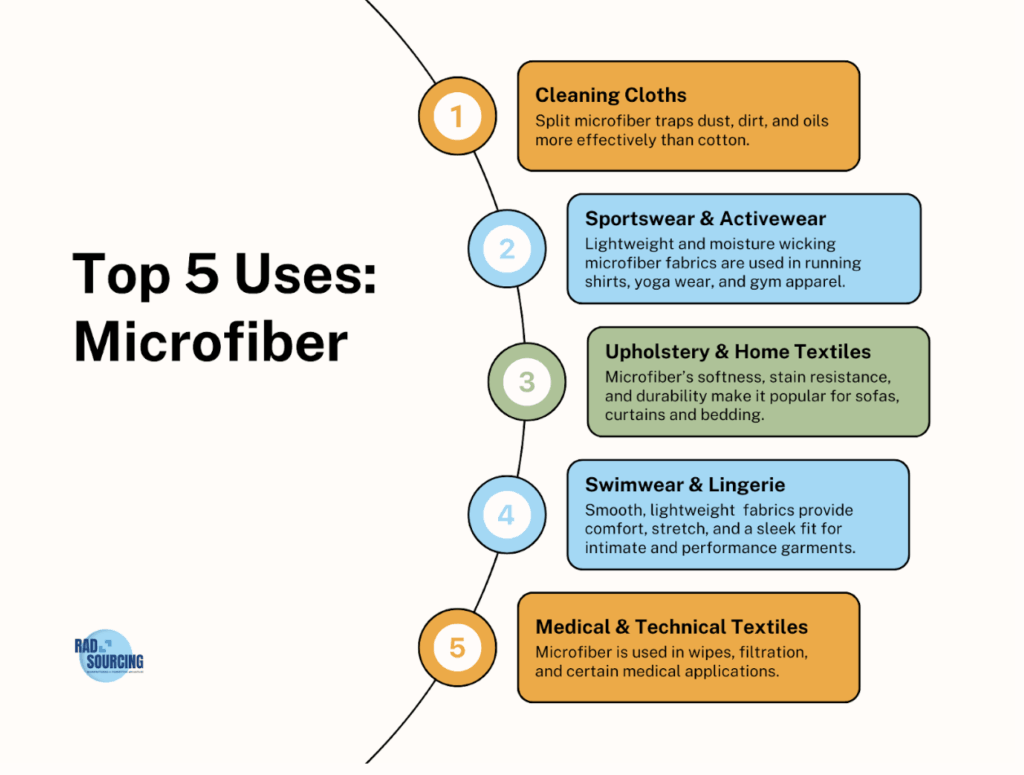
The applications of microfiber are diverse. In the fashion and apparel industry, it is commonly used for sportswear, swimwear, lingerie, and outerwear, where lightness and moisture management are crucial. In home and automotive care, microfiber cloths and mops are prized for their cleaning efficiency. In upholstery and interior design, microfiber fabrics are commonly used for sofas, chairs, and curtains due to their softness and stain resistance. The material is also found in accessories, such as handbags, as well as in specialized applications, including filtration and medical textiles.
From a sustainability perspective, microfiber is a controversial topic. While its durability and efficiency can reduce the frequency of replacements and laundering, microfiber is made from petrochemical-based synthetics that are non-biodegradable. A significant environmental concern is the shedding of microplastic fibers during washing, which enter waterways and accumulate in ecosystems. Efforts to address these issues include developing recycled polyester microfibers, improving fabric constructions that shed less, and implementing external solutions such as washing machine filters and laundry bags that capture microfibers before they reach wastewater systems.
Global production of microfiber is widespread, with major manufacturing hubs in China, Japan, South Korea, and Europe. Technological advances continue to refine microfiber performance, creating variants designed for luxury fashion, high-performance sportswear, or advanced cleaning applications.
Microfiber exemplifies the innovation of synthetic textiles, offering performance qualities that natural fibers cannot easily match. Its success across diverse industries underscores its versatility, but its future will depend on addressing environmental concerns while maintaining the qualities that have made it indispensable.