
Neoprene is a synthetic rubber-based fabric known for its durability, flexibility, and water resistance. Technically called polychloroprene, it was first developed by DuPont chemists in 1930 as one of the world’s first synthetic rubbers. Initially created as an industrial material to replace natural rubber, neoprene has since evolved into a versatile textile used in wetsuits, sportswear, accessories, and even fashion design. Its combination of stretch, insulation, and structure has made it indispensable in industries ranging from marine and automotive to performance apparel.
Neoprene is produced by polymerization, in which chloroprene monomers are chemically bonded into long chains, forming a stable, elastic synthetic rubber. The material is then foamed by injecting gas bubbles, which gives it its characteristic sponge-like texture. Sheets of neoprene foam are laminated with fabrics such as nylon, polyester, or spandex to enhance strength, comfort, and usability in apparel applications. Depending on thickness and density, neoprene can range from soft and flexible to stiff and supportive, making it adaptable to a wide range of products.

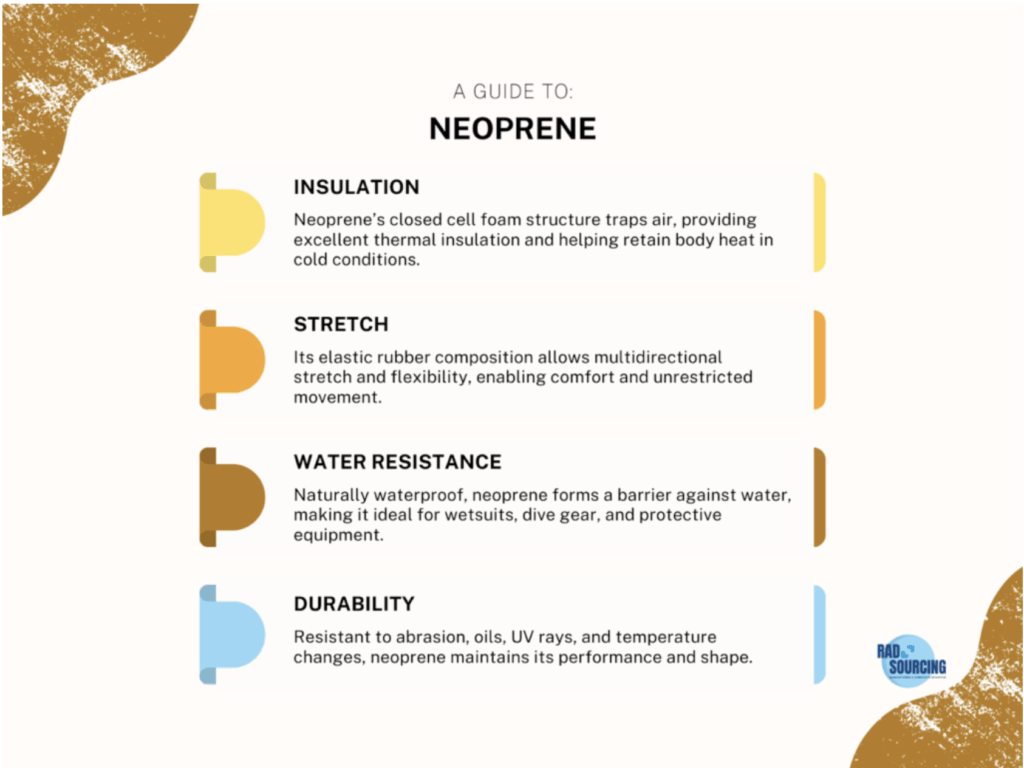
The defining properties of neoprene are its resilience, elasticity, and weather resistance. It is naturally waterproof, insulating, and resistant to oils, chemicals, and temperature extremes. The closed-cell foam structure traps air, providing buoyancy and thermal insulation, qualities that make neoprene ideal for aquatic environments. At the same time, it is stretchy and form-fitting, allowing unrestricted movement while maintaining shape. However, neoprene can be heavy compared to other fabrics, and traditional versions are not breathable, which can cause discomfort during prolonged wear outside of water.
Neoprene’s most recognizable use is in wetsuits, where its insulating properties help maintain body heat in cold water. It is also used in dive gear, surfing apparel, gloves, and footwear for aquatic sports. Beyond waterwear, neoprene has gained popularity in sportswear and fashion, particularly for structured skirts, leggings, and jackets, where its smooth surface and body-contouring stiffness create a modern, sculptural appearance. In industrial and technical contexts, neoprene is used for laptop sleeves, orthopedic braces, seat covers, hoses, and protective gear due to its shock absorption and durability.
Culturally, neoprene has evolved from a purely functional material to a fashion statement. Designers such as Balenciaga, Alexander Wang, and Stella McCartney have incorporated neoprene into their collections for its futuristic aesthetic and ability to maintain its shape without the need for lining or interfacing. Its sleek surface and architectural drape align with contemporary minimalist design trends.
From a sustainability perspective, neoprene has notable challenges. Traditional neoprene is made from petrochemical chloroprene, a non-renewable, energy-intensive material. The production process releases harmful chemicals and greenhouse gases, raising environmental and health concerns. However, in recent years, eco-friendly alternatives have emerged. Yulex neoprene, for example, is made from natural rubber derived from sustainably harvested Hevea trees, offering similar performance with a lower environmental footprint. Some manufacturers also use limestone-based neoprene, which reduces dependence on petroleum but still involves significant mining and energy use.
Global production of neoprene is centered in Japan, Taiwan, and China, where advanced manufacturing facilities supply both industrial and apparel-grade neoprene. Japan’s Yamamoto Corporation is particularly renowned for its high-performance limestone neoprene used in premium wetsuits. The material’s global reach spans from sportswear brands to automotive suppliers, making it one of the most ubiquitous synthetic rubbers worldwide.
Neoprene’s journey from industrial innovation to fashion essential showcases the material’s adaptability and enduring relevance. While sustainability challenges remain, advancements in renewable and eco-friendly alternatives are paving the way for a more responsible future. Whether in the ocean depths or on the runway, neoprene continues to represent resilience, performance, and modern design.