
Taffeta is a crisp, smooth, and lustrous woven fabric known for its distinctive rustling sound and elegant sheen. Traditionally made from silk, taffeta is now also produced in polyester, acetate, and nylon, and is synonymous with luxury and formalwear. It is most commonly used in evening gowns, bridal dresses, linings, and draperies, prized for its structured drape and ability to hold shape. With a history rooted in fine weaving and royal fashion, taffeta remains one of the most refined and timeless fabrics in textile history.
The word taffeta originates from the Persian term “taftah,” meaning “twisted woven,” referring to the tightly twisted yarns that give the fabric its distinctive crispness. The earliest records of taffeta date back to the 12th century in Persia and the Middle East, where skilled silk artisans first developed the technique of weaving it. The fabric gained prominence in Italy and France during the Renaissance, where it became the textile of choice for European nobility due to its smooth texture and shimmering surface. By the 18th century, taffeta had become a mainstay in aristocratic fashion, used in voluminous gowns, corsets, and decorative upholstery.
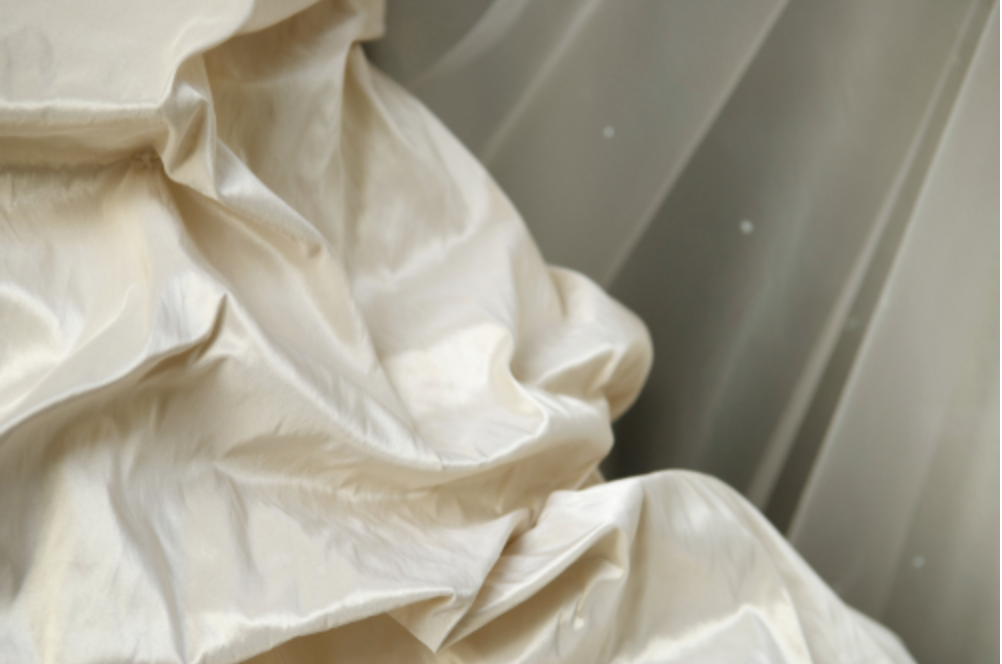
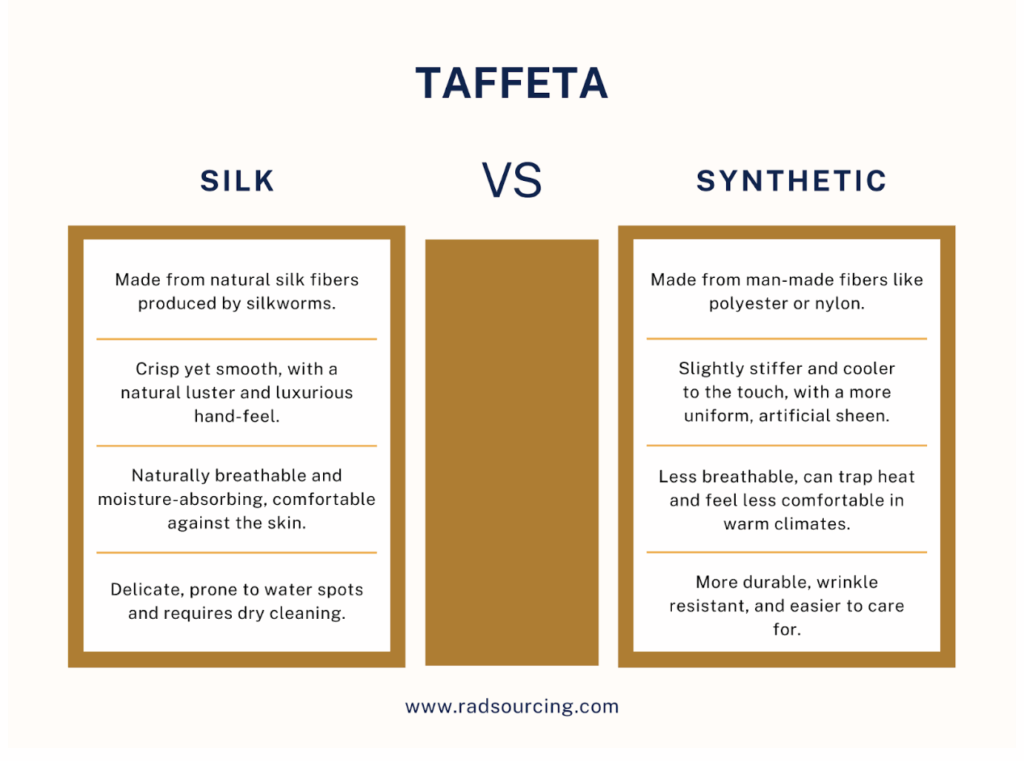
Taffeta is a plain-weave fabric, meaning the warp and weft threads cross over each other alternately, creating a tightly woven structure. What distinguishes taffeta from other plain weaves is the high-twist yarns and fine denier threads used in its construction. This gives it both body and crispness, as well as a characteristic rustling sound known as “scroop.” The yarns may be woven from silk, polyester, acetate, or nylon, depending on the desired effect and price point. Silk taffeta is the most luxurious and lustrous, while synthetic taffeta offers durability, wrinkle resistance, and affordability.
The weaving process can produce several types of taffeta, each with unique visual and tactile qualities:
- Plain taffeta: smooth, crisp, and evenly lustrous, often used for linings or structured garments.
- Shot (changeant) taffeta: woven with different colored warp and weft threads, creating an iridescent, color-shifting effect.
- Paper taffeta: extremely crisp and lightweight, used in couture and decorative garments for exaggerated silhouettes.
- Moire taffeta: features a rippled, water-like pattern achieved through a calendaring process.
- Antique taffeta: slightly slubbed, with a textured surface reminiscent of handwoven silk.
The properties of taffeta make it one of the most visually striking fabrics available. It has a smooth surface, high sheen, and crisp hand, giving garments a sculptural quality. It reflects light beautifully, enhancing its richness and depth of color. Taffeta is also relatively lightweight yet strong, with excellent shape retention. However, it wrinkles easily and lacks stretch, making it best suited to structured designs rather than fitted or flowing garments.
In fashion, taffeta remains a favorite for eveningwear, bridal gowns, ball gowns, and corsetry due to its polished finish and ability to hold volume. It is also widely used in linings, ribbons, and accessories, as well as costume design and interior décor, including draperies and upholstery. The combination of shimmer and stiffness gives taffeta garments an architectural elegance that few other fabrics can replicate. Designers often pair taffeta with silk organza or satin to achieve a contrasting texture and effect.
From a sustainability perspective, taffeta’s environmental impact varies depending on its fiber composition. Silk taffeta is a natural, biodegradable material derived from silkworm cocoons, making it an eco-friendly luxury option when sourced responsibly. However, synthetic taffetas, made from polyester or nylon, are derived from petroleum and are non-biodegradable; yet, they offer durability and ease of maintenance. Some modern producers are turning to recycled polyester taffeta (rPET), which repurposes plastic waste into fine yarns for a more sustainable alternative. Certifications such as OEKO-TEX or the Global Recycled Standard (GRS) help identify taffetas that are made responsibly.
The world’s leading taffeta producers include India, China, Italy, and France. India and China dominate production for global apparel and décor markets, while European mills in Como (Italy) and Lyon (France) specialize in high-end silk and designer-grade taffetas. Many luxury fashion houses, such as Dior, Valentino, and Carolina Herrera, continue to feature taffeta in their couture collections for its regal elegance and dramatic presence.
Taffeta is the embodiment of classic elegance and craftsmanship, a fabric that has dressed royalty, graced red carpets, and adorned interiors for centuries. Its shimmering surface, crisp body, and luxurious feel make it a textile of timeless sophistication. Whether woven from silk or modern synthetics, taffeta continues to captivate designers and wearers alike, standing as a symbol of how tradition and innovation can coexist beautifully in the art of fabric making.