
Brocade is a richly decorative woven fabric characterized by raised patterns, often featuring metallic threads and intricate designs. Its name comes from the Italian word “broccato,” meaning “embossed cloth,” which reflects the fabric’s dimensional appearance. Historically associated with luxury, wealth, and ceremonial dress, brocade has been produced and treasured across cultures for centuries. From the Byzantine Empire to Renaissance Italy and imperial China, brocade has symbolized prestige and artistry in textiles.
Brocade is woven on a Jacquard loom, which enables the creation of complex patterns directly in the weave. Unlike prints or embroidery, the designs in brocade are integral to the fabric structure. Traditionally, brocade was made from silk, often incorporating real gold or silver threads to highlight motifs. Today, while silk brocade remains highly prized, cotton, polyester, and other synthetic fibers are commonly used to create more affordable versions. Metallic threads are now typically made from etalized polyester film rather than precious metals.
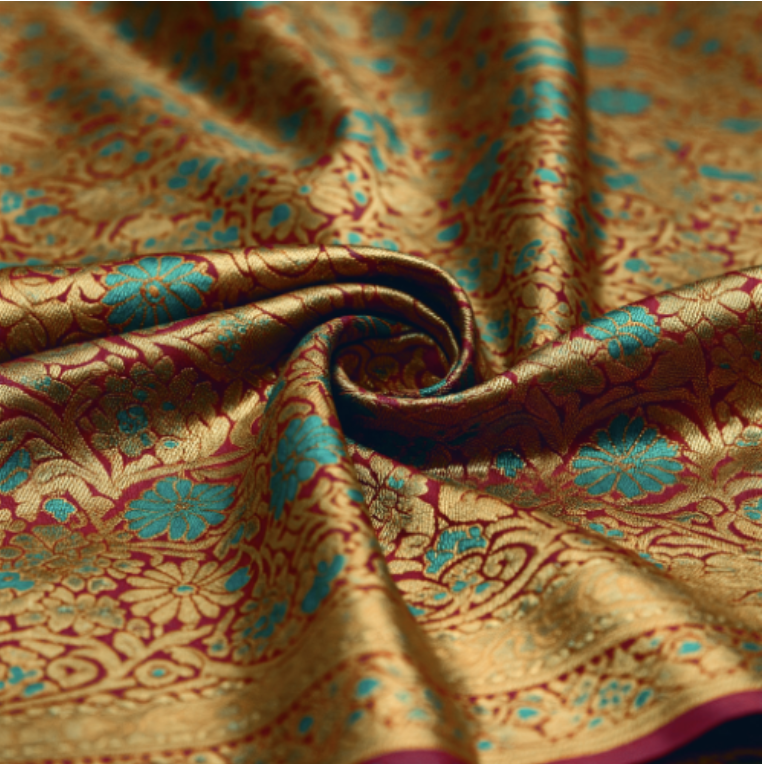
The defining property of brocade is its elaborate, raised pattern. These motifs, including florals, scrolls, geometric designs, or pictorial scenes, are often inspired by cultural heritage and are non-reversible, as the back of the fabric shows floating threads. Brocade tends to be heavy and structured, with a rich texture and sheen that make it ideal for formal garments and interior applications. It is not typically stretchy or highly breathable, but it offers durability and striking visual impact.
Throughout history, brocade has been closely associated with power and ceremony. In Europe, it flourished during the Renaissance, with Italian cities like Venice and Florence producing some of the finest silk brocades. In Asia, Chinese silk brocades, particularly from Nanjing and Suzhou, were prized for their vibrant colors and artistry, often featuring dragons, phoenixes, and other auspicious symbols. Brocade fabrics were used for royal robes, religious vestments, and elaborate upholstery, cementing their place in cultural and historical traditions.
Modern brocade remains a staple in fashion and décor. In apparel, it is often used for evening gowns, jackets, skirts, and traditional costumes, where its structure and decorative quality shine. In interiors, brocade is found in upholstery, drapery, and cushions, adding a sense of luxury and formality to spaces. It is also popular in accessories like handbags, shoes, and ceremonial textiles.
From a sustainability perspective, brocade’s impact depends on its fiber composition. Although silk brocade is renewable and biodegradable, it is often associated with resource-intensive silk farming practices. Synthetic brocades made from polyester or metallic threads are less sustainable due to their petrochemical origins and non-biodegradability. However, brocade garments and furnishings tend to be long-lasting, and their durability can offset some of their environmental footprint by reducing the need for replacement. High-quality brocades, particularly those made from silk, are often treated as heirlooms, passed down through generations.
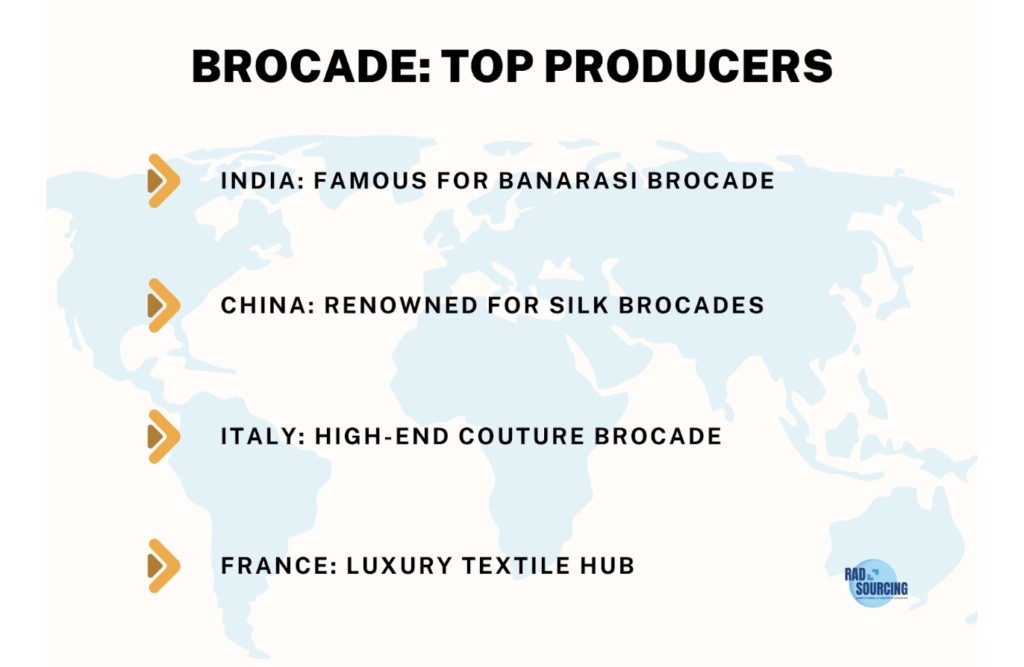
Global production of brocade continues in Italy, India, and China, where both traditional handweaving and industrial Jacquard looms are used. Varanasi brocade (Banarasi brocade) from India is especially renowned, often woven with gold and silver threads for saris and ceremonial attire. These regional specialties underscore the enduring cultural and economic significance of brocade.
Brocade remains one of the most iconic ornamental fabrics, embodying centuries of craftsmanship, luxury, and cultural symbolism. Its ability to combine art and function ensures its enduring appeal in both fashion and interiors.