
Camel wool, also known as camel hair, is a luxurious natural fiber sourced from camels’ soft undercoats, prized for its exceptional warmth and insulating properties. Renowned for its natural golden-brown hue and silky feel, camel wool has been used for thousands of years in the deserts and steppes of Central Asia and the Middle East, where it provided vital protection against both scorching days and freezing nights. Today, it remains one of the world’s most sophisticated and naturally functional animal fibers, used in high-end apparel, coats, and blankets.
The use of camel wool dates back to ancient civilizations, including the Mongols, Persians, and Bedouins, who spun and wove the fiber into garments, tents, and rugs to withstand harsh climates. The tradition of using camel hair spread along the Silk Road, where it became a valued trade commodity. By the 19th and early 20th centuries, European textile houses began importing camel hair to produce fine overcoats and suits, particularly in Britain and Italy, where its natural color and softness appealed to the growing luxury market. Today, camel wool remains associated with classic tailoring and timeless elegance.
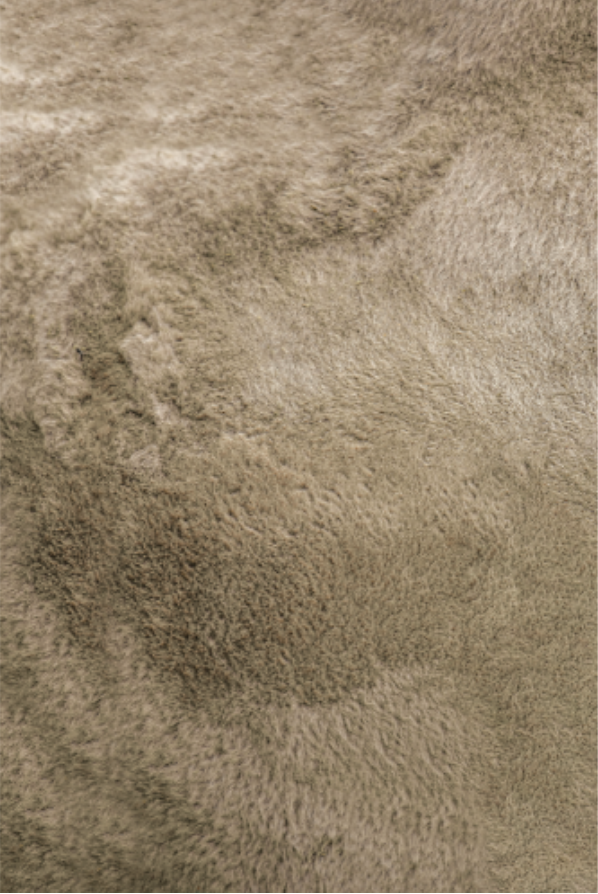
Camel wool comes primarily from Bactrian camels (Camelus bactrianus), which are native to Mongolia, China, and Central Asia. These camels have two coats: a coarse outer guard layer that protects against wind and sand, and a fine undercoat, which provides insulation and is the source of the soft, downy fiber used in textiles. The wool is collected during the natural molting season (usually spring), when camels shed their coats. The fine undercoat is combed or gathered by hand, washed to remove impurities, and then carded and spun into yarn. Each adult camel produces about 2–5 kilograms of hair per year, of which only about 500 grams is the fine, soft underdown suitable for luxury fabric production.
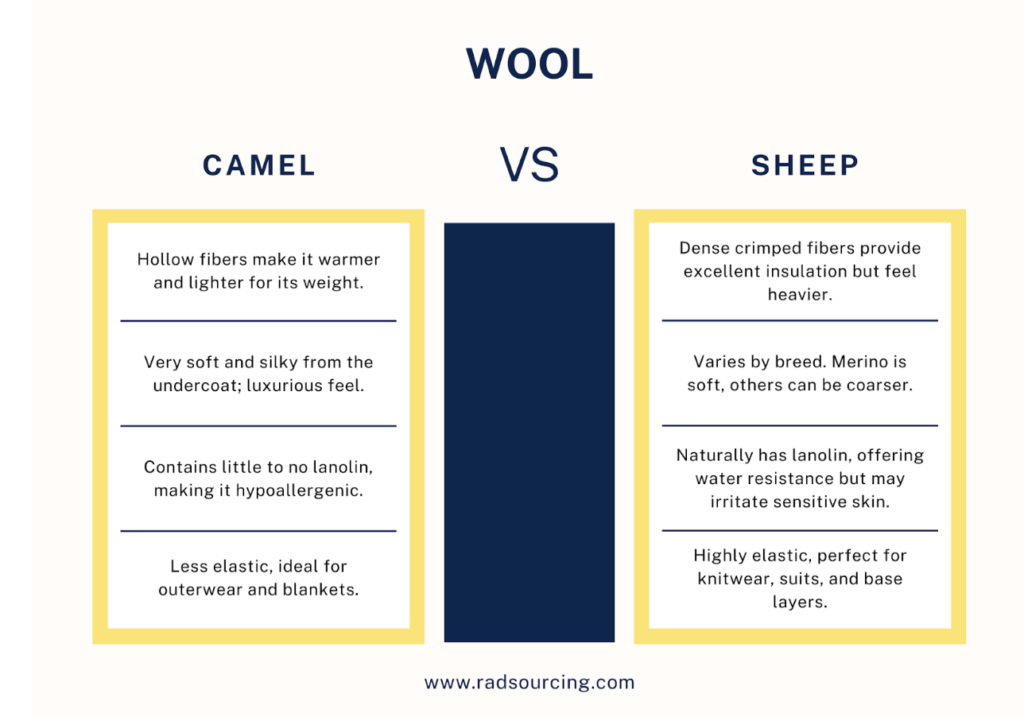
The properties of camel wool make it one of nature’s most efficient insulators. The fibers are hollow, which traps air and provides superior thermal regulation, keeping the wearer warm in cold weather and cool in heat. Camel wool is soft yet durable, with a natural elasticity that resists wrinkling. It is also lightweight, breathable, and moisture-wicking, offering comfort and dryness even during temperature fluctuations. Naturally water- and flame-resistant, it performs well as both a luxury and functional material. The fiber’s natural beige to golden-brown tones are often left undyed to preserve their organic beauty, though they also accept dye well for fashion applications.
In fashion, camel wool is most commonly used in coats, jackets, scarves, and sweaters, where its softness and warmth are most appreciated. Blends with wool, cashmere, or silk add structure and drape while enhancing affordability and wearability. Pure camel hair coats, first popularized by British tailoring brands like Jaeger and Aquascutum, remain iconic for their elegance and timeless style. Beyond apparel, camel wool is also used in blankets, carpets, and upholstery fabrics, particularly in regions where camel husbandry remains central to daily life.
From a sustainability perspective, camel wool is considered one of the more eco-friendly animal fibers. It is renewable and biodegradable, sourced through natural molting rather than shearing, which minimizes stress on the animals. Bactrian camels are hardy and well-adapted to extreme climates, requiring minimal human intervention, feed, and water compared to livestock such as sheep or goats. This makes camel wool production a relatively low-impact and well-suited option for arid, marginal ecosystems. However, overharvesting or poor fiber sorting can affect quality and disrupt traditional herding practices, so ethical and sustainable sourcing is vital to preserving both fiber quality and community livelihoods.
Camel wool production is concentrated in Mongolia, Inner Mongolia (China), Iran, and Afghanistan, with smaller-scale herding in Kazakhstan, India, and parts of the Middle East. Mongolia and China are the leading exporters, supplying both raw fiber and finished yarn to European luxury textile manufacturers. In Italy, mills in Biella and Prato transform raw camel fiber into the refined fabrics used by fashion houses such as Max Mara, Loro Piana, and Burberry, known for their signature camel coats.
The environmental advantages of camel wool are enhanced when it is used in undyed or naturally finished forms, reducing the need for chemicals and water-intensive processing. Some producers also participate in fair-trade and regenerative fiber initiatives, ensuring that traditional herders benefit directly from global demand while maintaining sustainable grazing practices on fragile desert and steppe lands.
Camel wool combines luxury, performance, and sustainability in a single fiber. Its natural adaptability to extreme environments translates beautifully into garments that provide warmth, comfort, and timeless elegance. Rooted in centuries of nomadic tradition yet refined by modern textile innovation, camel wool stands as a symbol of both cultural heritage and eco-conscious craftsmanship, proof that some of nature’s oldest materials remain among the most advanced.