
Canvas is a durable, plain-weave fabric traditionally made from cotton, linen, or hemp, and is often blended with synthetic fibers like polyester today. Its name is derived from the Latin word cannabis, reflecting its historical association with hemp. Known for its strength, rigidity, and coarse texture, canvas has been used for centuries in sails, tents, and workwear, and it remains one of the most practical textiles for industrial, artistic, and fashion applications.
The history of canvas stretches back thousands of years. Early civilizations used hemp canvas for ship sails, a practice that continued through the Middle Ages, when canvas became synonymous with maritime expansion. By the Renaissance, linen canvas had gained popularity among artists, replacing wooden panels as the preferred medium for painting. With the widespread cultivation of cotton in the 18th and 19th centuries, cotton canvas became more accessible and established itself as a staple fabric in workwear, military gear, and utility textiles.

Canvas is characterized by its plain weave, in which the warp and weft threads cross evenly, creating a dense, sturdy structure. The weight and quality of canvas are determined by the yarn thickness and thread count, with heavier canvas providing exceptional durability and lighter canvas offering more flexibility. Variants include duck canvas, a smoother, tightly woven form often used in apparel and accessories, and sailcloth canvas, designed for maximum strength and resistance to the elements.
Canvas’s properties make it highly versatile. It is strong, abrasion-resistant, and able to withstand heavy use, which explains its association with workwear and outdoor gear. Canvas is also naturally breathable, though not inherently waterproof; however, treatments with wax, oil, or modern synthetic coatings can make it water-resistant or fully waterproof. This adaptability has allowed Canvas to remain relevant in both rugged and everyday applications.
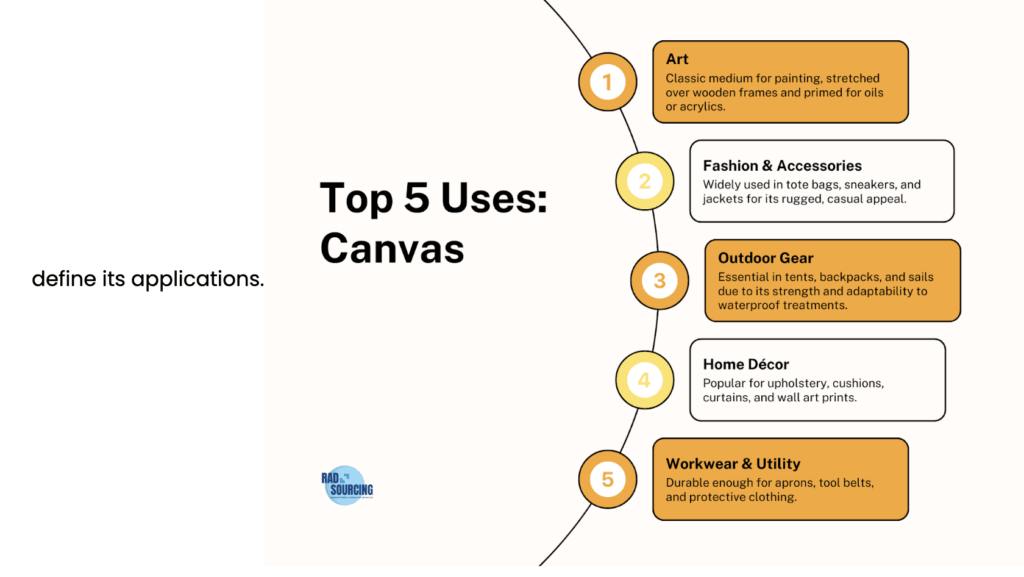
Canvas is widely used across industries. In fashion, it appears in sneakers, jackets, and tote bags, prized for its durability and casual aesthetic. In art, the canvas remains the dominant surface for painting, stretched over wooden frames and primed for oil or acrylic paint. For industrial use, canvas is used in sails, tents, tarpaulins, awnings, and upholstery, while lighter grades are used in household items such as aprons and cushions. Its reputation as a workhorse fabric continues to define its applications.
From a sustainability standpoint, canvas reflects the qualities of its base fibers. Cotton canvas, if not sourced organically, inherits the environmental challenges of conventional cotton farming, including high water and pesticide use. Hemp and linen canvas, however, are far more sustainable, as they require fewer resources and offer biodegradability. Synthetic blends, while increasing durability and water resistance, reduce recyclability at the end of their life. Canvas products, however, are often long-lasting and reusable, which contributes positively to their overall environmental profile.
Canvas is produced globally, with major manufacturing hubs in India, China, and Pakistan for cotton canvas, while Europe continues to produce high-quality linen canvas for fine arts. North America has a strong tradition of canvas use in workwear and outdoor gear, with many brands emphasizing heritage and ruggedness.
Canvas remains an enduring and essential textile, striking a balance between functionality, tradition, and adaptability. Its ability to serve both practical and creative purposes ensures it remains woven into daily life, from the art studio to the open seas.