
Chambray is a lightweight woven fabric that has been a fashion staple for centuries, admired for its soft texture, breathability, and classic denim-like appearance. The fabric traces its roots back to the 16th century in Cambrai, France, where it was initially known as “cambric.” Over time, the weave evolved into chambray. Unlike denim, which is typically associated with rugged workwear, chambray has long been favored for shirts, dresses, and lightweight summer clothing because of its softer hand and lighter weight.
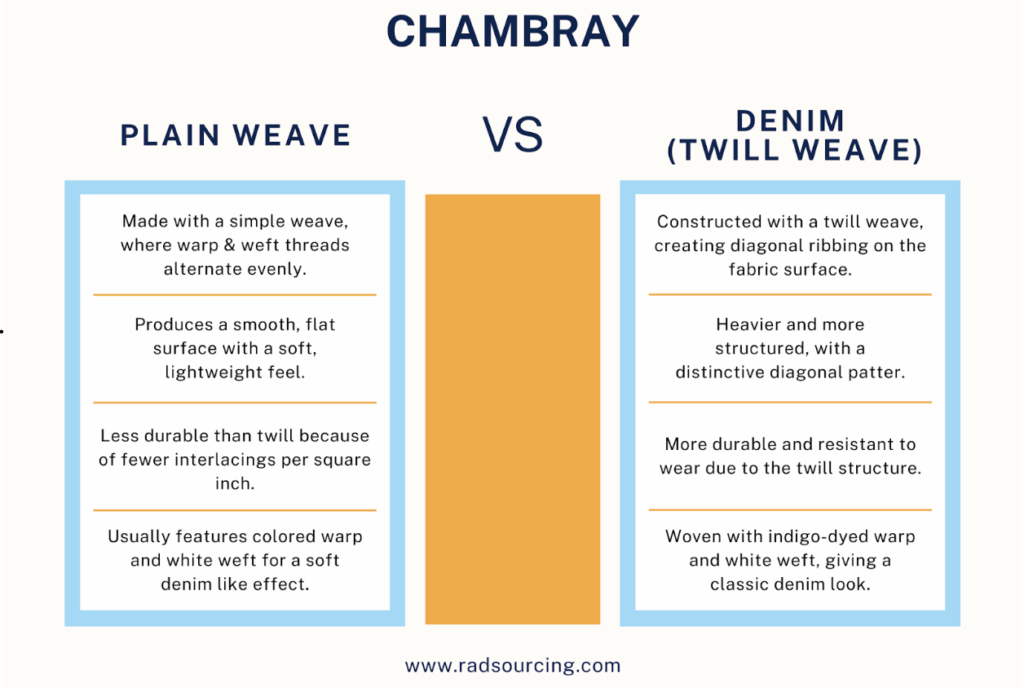
Chambray is most commonly made from cotton, though blends with linen or synthetic fibers are also available. The defining feature of chambray is not the fiber itself, but the weave. It is woven in plain weave, with the warp (vertical) yarns dyed, usually in indigo or blue, and the weft (horizontal) yarns left white or undyed. This creates a subtle, mottled effect that gives chambray its signature look, similar to denim but with a finer and smoother texture.

One of chambray’s key properties is its lightweight and breathable nature, making it a popular choice for warm-weather apparel. It feels soft against the skin and drapes well, providing comfort without feeling heavy. Chambray also holds dye effectively, allowing for a range of shades and finishes, though the most iconic version is the light blue, denim-like shade. Due to its simple weave, chambray is less durable than twill-woven denim; however, it compensates for this with increased comfort and versatility.
Chambray production today is centered in textile hubs across Asia, including India and China, as well as parts of Europe. Both high-fashion and casual brands widely use it due to its timeless appeal. The lightweight fabric is relatively easy to weave and dye, contributing to its availability and popularity.
From a sustainability perspective, Chambray’s impact primarily depends on the type of fiber used. When made from organic cotton or linen, chambray can be a more environmentally friendly option compared to polyester or blends. Conventional cotton chambray, however, shares the same sustainability challenges as cotton in general, including water usage and reliance on pesticides. Some brands now offer chambray made from organic or recycled fibers, aiming to reduce the fabric’s ecological footprint.
Chambray’s versatility makes it popular in both fashion and home goods. It is most often used for shirts, sometimes called “chambray shirts” or “work shirts”, that strike a balance between casual and polished styles. It also appears in dresses, skirts, lightweight trousers, and even accessories, such as scarves. In home décor, chambray fabrics are used for pillowcases, duvet covers, and lightweight curtains, where their airy texture adds a relaxed yet refined touch.
Chambray represents a perfect blend of history, comfort, and style. With its breathable nature and timeless, denim-like appearance, it remains a fabric of choice for consumers seeking casual sophistication. As sustainability becomes more central in fashion, chambray’s appeal can only grow when paired with responsible sourcing and eco-friendly practices.