
Damask is a richly patterned woven fabric characterized by its reversible designs, often featuring floral, geometric, or arabesque motifs. Known for its intricate texture and elegant sheen, damask has long been associated with luxury and refinement. It is woven using a jacquard weave technique, which allows for complex patterns to emerge from the interplay of satin and matte surfaces within the same fabric. Traditionally made from silk, damask is now also woven from cotton, linen, wool, or synthetic fibers, maintaining its reputation as one of the most timeless ornamental textiles.
The history of damask stretches back over a thousand years. It takes its name from Damascus, Syria, a major trading hub along the Silk Road during the Middle Ages. As early as the 9th century, damask was prized for its craftsmanship and elegance in the Byzantine and Islamic worlds. By the 12th century, it had spread to Europe, where it was woven on early drawlooms in Italy, Spain, and France. During the Renaissance, Italian silk weavers, particularly in Venice and Florence, perfected the art of damask weaving, and the fabric became a symbol of wealth and nobility. The invention of the Jacquard loom in the early 19th century revolutionized damask production, allowing for even more intricate designs and larger-scale manufacturing.
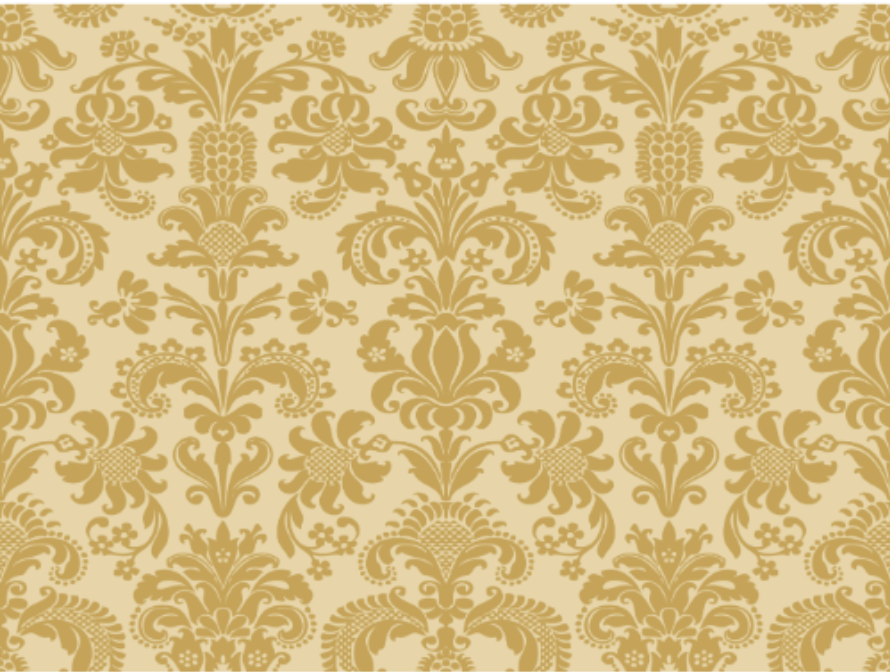
Alternating satin and sateen weaves create damask’s unique appearance within a single fabric, which reflects light differently. This interplay produces patterns that appear darker or lighter depending on the angle of view. The front and back of damask are mirror images, though one side typically has a shinier finish. The fabric is generally medium to heavyweight, smooth to the touch, and durable, making it both decorative and functional.
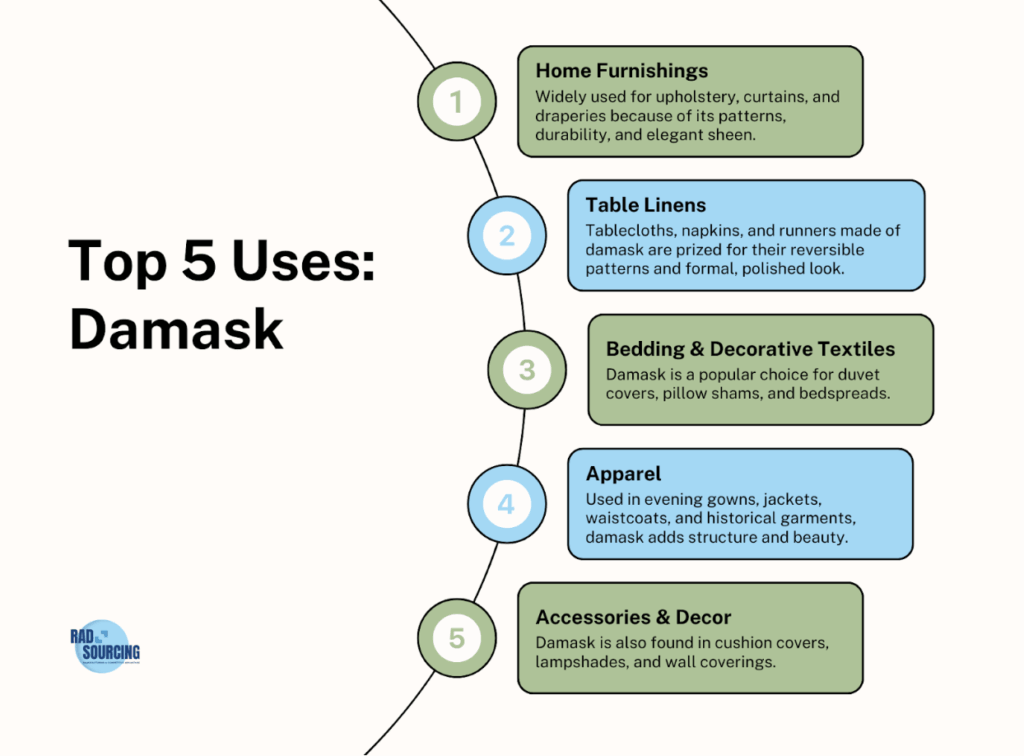
Damask’s properties make it exceptionally versatile. It combines strength with sophistication, making it suitable for both fashion and interiors. Damask drapes beautifully and resists wear, making it ideal for long-lasting home furnishings. Silk and rayon damasks feature a lustrous finish, making them suitable for evening wear, while cotton and linen damasks offer a matte, refined elegance, perfect for table linens and upholstery. Due to its dense weave, damask also retains dye exceptionally well, resulting in rich, vibrant colors that accentuate its patterns.
Throughout history, damask has served both practical and ceremonial purposes. In the Middle Ages and Renaissance, it adorned royal robes, church vestments, and palace interiors. During the Baroque and Rococo periods, it became synonymous with opulence, as walls, draperies, and furniture in grand European homes were adorned with it. In modern times, damask remains a classic choice for upholstery, curtains, bedding, tablecloths, and luxury apparel, maintaining its association with tradition and taste.
From a sustainability perspective, damask’s impact depends on the fibers used. Silk and linen damasks are renewable, biodegradable, and long-lasting, offering eco-friendly advantages. Cotton damask, while durable, inherits the environmental challenges of cotton cultivation, including high water and pesticide use. Synthetic damask, typically polyester, is less sustainable but more affordable and easier to maintain. Because damask is highly durable, its longevity helps reduce waste by extending product life, making it a responsible choice for interiors and heirloom-quality textiles.
Damask continues to be woven worldwide, with high-end silk and linen versions still produced in Italy, France, and Belgium, while cotton and synthetic damasks are manufactured extensively in China, India, and Turkey for global markets. European mills remain leaders in luxury production, especially those that preserve traditional Jacquard techniques.
Damask is a testament to the artistry and innovation of textile weaving. Combining historical richness with enduring elegance, it bridges the gap between tradition and modernity. Whether draped across a dining table, upholstered on a chair, or tailored into formalwear, damask remains a symbol of sophistication and timeless beauty.