
Jacquard is not a fiber but a weaving technique that produces complex, decorative patterns directly into the fabric structure. Named after its inventor, Joseph Marie Jacquard, the method was first introduced in France in 1804 with the creation of the Jacquard loom. This loom utilized a series of punch cards to control the movement of individual warp threads, enabling weavers to produce intricate designs, such as florals, brocades, and damasks, with unprecedented precision. The innovation marked a turning point in textile history and is often cited as a precursor to modern computer programming due to its use of punch cards as coded instructions.
The hallmark of Jacquard fabric is its woven pattern. Unlike prints or surface embellishments, Jacquard designs are woven into the fabric itself, giving it durability and depth. The loom raises and lowers specific warp threads while interlacing the weft, enabling highly detailed motifs. Today, computerized Jacquard looms can produce patterns far more intricate and efficient than the original punch card systems, though the principle remains the same.
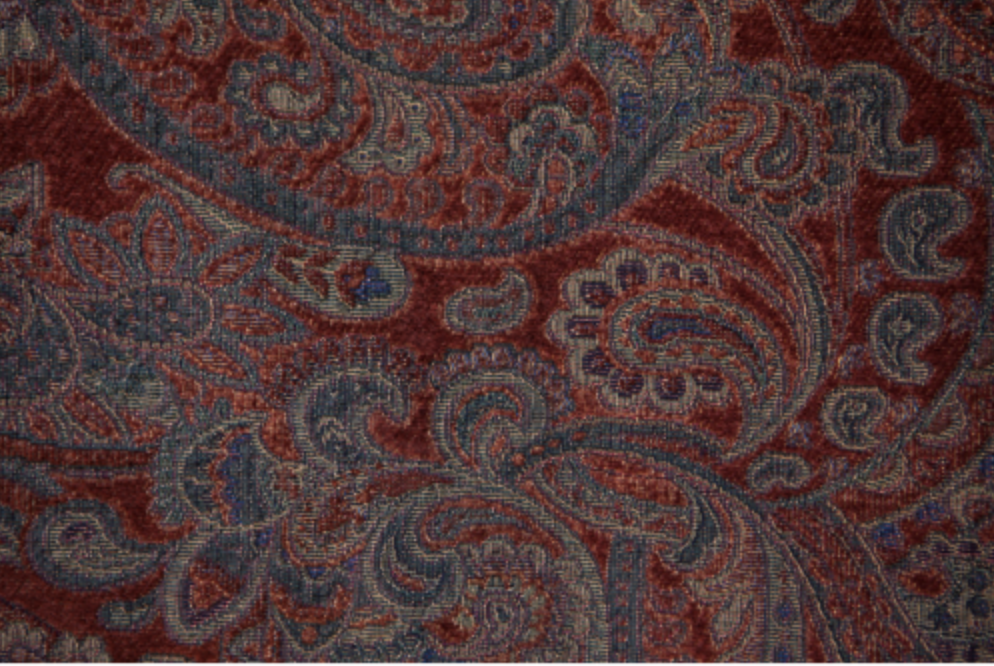
Jacquard can be woven from a wide range of fibers, including cotton, silk, wool, polyester, or blends. This versatility means that Jacquard fabrics can vary dramatically in weight, texture, and application. Common types include brocade (heavy, ornate fabrics often with metallic threads), damask (reversible patterns with a satin finish), and matelassé (puckered, quilted-like textures). Depending on the fibers and weave, Jacquard fabrics can be lightweight and drapey or heavy and suitable for upholstery.
The properties of Jacquard fabrics depend on the materials used, but generally include durability, dimensional stability, and an ornate, textured surface. The woven-in patterns do not fade or peel like prints, making them suitable for long-lasting applications. Jacquards also have a distinctive tactile quality, with raised motifs that add richness and depth to the fabric.
Jacquard weaving is used globally, with major production centers in China, India, Italy, and Turkey. Italian Jacquards, especially those from Como, are celebrated for their luxury and artistry, often used in high-end fashion and interior design. In India, Jacquard weaving techniques are integral to traditional textiles, such as Banarasi silk saris.
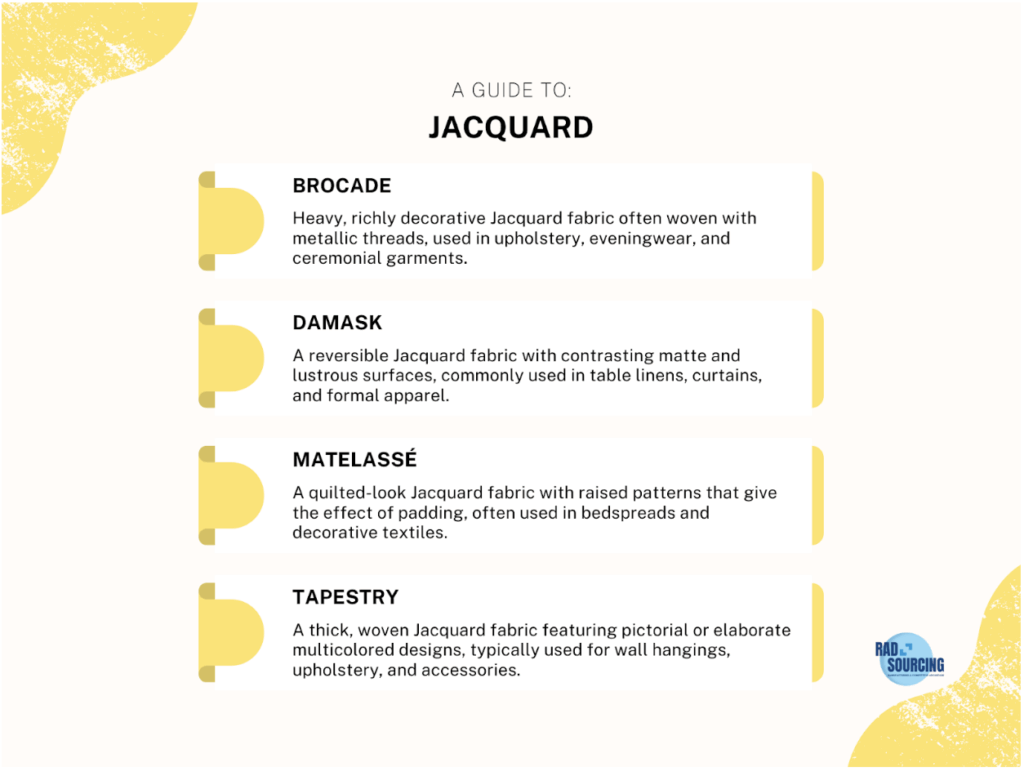
From a sustainability perspective, Jacquard fabrics are subject to the same considerations as their base fibers. Natural fiber Jacquards, such as cotton or silk, are renewable and biodegradable but may involve intensive resource use in cultivation or sericulture. Synthetic fiber Jacquards, such as polyester, are durable and affordable but contribute to microplastic pollution and rely on fossil fuels. Because Jacquards are often heavier and more durable than plain weaves, they tend to have longer lifespans, thereby reducing their overall environmental footprint. Choosing certified sustainable fibers (organic cotton, recycled polyester, or responsibly sourced silk and wool) can improve the sustainability of Jacquard fabrics.
The applications of Jacquard are wide-ranging. In fashion, it is used for dresses, suits, ties, evening gowns, and outerwear where elaborate patterns are desired. In interiors, Jacquard fabrics are common in upholstery, drapery, and bedding, adding elegance and sophistication. Jacquard is also used in accessories, such as handbags, and decorative textiles, like table linens.
Jacquard embodies the marriage of technology and artistry in textiles. Its invention transformed weaving and laid the groundwork for automation, while its fabrics remain symbols of richness, craftsmanship, and innovation. Whether in couture gowns or home interiors, Jacquard continues to weave beauty and history into everyday life.