
Jersey is a soft, stretchy knit fabric best known for its comfort, drape, and versatility. Originally made from wool, jersey was first produced on the Channel Island of Jersey, which gave the fabric its name. In medieval times, it was used for fishermen’s sweaters and undergarments. By the early 20th century, jersey gained prominence in fashion when Coco Chanel introduced it into women’s wear, transforming it from a utilitarian textile into one associated with elegance and modernity. Today, jerseys are commonly made from cotton, wool, silk, or synthetic fibers such as polyester and rayon, and they remain among the most widely used fabrics in the world.
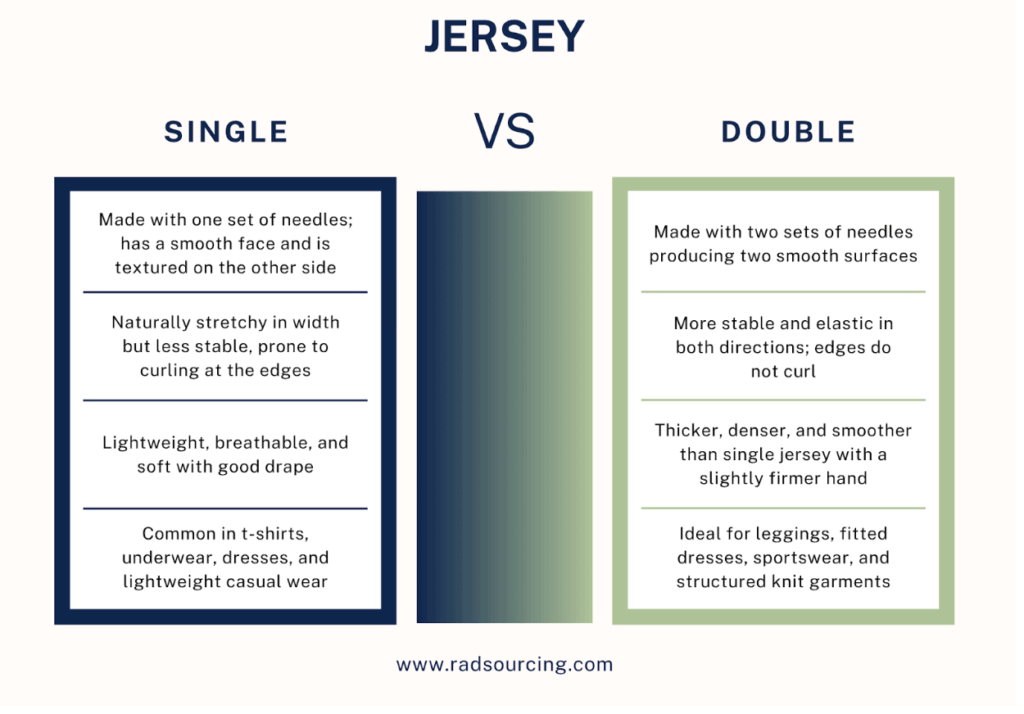
The defining characteristic of jersey is its knit construction. Unlike woven fabrics, jersey is made by looping yarns together, creating a structure that is naturally stretchy and flexible. There are two main types: single jersey, which has a smooth face and a slightly textured reverse, and double jersey (also known as interlock), which has a softer, thicker structure on both sides. This knit design gives jersey its softness, breathability, and drape.
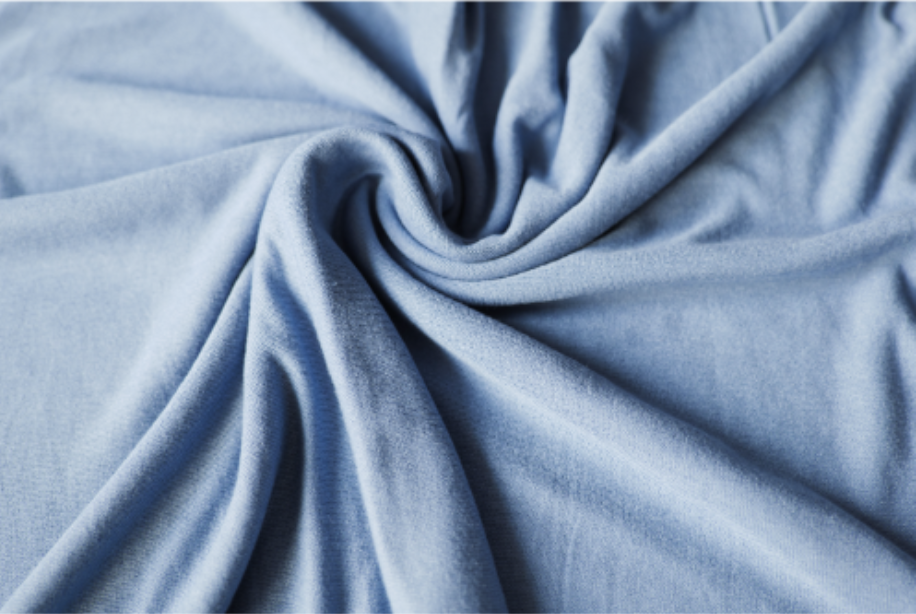
Jersey’s properties make it highly versatile. It is stretchy without requiring added elastane, although blends often include spandex for extra recovery. It is lightweight to medium, breathable, and absorbent, making it comfortable for daily wear. Depending on fiber content and knit density, jersey can be fine and silky, as in silk jersey dresses, or thick and cozy, as in wool or heavy cotton jerseys. However, jersey fabrics can sometimes curl at the edges and may be prone to pilling, especially when made from lower-quality fibers.
The applications of jersey are nearly limitless. It is the dominant fabric in T-shirts, which form the cornerstone of modern wardrobes. In fashion, jersey is also used for dresses, skirts, blouses, leggings, and sportswear, prized for its stretch and drape. In loungewear and underwear, cotton jersey provides breathability and comfort. In performance apparel, synthetic jerseys wick moisture and enhance durability, making them staples in activewear and athleisure. Beyond clothing, jersey is used in bedding, linings, and upholstery, where softness and stretch are beneficial.
Culturally, jersey fabric has been associated with innovation and accessibility. Coco Chanel’s use of jersey in the 1910s marked a turning point in women’s fashion, breaking away from restrictive garments and introducing comfort and fluidity into high style. Since then, jersey has remained central to both high fashion and everyday apparel. Sports uniforms and fashion alike have helped cement its identity as both practical and stylish.
From a sustainability perspective, jersey inherits the qualities of its fibers. Cotton jersey, if produced conventionally, carries the environmental burden of cotton farming, including high water use. Organic cotton jersey reduces these impacts and remains biodegradable. Wool and silk jerseys are natural and renewable, but more expensive. Synthetic jerseys made from polyester or rayon are durable and widely available; however, they raise concerns about microplastic shedding and non-biodegradability. Blended jerseys, while offering performance benefits, complicate the recycling process.
Global production of jersey fabric is widespread, with cotton jerseys being manufactured in major textile hubs such as India, Bangladesh, and China. In contrast, high-quality wool and silk jerseys are associated with Europe and Japan. Its ubiquity across markets makes jersey one of the most accessible textiles.
Jersey remains a cornerstone fabric in modern life, striking a balance between comfort, style, and adaptability. Its soft stretch and versatility ensure it will continue to dominate both casual and high-fashion wardrobes, as well as everyday essentials like T-shirts and bedding.