
Lace is a delicate, ornamental fabric characterized by its openwork design, often featuring floral, geometric, or abstract motifs. Unlike woven or knitted fabrics, lace is created by looping, twisting, or braiding threads to form intricate patterns with open spaces. This decorative textile has long been associated with luxury, femininity, and craftsmanship, adorning clothing, accessories, and interiors for centuries. Its allure lies in both its visual beauty and the artistry of its creation.
The origins of lace are traced back to the late 15th and early 16th centuries in Europe, particularly in Italy and Flanders (modern-day Belgium). Early lace was handmade using linen, silk, or gold threads, and it quickly became a symbol of wealth and nobility. By the 17th century, lace was widely used in collars, cuffs, and ruffs for both men and women, marking social status and refinement. The Industrial Revolution of the 19th century introduced machine-made lace, making it more accessible and less labor-intensive, though handmade lace continues to be prized for its artistry.
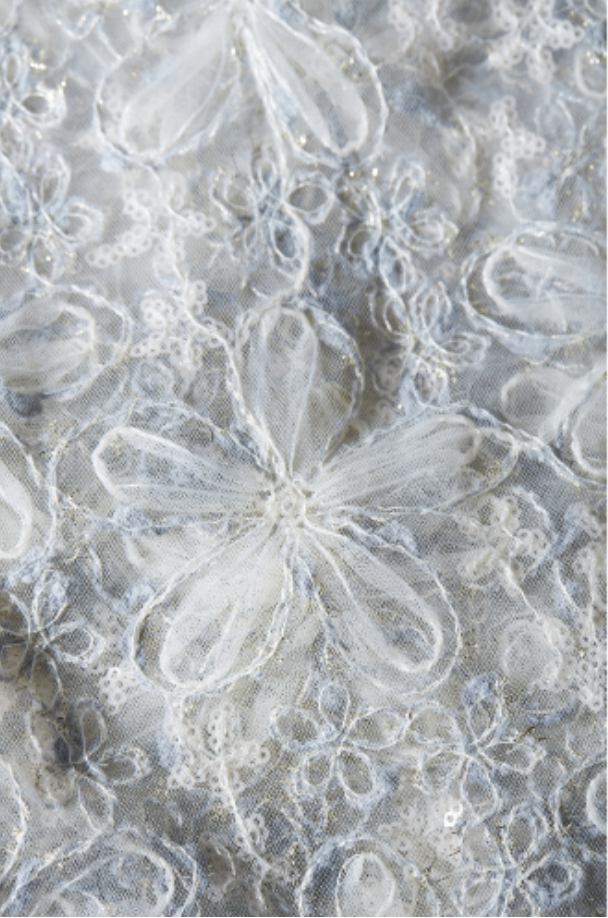
There are two main types of lace: needle lace and bobbin lace. Needle lace is made with a single thread and a needle, creating patterns by looping and stitching. Bobbin lace, on the other hand, involves weaving multiple threads wound on bobbins to form patterns through braiding and twisting. In addition to these, modern machine-made lace includes variations such as Raschel lace (knitted on a warp knitting machine) and Leavers lace (made on intricate looms replicating traditional bobbin techniques). Each method creates a distinct look and texture.
Its delicacy and decorative appeal define the properties of lace. Lace is lightweight, sheer, and flexible, yet not strong enough for structural use on its own. It is often layered over other fabrics or used as a trim to add elegance and detail. Depending on fiber choice, lace may be crisp and stiff or soft and flowing. While traditionally made from linen and silk, lace is now commonly produced from cotton, nylon, polyester, or rayon, expanding its affordability and applications.
Lace has a wide range of applications in fashion and décor. In apparel, it is synonymous with bridal gowns, evening dresses, lingerie, and veils, where its delicacy conveys romance and sophistication. Lace trims are common in blouses, skirts, and accessories. In interiors, lace is used for curtains, tablecloths, and decorative linens, adding an airy elegance to household spaces. Lace motifs also appear in embroidery, appliqué, and even footwear.
Culturally, lace has long been a marker of status and artistry. European monarchs regulated its use through sumptuary laws in the 16th and 17th centuries, reserving it for the elite. Handmade lace remains a celebrated craft in regions such as Bruges (Belgium), Burano (Italy), and parts of Spain, where artisans preserve centuries-old techniques. In fashion, lace has experienced cycles of popularity, from the elaborate lace collars of the Renaissance to the minimalist lace details in contemporary design.
From a sustainability perspective, lace’s impact depends on the fiber content and production methods used. Natural-fiber lace, made from linen, cotton, or silk, is biodegradable and renewable, but it is more expensive. Synthetic lace, typically made from polyester or nylon, is affordable and widely available; however, it is not biodegradable. Machine-made lace reduces labor and cost but can contribute to overproduction in fast fashion. Handmade lace, although time-intensive, is typically produced in small batches and valued for its longevity, aligning with the principles of slow fashion.
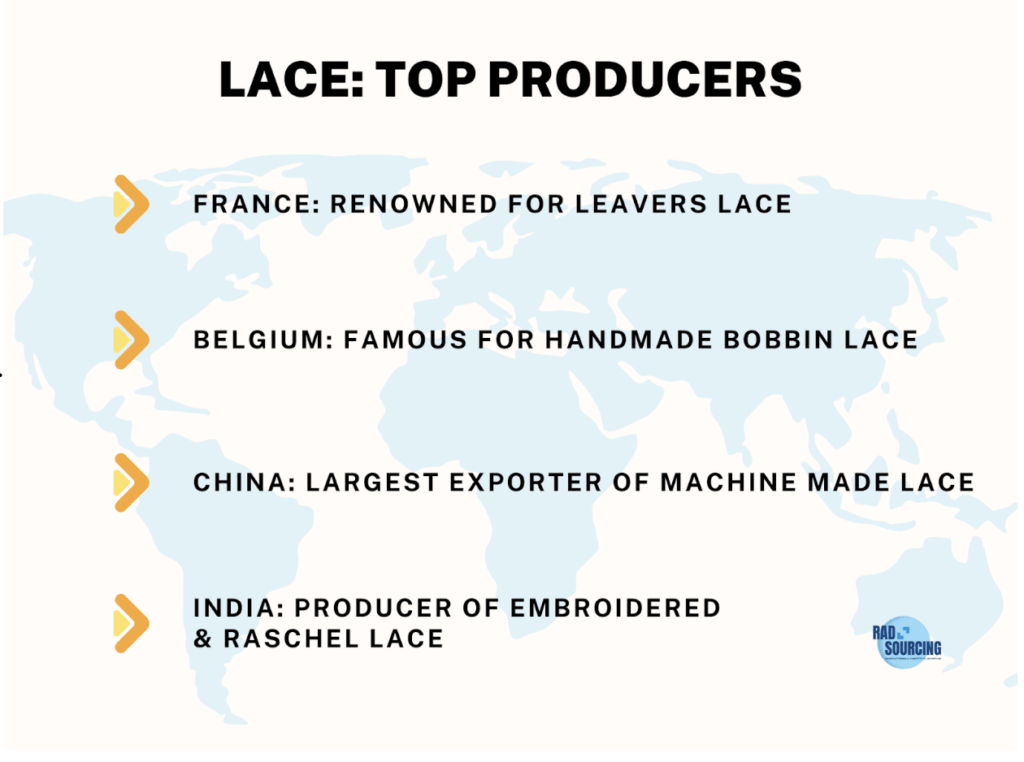
Global production of lace remains diverse. Machine-made lace is manufactured in textile hubs across Asia, particularly in China and India, for the global fashion market. Handmade lace traditions continue in Europe, often supported by tourism and the preservation of heritage crafts. High-quality Leavers lace is still produced in France and the UK, supplying luxury fashion houses.
Lace remains one of the most enchanting and symbolic fabrics, embodying centuries of artistry, tradition, and elegance. Whether handmade or machine-made, it continues to elevate fashion and interiors with its delicate beauty, ensuring its enduring place in the history of textiles.