
Lamé is a distinctive fabric known for its metallic sheen and glamorous appearance, often used in fashion, performance costumes, and evening wear. The word “lamé” comes from the French term for “metal plate” or “foil,” which reflects its defining characteristic: the incorporation of metallic threads into the weave. While metallic fabrics have been used for centuries in ceremonial and luxury garments, dating back to ancient Egypt, Greece, and Byzantium, the modern version of lamé gained prominence in the 20th century, particularly in haute couture, stage costumes, and the disco-era fashion of the 1970s.
Lamé is typically made by weaving or knitting together metallic yarns with other fibers such as silk, nylon, polyester, or spandex. The metallic component may be actual thin strips of metal, but in most contemporary lamé, the metallic threads are made from metalized plastic film (such as aluminum-coated polyester) cut into fine strips. These are combined with base fibers to create a fabric that shimmers under light and moves with a reflective quality.

The lamé structure can vary depending on its intended use. In woven lamé, metallic threads are interlaced with warp and weft to create fabrics ranging from lightweight sheers to heavy brocades. Knit lamé incorporates stretch, often using spandex or elastane, making it suitable for figure-hugging costumes and dancewear. The balance of metallic and non-metallic fibers determines the fabric’s weight, flexibility, and durability.
Lamé’s key properties include its dazzling visual effect, smooth texture, and ability to create bold, dramatic statements. However, lamé can be delicate, prone to snagging, fraying, or tarnishing if made with actual metal fibers. It may also require special care, as excessive washing or abrasion can dull its shine or weaken its structure. Many lamé fabrics are dry-clean-only, especially those with a high metallic content.
From a sustainability perspective, lamé presents challenges. Most modern lamé relies on metalized polyester or nylon, which are synthetic, non-biodegradable materials derived from petrochemicals. The addition of metallic coatings complicates recycling, making lamé difficult to repurpose at the end of its life. While its durability in occasional-use garments, such as costumes and evening wear, can extend the lifespan, lamé is not considered eco-friendly compared to natural or recyclable fabrics. However, some designers are experimenting with recycled polyester bases or more sustainable metallic finishes to reduce environmental impact.
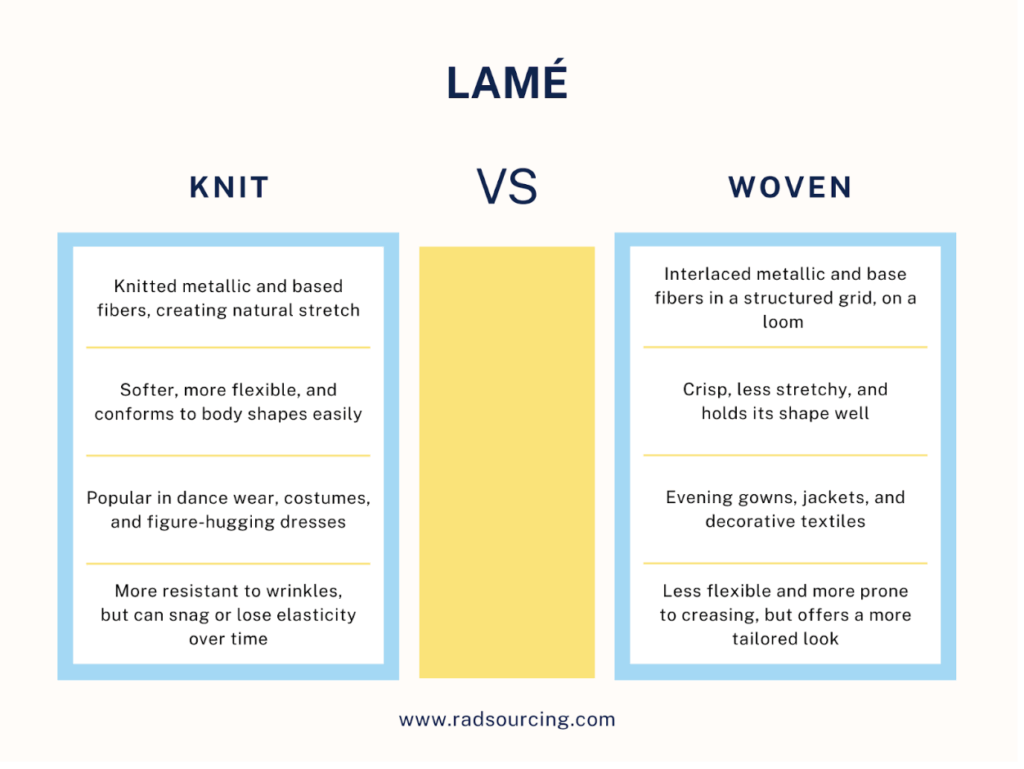
Lamé is widely used in the fashion and entertainment industries. It is a favorite for evening gowns, cocktail dresses, and statement jackets, where its reflective qualities add a touch of glamour. In performance and costume design, lamé is popular for dancewear, stage costumes, and theatrical garments because it catches and reflects stage lighting. Lamé is also used in accessories such as handbags, shoes, and belts, as well as in decorative applications, including upholstery and ceremonial textiles.
Lamé remains a fabric of spectacle and sophistication. Its shimmering presence continues to captivate designers and audiences alike, offering a blend of historical luxury and modern theatrical flair. Though not without sustainability challenges, lamé’s unique visual impact ensures its enduring place in fashion and performance.