Linen is one of the world’s oldest and most cherished natural textiles, celebrated for its strength, breathability, and timeless elegance. Made from the fibers of the flax plant (Linum usitatissimum), linen is valued for its crisp texture, smooth feel, and ability to keep the wearer cool in warm climates. With a history spanning more than 8,000 years, linen has woven its way into the fabric of human civilization. From ancient Egyptian tombs to modern minimalist wardrobes, it symbolizes purity, craftsmanship, and sustainability.
The origins of linen trace back to ancient Mesopotamia and Egypt, where flax cultivation and weaving techniques were already highly advanced by 3000 BCE. Archaeologists have discovered linen in Egyptian burial sites, including the wrappings of mummies, attesting to its durability and cultural significance. In ancient Greece and Rome, linen garments were prized for their coolness and comfort. In medieval Europe, linen was a household essential used for clothing, bed linens, and sails. By the 18th and 19th centuries, linen had become a major European export, with Ireland, Belgium, and France emerging as centers of fine linen production, a legacy that continues to this day.
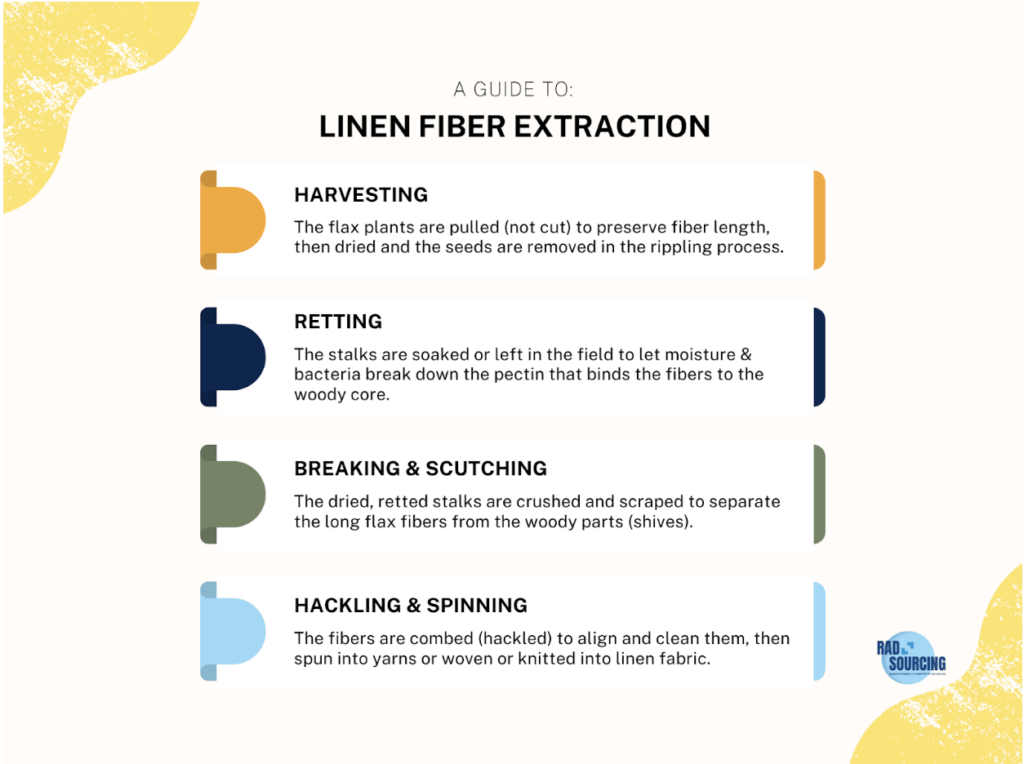
Linen production begins with the flax plant, a slender annual that thrives in cool, temperate climates with well-drained soil. The process starts with harvesting the flax stalks, which are pulled from the ground rather than cut to preserve fiber length. The stalks then undergo retting, a controlled process of decomposition, which loosens the fibers from the woody stem. After retting, the flax is scutched (to remove woody material), hackled (combed), and spun into yarn. The resulting linen fibers are long, smooth, and lustrous, producing a fabric that is naturally breathable, moisture-wicking, and cool to the touch.
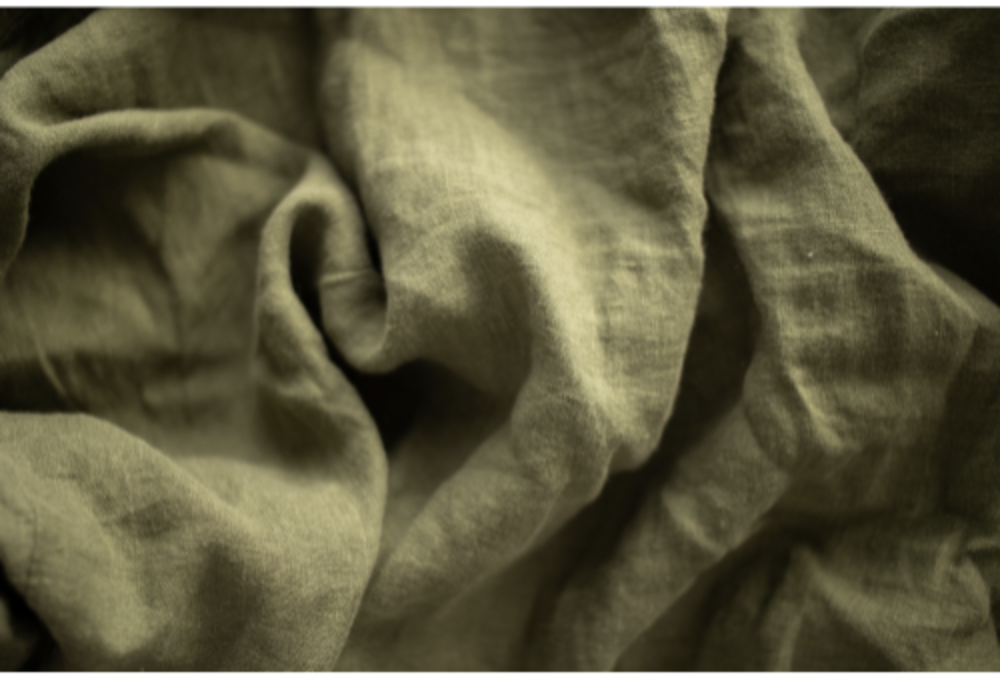
Linen’s properties make it one of the most functional and comfortable textiles available. It is stronger than cotton, highly absorbent, and naturally hypoallergenic. Its hollow fibers allow air to circulate freely, keeping the body cool and dry in hot weather. Linen also becomes softer and more supple with use and washing while retaining its tensile strength. Its characteristic wrinkles are not flaws but part of its relaxed charm, lending a natural, lived-in elegance. Linen’s durability allows it to last for decades, making it a sustainable investment in both fashion and home textiles.
In fashion, linen is used for shirts, dresses, trousers, jackets, and summer suits, appreciated for its effortless drape and refined simplicity. In home décor, it is a staple for tablecloths, bedding, curtains, and upholstery, adding texture and sophistication to interiors. Lightweight linens, such as handkerchief linen, are used in apparel, while heavier weaves serve for upholstery and draperies. Linen can also be blended with cotton, silk, or wool to create fabrics with unique textures and enhanced versatility.
Culturally, linen has long been associated with purity, comfort, and social status. In ancient societies, it was associated with cleanliness and used in religious ceremonies. In Europe, finely woven Irish and Belgian linens became prized heirlooms. During the 20th century, linen transitioned from formal use to a modern, casual staple, embraced for its eco-friendly nature and understated luxury. Today, linen aligns perfectly with contemporary values of slow fashion and natural living, bridging traditional craftsmanship with modern sustainability.
From a sustainability perspective, linen is one of the most eco-friendly textiles available. The flax plant requires minimal water and pesticides, and every part of it can be used: fibers for fabric, seeds for linseed oil, and byproducts for paper or insulation. Linen is biodegradable and recyclable, leaving virtually no waste. European linen production often adheres to strict environmental standards, with certifications such as the Masters of Linen and European Flax ensuring traceability and responsible cultivation practices. The primary environmental concern is retting, which can lead to water pollution if not properly managed; however, modern dew-retting and closed-loop systems minimize this impact.
Globally, the top producers of linen are France, Belgium, the Netherlands, Ireland, and China. Western Europe dominates high-end linen manufacturing, with French and Belgian flax regarded as the finest in the world due to its long, silky fibers. China leads in large-scale linen spinning and weaving, supplying a significant portion of the global apparel market. European mills, however, remain the gold standard for premium linens used by luxury fashion houses and homeware brands.
Linen embodies the perfect balance of heritage, performance, and sustainability. Rooted in ancient tradition yet aligned with modern values, it remains an enduring symbol of natural luxury and mindful living. Whether in a breezy summer dress or a crisp set of bed linens, linen continues to represent craftsmanship, comfort, and ecological harmony, a timeless fabric that grows more beautiful with age.