
Organdy is a sheer, lightweight cotton fabric known for its crisp texture, transparency, and delicate elegance. Often considered the finest of the cottons, organdy has been a popular choice for warm-weather clothing, formal wear, and decorative household textiles for centuries. Its origins are believed to date back to the medieval textile centers of Europe, with the name “organdy” possibly derived from the French town of Organdi; however, its exact etymology remains a matter of debate. By the 19th century, organdy had become a staple for summer dresses, blouses, aprons, and curtains.
The defining characteristics of organdy are its crisp hand and translucency, achieved through a finishing process applied to cotton yarns or fabrics. After weaving in plain weave, the cotton fabric is treated with a finish that imparts the fibers with stiffness and a glossy sheen. Unlike voile or lawn, which are also sheer cotton fabrics, organdy is stiffer and holds its shape, allowing garments to maintain a structured, airy silhouette.
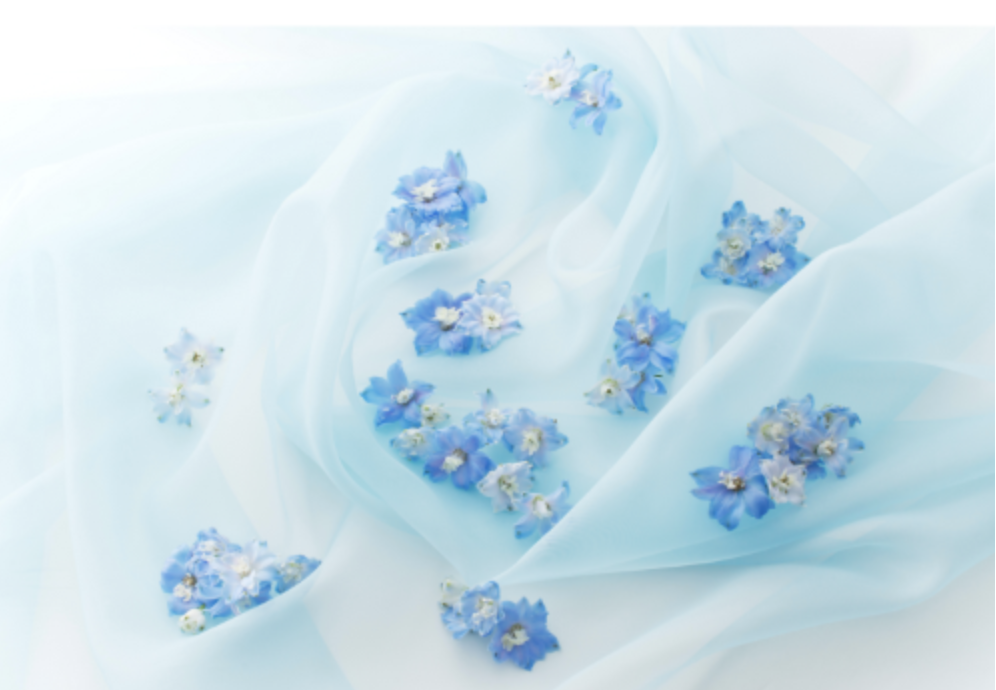
Organdy’s properties make it highly distinctive. It is extremely lightweight and sheer, yet its stiffness gives it body and volume, making it ideal for ruffles, puffed sleeves, and full skirts. The fabric is breathable and cool, making it ideal for warm-weather wear. However, organdy is also delicate: it wrinkles easily, is prone to fraying, and requires careful laundering and ironing to maintain its crispness. Some modern versions are finished with resin treatments to improve wrinkle resistance and durability.
Organdy is produced in various grades and qualities. Swiss organdy, considered the finest, is made from high-quality cotton and has an exceptionally smooth and delicate finish. Less expensive varieties are produced in India, Pakistan, and China, where organdy is widely woven for both apparel and home textiles. Depending on the intended market, organdy may be bleached to a white color, dyed in pastel shades, or embroidered for decorative purposes.
From a sustainability perspective, organdy shares cotton’s qualities. When made from conventional cotton, its production involves high water usage and reliance on pesticides. However, if produced from organic or sustainably sourced cotton, organdy can offer a more environmentally friendly profile. As a natural fiber fabric, organdy is biodegradable, offering an end-of-life advantage over synthetic materials.
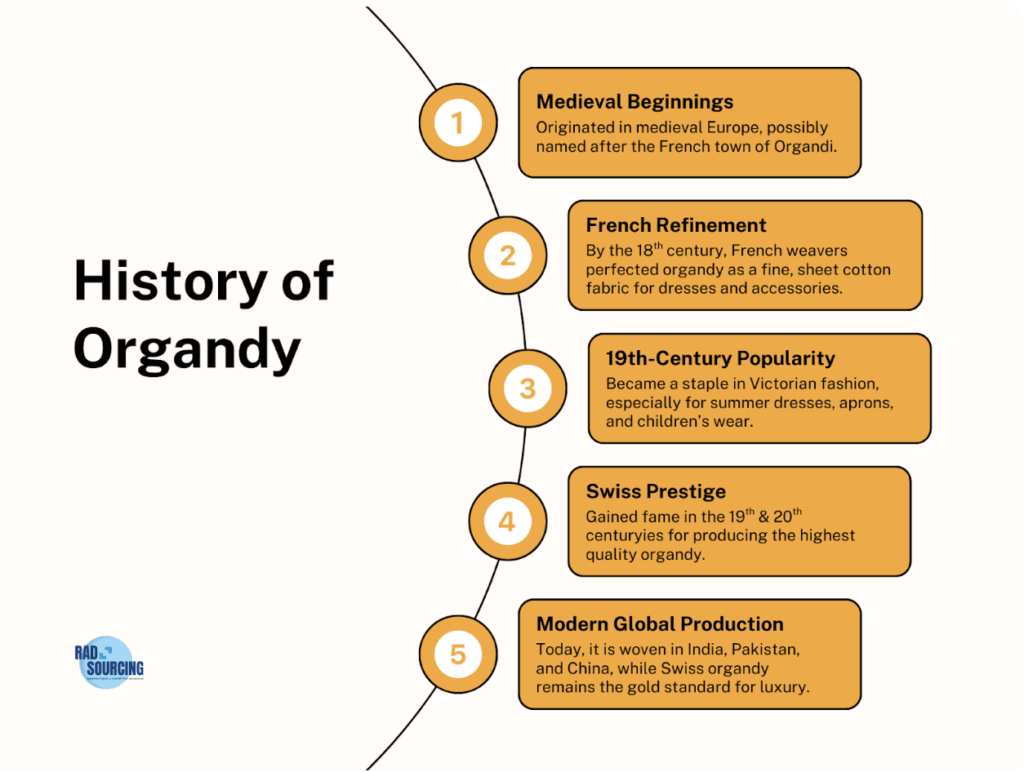
Organdy’s applications span both fashion and interiors. In apparel, it is used for summer dresses, evening gowns, children’s clothing, aprons, and bridal wear, where its sheer crispness adds elegance. It is also a favorite in costume design for its ability to hold shape dramatically. In home décor, organdy is used for sheer curtains, tablecloths, and decorative coverings. Embroidered or printed organdy is especially popular for adding a delicate, ornamental touch.
Organdy represents a unique blend of lightness and structure. Its crisp, transparent elegance has made it a fabric of choice for centuries in both fashion and decoration. While delicate to maintain, its ability to transform simple cotton into something ethereal ensures organdy’s continued presence in wardrobes and homes alike.