
Scuba fabric is a modern, double-knit material known for its smooth texture, structure, and slight sponginess. It is often compared to neoprene, the rubbery material used in wetsuits, but it is lighter, softer, and designed primarily for fashion and performance wear rather than underwater use. With its stretch, body, and resilience, scuba fabric has become a favorite for form-fitting garments, contemporary streetwear, and sports apparel that require both style and support.
The origins of scuba fabric lie in the evolution of synthetic knits during the late 20th century, when textile engineers sought to develop lighter alternatives to neoprene for clothing. While neoprene (made of synthetic rubber) was too thick and heavy for everyday wear, fashion designers admired its structured appearance. Manufacturers began producing a polyester–spandex double-knit that mimicked neoprene’s body-hugging fit and smooth finish, but offered greater flexibility and breathability. This material was eventually dubbed “scuba” due to its visual resemblance to wetsuit material, even though it contains no actual rubber layer.

Scuba fabric is typically made from a blend of polyester and spandex (also known as elastane) and features a double-knit construction. Unlike single-knit jerseys, double-knit jerseys interlock two layers of loops, creating a thicker, more stable textile with minimal edge curling. This gives scuba its dense, springy hand-feel and excellent shape retention. The spandex content provides four-way stretch, allowing the fabric to move comfortably with the body while maintaining its sculpted silhouette.
The properties of scuba fabric make it a unique hybrid between technical and fashion textiles:
- Stretch and Recovery: The addition of spandex gives scuba excellent elasticity and bounce, ideal for fitted designs.
- Structure and Smoothness: The double-knit construction produces a firm body with a sleek surface, lending garments a polished appearance.
- Durability: Scuba resists wrinkles, pilling, and shrinkage, maintaining its smooth look over time.
- Comfort and Warmth: Its dense weave provides slight insulation, while the spandex fibers allow breathable flexibility.
- Water and Stain Resistance: While not waterproof, scuba’s tight knit naturally repels light moisture and stains better than many natural fabrics.
In fashion, scuba is used for dresses, skirts, leggings, jackets, and activewear, where designers want clean lines and sculptural volume. It’s also popular for athleisure and contemporary streetwear, combining comfort with a bold, modern aesthetic. Because it holds its shape so well, scuba is often used for fit-and-flare silhouettes, peplum tops, and architectural designs that require fabric stiffness without added weight. Some versions, like scuba crepe, offer a slightly textured surface and lighter drape, suitable for more fluid garments.
In performance wear, scuba’s flexibility and resilience make it a functional choice for dancewear, yoga apparel, and compression garments, where stretch and support are essential. It’s also used in accessories such as bags and footwear linings, where durability and shape retention are crucial. Its wrinkle resistance and sleek appearance have made it a preferred travel fabric as well.
From a sustainability perspective, scuba fabric is primarily synthetic, derived from petrochemicals, and non-biodegradable. Polyester production is energy-intensive, and washing synthetic fabrics can release microplastics into waterways. However, recent advancements are improving scuba’s environmental profile. Recycled polyester (rPET) is now used by some manufacturers to create eco-friendly scuba fabrics, reducing dependency on virgin petroleum resources. Circular production initiatives are also exploring how blended fabrics, such as polyester–spandex knits, can be recycled more effectively.
Care and maintenance for scuba fabric are relatively simple: it can be machine-washed in cool water and air-dried without losing structure. Ironing is usually unnecessary, as the fabric naturally resists wrinkles. Because it dries quickly and resists fading, scuba is considered a low-maintenance and long-lasting textile, contributing to its growing popularity in both fast and slow fashion contexts.
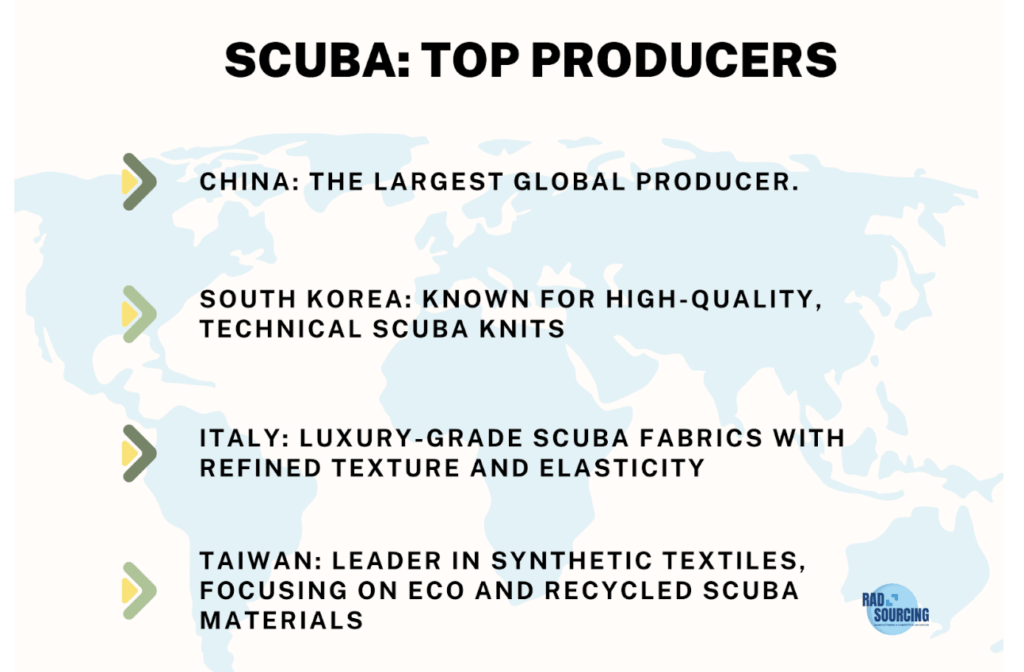
The global production of scuba fabric is concentrated in China, South Korea, and Taiwan, which leads the development of high-performance synthetics. Italy and Japan produce luxury-grade scuba for designer and couture use, emphasizing superior stretch recovery and texture refinement. The versatility of this fabric has led to its widespread adoption by brands that blend athletic performance with modern aesthetics, such as Nike, Adidas, and Alexander Wang.
Scuba fabric represents the fusion of technology, comfort, and modern design. Its combination of stretch, structure, and polish enables designers to create garments that are both functional and striking. While challenges remain in making it more sustainable, innovations in recycled synthetics and closed-loop production are paving the way for a more responsible future. In today’s world, where boundaries between fashion and performance wear are increasingly blurred, scuba stands out as a fabric that perfectly embodies the spirit of contemporary versatility.