
Shantung is a textured silk fabric known for its slightly irregular surface, crisp hand, and lustrous appearance. Its name comes from Shandong Province, China, where it was first produced centuries ago. Traditionally woven from raw silk, shantung is characterized by slubs (uneven, thick areas in the yarn) that give the fabric a natural, nubby texture. While these irregularities were once considered imperfections, they have come to define the fabric’s charm and elegance. Today, Shantung remains a popular choice for formal wear, bridal gowns, and home décor, while modern versions are also produced from polyester and other fibers.
The defining feature of Shantung is its slubbed texture. These slubs occur when silk filaments are uneven in thickness, creating variations in the weave. The fabric is typically woven in a plain weave, producing a crisp, lightweight fabric that combines smoothness with subtle irregularity. The face of shantung has a lustrous sheen, similar to dupioni silk, but the slubs are finer and less pronounced, giving it a more refined appearance.
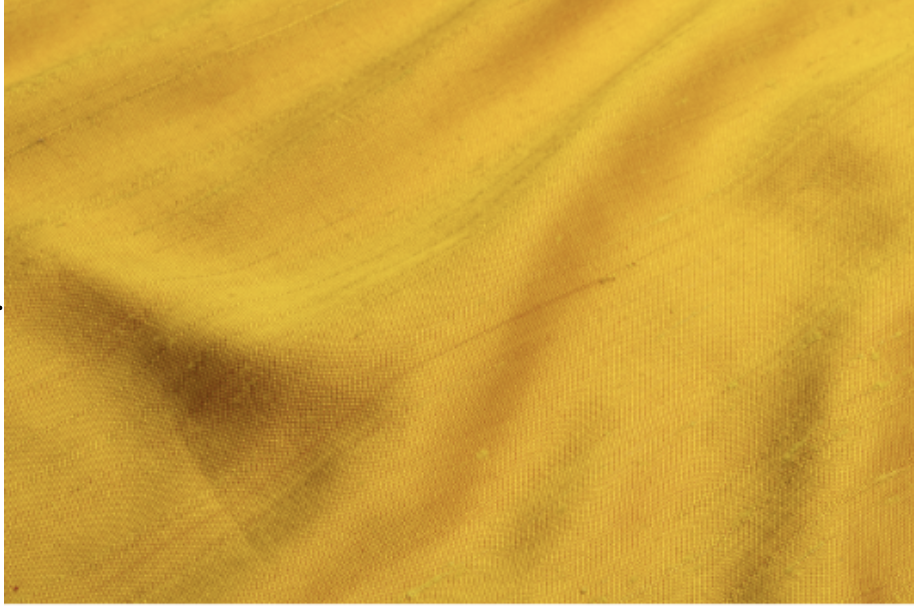
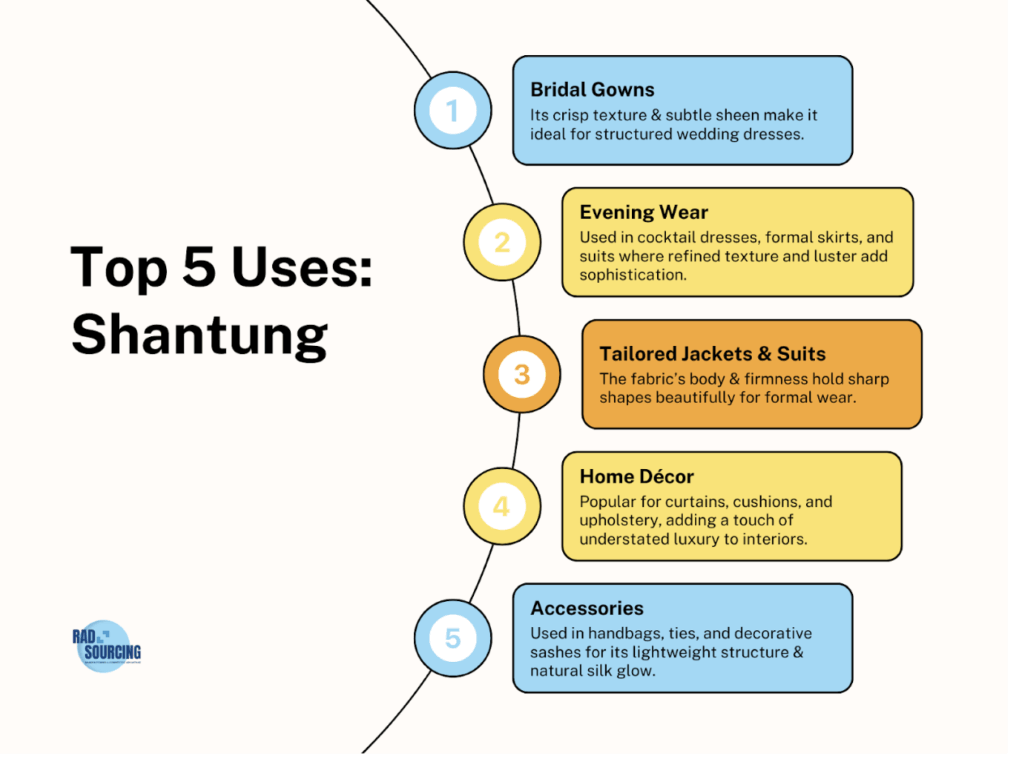
Shantung’s properties make it particularly suited to elegant garments. It is crisp and holds its shape well, making it ideal for structured silhouettes such as evening gowns, cocktail dresses, and tailored jackets. At the same time, it is lightweight and breathable, making it comfortable to wear in warm weather. Its sheen and texture add depth and sophistication, catching the light beautifully. However, shantung wrinkles easily, requires delicate care, and is not as soft or drapey as some other silks, such as charmeuse.
In fashion, shantung is most closely associated with bridal, evening, and special-occasion wear. Its crispness allows designers to create voluminous skirts, tailored bodices, and elegant drapery. In interiors, shantung is used for curtains, cushions, and upholstery, where its subtle texture and sheen add a touch of refinement. Polyester shantung is a popular alternative for these applications, offering greater durability and easier care while retaining much of silk’s look.
Historically, shantung silk was valued in China and eventually exported to Europe, where it became part of luxury dress and décor. In the 20th century, Shantung gained popularity in Western fashion, especially in mid-century couture and bridal design. Today, while synthetic versions have broadened accessibility, silk shantung remains prized in luxury markets.
From a sustainability perspective, Shantung’s profile is largely defined by its fiber. Silk shantung is renewable and biodegradable, though silk production involves intensive labor and raises ethical concerns regarding sericulture. Polyester shantung, on the other hand, is more affordable and durable, but it is derived from petrochemicals and is non-biodegradable. Some modern producers blend silk with synthetics to balance cost, durability, and appearance, though this complicates recycling.
Global production of shantung continues in China and India, where silk weaving remains a cultural and economic tradition. Italy and other European countries also produce high-quality silk shantung for luxury fashion houses. Polyester and blended shantungs are manufactured widely in textile hubs across Asia.
Shantung embodies the balance of elegance and authenticity. Its crisp texture, subtle sheen, and natural slubs set it apart from smoother silks, offering a refined yet grounded fabric. Whether in a wedding dress or drapery panel, shantung continues to symbolize understated luxury and timeless sophistication.