
Silk is one of the most luxurious and historically significant textile fibers in the world, valued for its luster, softness, and strength for thousands of years. Its origins trace back to ancient China around 2700 BCE, when legend credits Empress Leizu with discovering silk after a cocoon fell into her tea and unraveled. For centuries, China closely guarded the secrets of silk production, creating a booming trade along the Silk Road that linked Asia with Europe and the Middle East. This history made silk not only a textile but also a symbol of wealth, status, and cultural exchange.
Silk is produced by the larvae of the Bombyx mori silkworm, which spin cocoons made of a continuous filament that can stretch up to a mile in length. To harvest silk, the cocoons are carefully boiled or steamed to soften the sericin (a natural gum) and then unwound into long filaments. These filaments are twisted into threads, which can be woven or knitted into fabrics ranging from delicate chiffon to heavy brocade. While mulberry silk from the Bombyx mori silkworm is the most common, other types include tussah (wild silk), eri silk, and muga silk, each with distinct textures and natural colors.
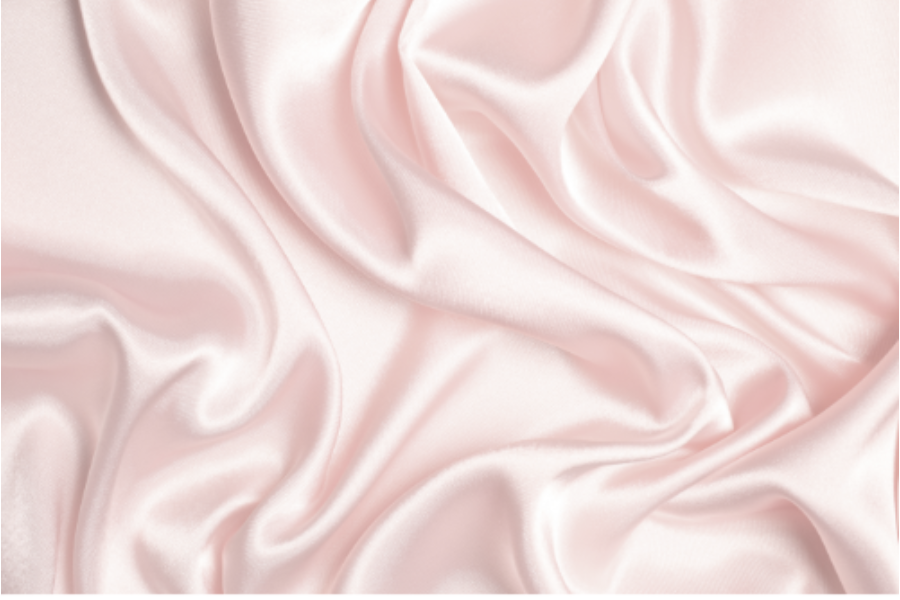
Silk’s properties make it unique among natural fibers. It is incredibly soft and smooth, with a natural sheen created by the triangular prism-like structure of the silk filament that refracts light. Despite its delicate feel, silk is remarkably strong, but it loses strength when wet. Silk is breathable, hypoallergenic, and naturally regulates temperature, keeping wearers cool in summer and warm in winter. These characteristics have made it a favorite for luxury apparel, lingerie, ties, scarves, and bedding.
Silk fabrics vary widely in texture and use. Organza and chiffon are lightweight and sheer, ideal for evening gowns and veils. Charmeuse is a glossy, fluid fabric often used for dresses and lingerie. Dupioni silk has a crisp texture with irregular slubs, making it well-suited for formal wear. Heavy silks, such as brocade and jacquard, feature elaborate woven patterns and are often used for upholstery or ceremonial clothing. This versatility ensures silk’s presence in both everyday elegance and high couture.
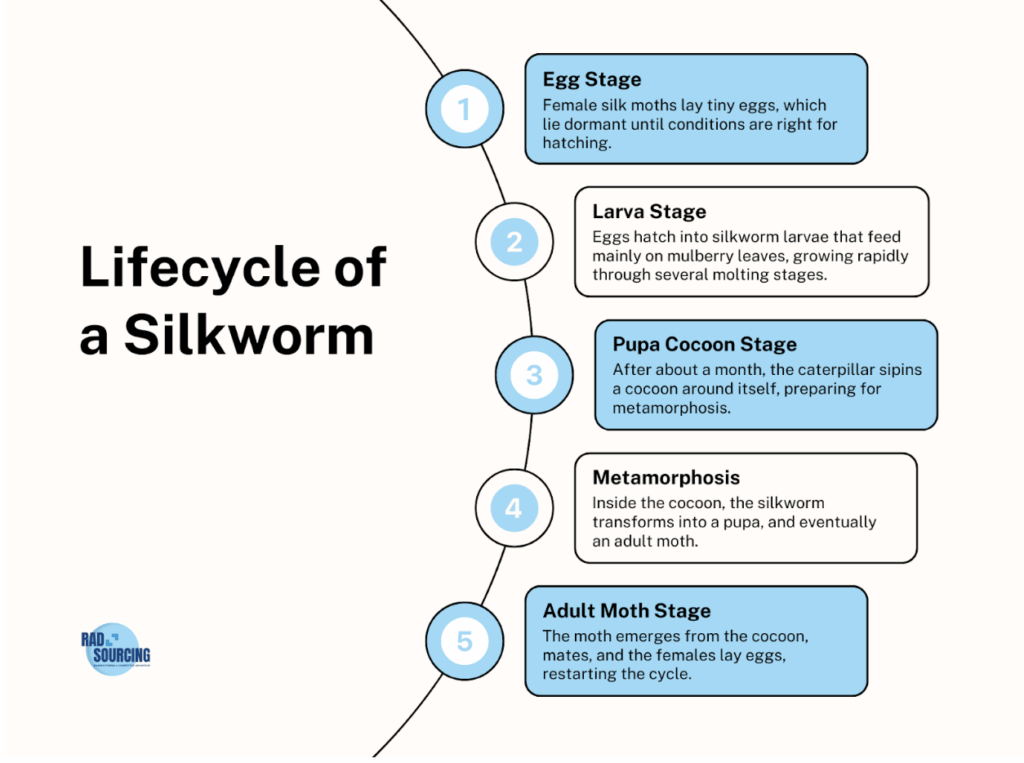
From a sustainability perspective, silk presents a mixed profile. On the positive side, silk is a renewable, biodegradable fiber that requires minimal chemical treatment during processing compared to many synthetic fibers. Its durability also means that silk garments can last for decades when properly cared for. However, traditional silk production involves boiling cocoons containing live pupae, raising ethical concerns about animal welfare. Alternatives, such as peace silk (Ahimsa silk), allow moths to emerge naturally before the cocoons are processed, though this results in shorter, less uniform fibers. Additionally, large-scale sericulture requires the cultivation of mulberry trees, which can consume significant amounts of water and land resources.
Modern silk production is concentrated in Asia, with China and India as the largest producers. Smaller but notable producers include Thailand, Uzbekistan, and Brazil. While much silk remains tied to traditional handweaving industries, modern mills produce silk for both luxury and mass-market applications.
Silk’s cultural impact is as profound as its material qualities. It has been a symbol of status, wealth, and artistry across civilizations. The Silk Road not only facilitated trade but also cultural exchange, spreading ideas, religions, and technologies alongside textiles. Today, silk remains associated with connotations of elegance, luxury, and timeless style.
Silk remains a fabric of legend and luxury, embodying both nature’s ingenuity and human craftsmanship. Its unparalleled combination of strength, softness, and luster ensures that it continues to hold a special place in fashion, culture, and global trade, even as the industry works toward more ethical and sustainable practices.