
Soy fabric, often referred to as “vegetable cashmere,” is a sustainable textile made from the byproducts of soybean processing. It was first developed in the early 20th century when Henry Ford experimented with soy-based fibers for car upholstery. However, it wasn’t until the late 1990s and early 2000s that modern techniques enabled the commercial-scale production of soy fabric for fashion and textiles. Today, soy fabric is valued for its softness, eco-friendly sourcing, and biodegradable nature, making it part of the growing movement toward plant-based fibers.
The production of soy fabric begins with the residue left after soybeans are processed for food products, such as tofu, soy milk, or soybean oil. This protein-rich byproduct, known as soy protein, is liquefied and then extruded through spinnerets to form filaments. These fibers are then stabilized, spun into yarn, and woven or knitted into fabric. Because the material comes from a food industry byproduct, soy fabric is considered a resource-efficient choice, as it utilizes waste that would otherwise be discarded.
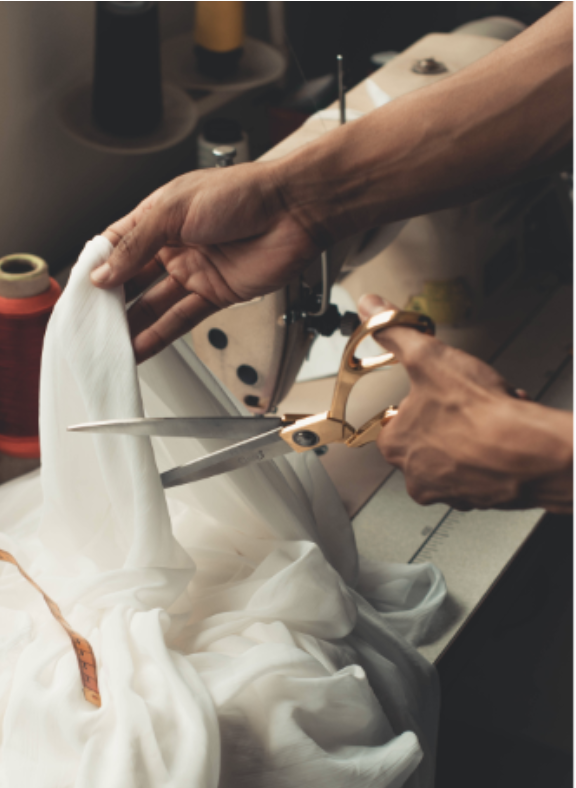
Soy fabric is often praised for its unique properties. It is extremely soft, with a feel often compared to that of cashmere or silk, earning it the nickname “vegetable cashmere.” It is lightweight, breathable, and highly absorbent, making it comfortable to wear in warm weather while also retaining warmth in cooler conditions. Soy fabric also has a natural sheen, drapes well, and resists wrinkles. Additionally, it is biodegradable and compostable, breaking down without leaving any harmful residues.
In terms of performance, soy fabric blends well with other fibers, such as cotton or spandex, enhancing its durability and stretch. While soy fiber alone is relatively delicate, these blends make it more versatile for apparel and activewear. Soy fabric also readily accepts dyes, producing vibrant, long-lasting colors.
Soy fabric has a wide range of applications. In fashion, it is used for T-shirts, underwear, dresses, and loungewear, where softness and comfort are priorities. In home textiles, soy fabric is found in bedding, sheets, and upholstery. It is also used in eco-friendly blends for sportswear and outerwear, where it contributes to softness and sustainability.
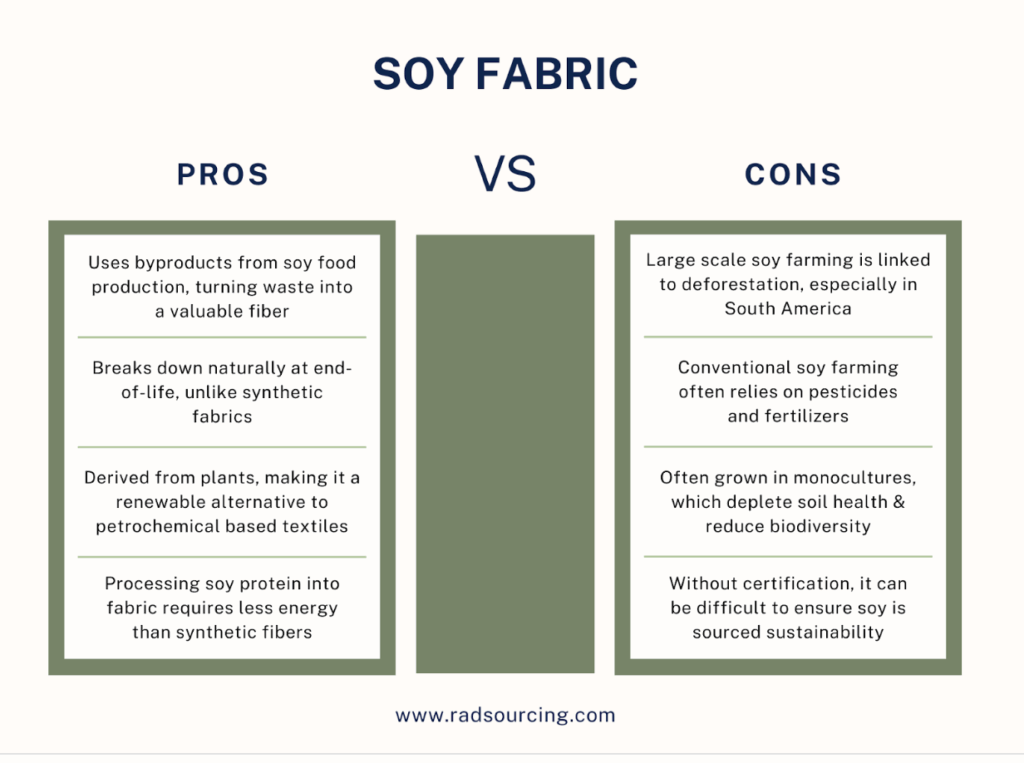
From a sustainability perspective, soy fabric offers several advantages. It is derived from a renewable resource and utilizes a byproduct of the soy food industry, thereby reducing waste. It is biodegradable, giving it an end-of-life advantage over synthetic textiles like polyester or nylon. However, soy fabric does inherit some of the broader controversies surrounding soy agriculture. Large-scale soybean farming is associated with deforestation, pesticide use, and monoculture, particularly in South America. As a result, the environmental impact of soy fabric depends heavily on sourcing and whether the soy is grown sustainably and responsibly. Certifications such as organic soy can help ensure lower-impact production.
Soy fabric is produced in several regions worldwide, with China being the most prominent manufacturer due to its extensive soy production and textile infrastructure. Other countries with strong soy industries, such as the United States and Brazil, have also explored soy fabric applications, though not at the same commercial scale.
Soy fabric reflects the innovation of turning agricultural byproducts into luxurious, eco-conscious textiles. With its soft touch, renewable sourcing, and biodegradability, it offers a compelling option for sustainable fashion, provided that its raw materials are grown and managed responsibly.