
Suede is a type of leather distinguished by its soft, velvety texture and matte finish. Known for its supple hand and luxurious appearance, suede is made from the underside of animal hides, typically those of lamb, calf, goat, or deer. Unlike full-grain leather, which utilizes the outer skin surface, suede is derived from the inner split of the hide, resulting in a finer, more delicate nap. Coveted in both fashion and interior design, suede strikes a balance between elegance and tactility, an enduring symbol of understated sophistication.
The origins of suede can be traced to 19th-century Sweden, where craftsmen developed fine leather gloves known as “gants de Suède”, literally, “gloves from Sweden.” The material’s softness and pliability quickly caught the attention of European fashion houses, and suede soon became synonymous with luxury accessories. By the early 20th century, French designers popularized suede for handbags, shoes, and garments, while American and British industries adopted it for jackets, upholstery, and footwear.

The process of making suede begins with splitting the animal hide. Whole hides are divided into layers: the top grain (used for smooth leather) and the lower layer, which becomes suede. This inner surface is then buffed or sanded to raise the nap, a fine layer of short, fuzzy fibers that give suede its distinctive texture. The material is then dyed and finished, often treated with oils or waterproof coatings to improve durability. The result is a lightweight, flexible leather with a soft, tactile surface that contrasts with the glossy appearance of traditional leather.
Suede’s properties make it prized for both comfort and aesthetics. It is soft, pliable, and warm, with a natural ability to conform to shape. Its porous texture allows it to breathe, making suede comfortable to wear, while its nap gives it depth and rich color. However, suede is more delicate than smooth leather; it absorbs water easily, can stain or scuff, and requires careful maintenance. Protective sprays and gentle brushing help preserve the appearance and longevity of the product. Despite its fragility, high-quality suede can last for years when properly cared for.
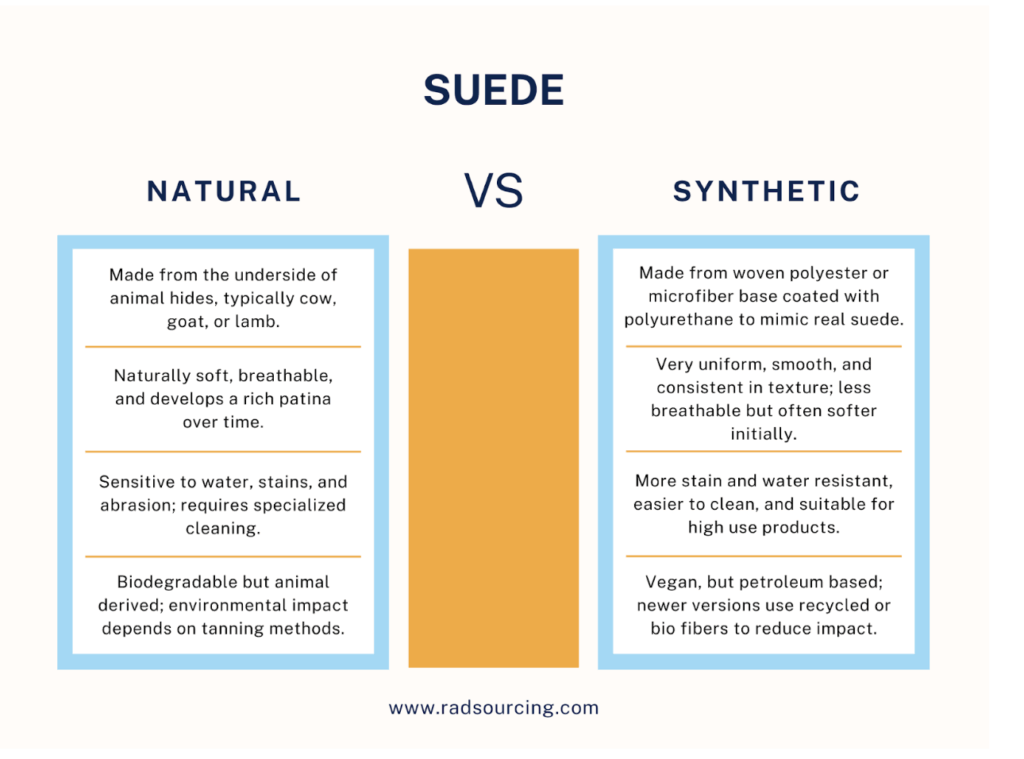
In fashion, suede is a staple in both luxury and casual wear. It is commonly used in shoes, boots, jackets, skirts, handbags, belts, and gloves, where its soft texture adds elegance and depth. Iconic pieces, such as the suede jacket or desert boot, have become cultural symbols of style and rebellion. Suede also appears in home décor, particularly in furniture upholstery, cushions, and wall panels, lending warmth and texture to interiors. Variants such as nubuck (made from the outer hide and featuring a finer nap) offer similar softness with greater durability, further expanding suede’s versatility.
Culturally, suede has maintained a strong presence in both design and music history. From the Western-style jackets of the 1950s to the mod and bohemian looks of the 1960s and 1970s, suede has often represented creative expression and individuality. The Beatles, Elvis Presley, and later style icons helped immortalize suede garments, from the “blue suede shoes” of rock ’n’ roll to modern luxury collections. Its natural softness and retro charm continue to make suede a favorite among designers seeking texture and timeless appeal.
From a sustainability standpoint, suede raises complex issues. Traditional suede is an animal-derived material, meaning it depends on livestock industries that contribute to greenhouse gas emissions, water use, and land degradation. However, suede is a byproduct of the meat industry, not a standalone source of animal exploitation, which somewhat mitigates its environmental impact. To address growing ethical concerns, many brands now use eco-certified leathers or plant-based tanning processes that reduce chemical pollution. Additionally, synthetic and vegan suedes made from microfiber, recycled polyester, or plant-based materials such as mushrooms and cacti offer cruelty-free, low-impact alternatives with similar softness and appearance.
Major suede production centers include Italy, Spain, India, and China, where traditional tanning and finishing techniques have been refined for both high-end and mass-market applications. Italian tanneries are particularly renowned for their premium suedes, which are used by luxury houses such as Gucci, Prada, and Tod’s. Meanwhile, Japan and Northern Europe are exploring innovative vegan suedes that integrate sustainability and performance into next-generation materials.
Suede remains one of the most evocative materials in the world of textiles, a fabric that feels as good as it looks. Its velvety softness, depth of color, and tactile warmth continue to captivate designers and consumers alike. Though delicate, suede embodies a balance between refinement and rebellion, tradition and innovation. As sustainable and vegan alternatives evolve, suede’s timeless appeal endures, proof that texture, craftsmanship, and emotion are at the heart of enduring design.