
Tweed is a rugged, woolen fabric known for its warmth, durability, and distinctive textured appearance. Traditionally associated with the British Isles, tweed has long been linked to outdoor pursuits such as hunting, riding, and fishing, as well as to heritage fashion. The name “tweed” is thought to have originated in the 19th century, possibly from a misreading of the Scottish word tweel (meaning “twill”) or from its association with the River Tweed in Scotland, where the fabric was widely produced.
Tweed is typically woven in a twill weave, creating diagonal ridges; however, plain weaves and herringbone patterns are also common. It is made from coarse, carded wool yarns that retain their natural oils, giving tweed water resistance and warmth. The fabric is often woven from multicolored yarns, creating its characteristic heathered, speckled look. Common patterns include houndstooth, windowpane, check, and herringbone, each associated with specific regional or cultural traditions.
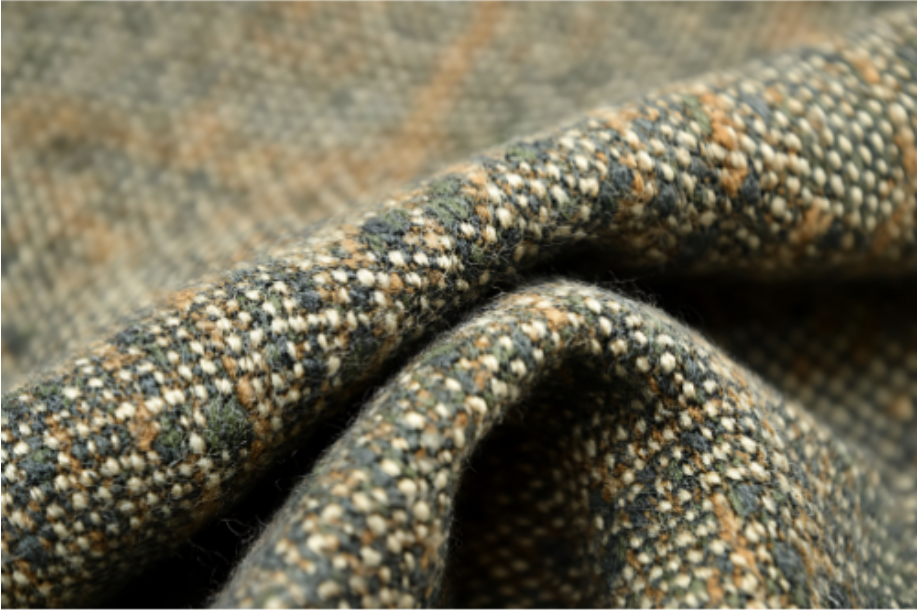
The properties of tweed make it especially suited for outerwear and country clothing. It is thick, insulating, and wind-resistant, providing warmth in cool and damp climates. The rough texture and coarse finish give it durability and a rustic charm, though modern finishing techniques have also produced softer versions. Tweed can be stiff when new, but tends to mold to the wearer over time, gaining comfort and character.
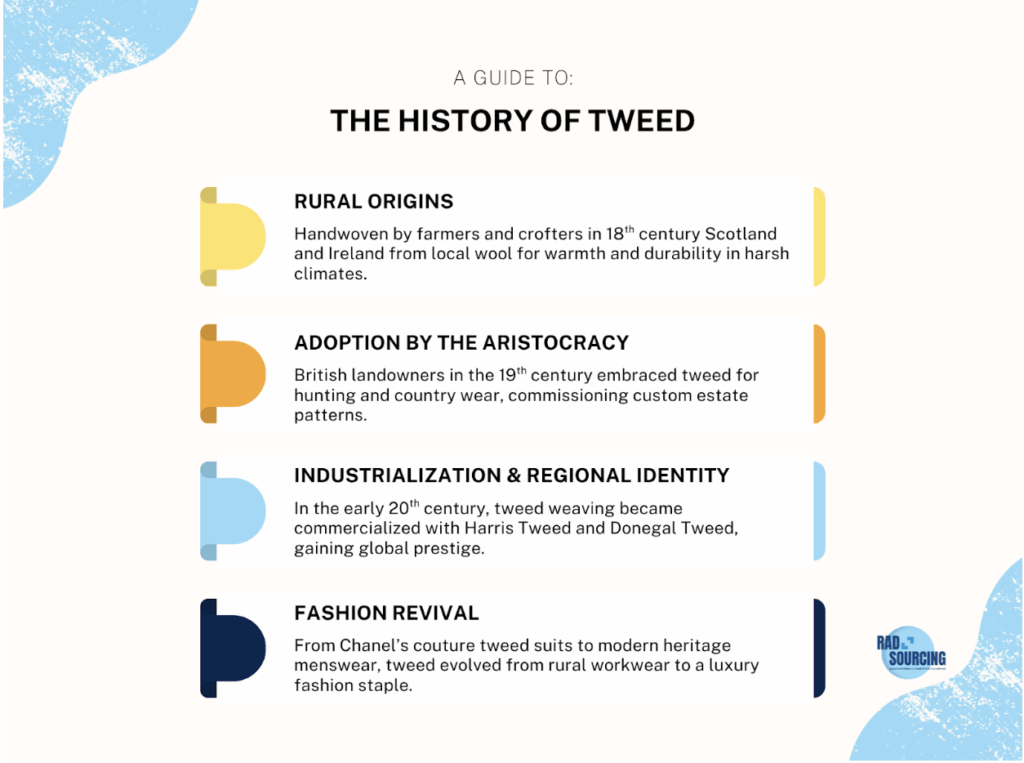
Historically, tweed emerged as a handwoven fabric in Scotland and Ireland, made from locally sourced wool. By the 19th century, tweed had become associated with the British aristocracy and landed gentry, who adopted tweed suits and jackets for outdoor sporting activities. The Harris Tweed industry in the Outer Hebrides of Scotland gained particular fame, and to this day, Harris Tweed is protected by law with its own certification mark, guaranteeing authenticity. Tweed also gained popularity in urban fashion, adopted by intellectuals and later reinterpreted by luxury fashion houses such as Chanel, which introduced boucle-style tweed jackets in the 20th century.
Modern applications of tweed span both fashion and interiors. In apparel, it remains a classic choice for jackets, coats, and suits, conveying tradition and refinement. Tweed skirts, dresses, and accessories such as caps and bags bring the fabric into contemporary wardrobes. In interiors, tweed is used for upholstery, cushions, and throws, prized for its durability and natural aesthetic. The fabric’s rustic roots and luxury associations make it adaptable across markets, from countryside gear to runway collections.
From a sustainability perspective, tweed fares well compared to many modern textiles. As a wool-based fabric, it is renewable, biodegradable, and long-lasting. The durability of tweed garments means they often last decades, reducing the need for replacements. However, large-scale sheep farming raises concerns about land use, methane emissions, and animal welfare. Traditional handwoven tweeds, such as Harris Tweed, are relatively sustainable due to small-batch, artisanal production. Synthetic tweed imitations made from polyester or blends are less sustainable due to their petrochemical origins and lack of biodegradability.
Today, tweed continues to be produced in Scotland, Ireland, and the UK, as well as in textile hubs worldwide. Harris Tweed remains the most famous variety, woven by hand on looms in the Outer Hebrides, while Donegal tweed from Ireland is known for its colorful flecks. High-end fashion brands also produce luxury tweeds, often incorporating silk, cotton, or synthetic fibers for modern reinterpretations.
Tweed represents the marriage of practicality and style. From its roots in the damp moors of Scotland to its place on international fashion runways, it has remained a fabric of distinction, rugged enough for the outdoors yet refined enough for heritage fashion. Its ability to evolve with time ensures its enduring presence in both tradition and modern design.