
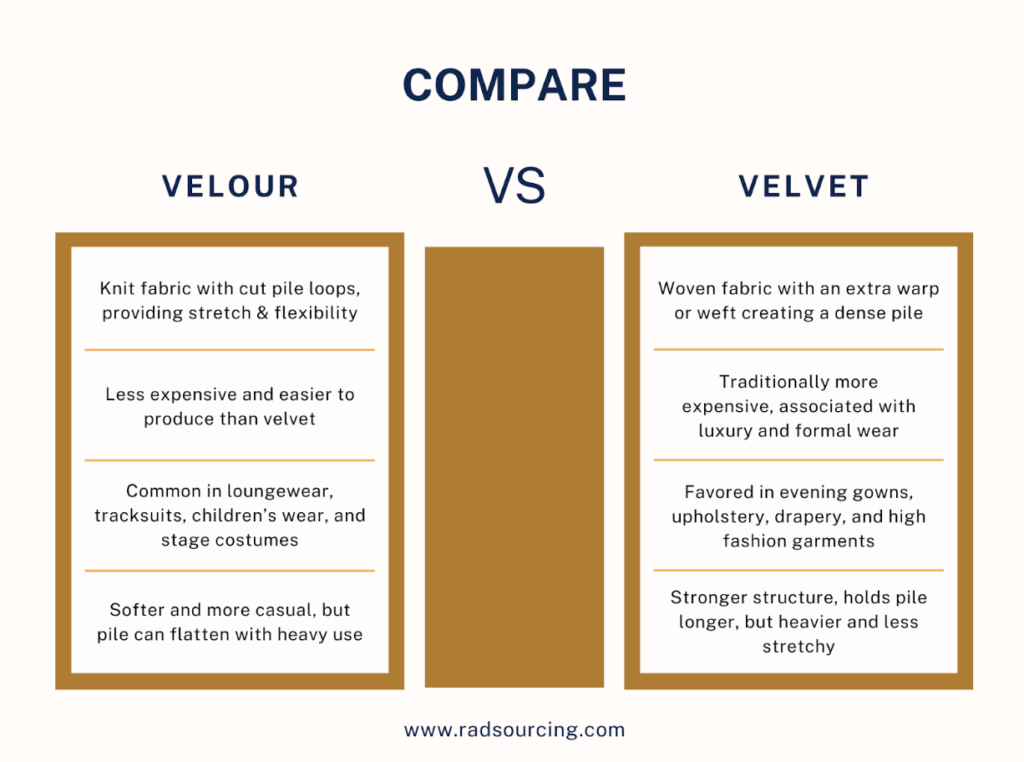
Velour is a plush, knitted fabric known for its soft texture, stretch, and luxurious appearance. Its name comes from the French word for “velvet,” and it is often compared to velvet due to its pile surface and sheen. However, while velvet is traditionally woven, velour is knitted, which gives it more flexibility and makes it easier to produce at a lower cost. Velour first rose to prominence in the mid-20th century as an accessible alternative to velvet in fashion, upholstery, and performance costumes. It became especially iconic in the 1970s and early 2000s through its use in tracksuits and loungewear.
Velour is created through a pile-knit construction, in which loops of yarn are knitted into a base fabric and then cut to form a dense, plush surface. This gives velour its soft, velvety hand-feel and subtle sheen. The fabric is most commonly made from cotton, polyester, or blends that may include spandex for added stretch. Cotton velour tends to be more breathable and is often used in apparel, while polyester velour offers enhanced durability, wrinkle resistance, and color retention, making it popular for upholstery and costumes.
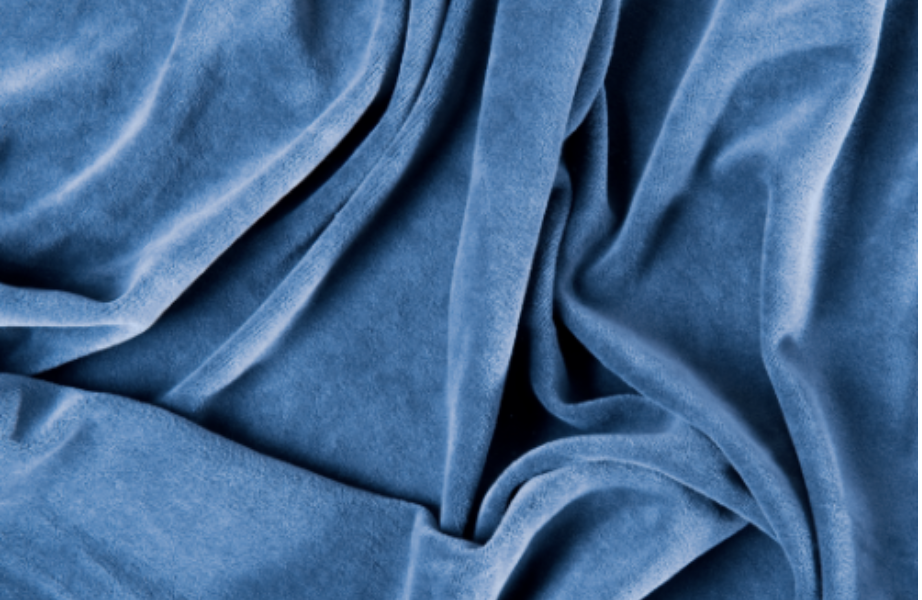
The key properties of velour include its softness, stretch, and drape. It is comfortable to wear, conforms to the body’s movements, and offers cozy warmth, making it suitable for both casual and leisure wear. Velour’s sheen adds a touch of luxury, while its knit structure provides elasticity not found in woven velvet. However, velour is less durable than velvet and can be prone to crushing or flattening of its pile over time.
Velour has a wide range of applications. In fashion, it is used in loungewear, tracksuits, dresses, and children’s clothing, offering both comfort and style. In performance, velour is favored for stage costumes, dancewear, and theater curtains due to its vibrant colors and dramatic look under stage lighting. In interiors, velour is used for upholstery, cushions, and drapery, bringing softness and richness to home décor. The fabric’s versatility ensures its continued popularity across different industries.
From a sustainability perspective, velour’s impact depends on its fiber content. Cotton velour is renewable and biodegradable, but it still requires high water use and pesticides, as with conventional cotton. Polyester velour is derived from petrochemicals and is non-biodegradable, though it is durable and increasingly available in recycled forms. Blended velours can be more challenging to recycle at the end of life due to their mixed fiber composition. As with other fabrics, responsible sourcing and the use of recycled fibers can help mitigate environmental impacts.
Velour production is widespread, with major manufacturers in China, India, and Turkey, as well as in Europe and North America for higher-end textiles. Advances in knitting technology have made velour accessible across a wide range of prices, from affordable mass-market apparel to luxury interior furnishings.
Velour embodies comfort and glamour, offering a fabric that combines the softness of velvet with the flexibility of knit construction. From casual tracksuits to theater curtains, velour continues to strike a balance between everyday coziness and expressive luxury.