
Velvet is one of the most luxurious and visually striking fabrics in the world, known for its rich texture, deep sheen, and soft hand. Characterized by its short, dense pile that reflects light beautifully, velvet has long been associated with nobility, opulence, and refinement. Whether woven from silk, cotton, or synthetic fibers, velvet remains a symbol of elegance, combining aesthetic richness with tactile indulgence.
The origins of velvet date back to ancient Egypt and China, but it was during the Middle Ages that the art of velvet weaving flourished in the Middle East and Europe. The fabric likely spread through trade routes connecting Asia to Italy, where cities like Venice, Florence, and Genoa became renowned centers of velvet production by the 14th century. Woven primarily from silk at the time, velvet was a labor-intensive and costly textile to produce, making it a luxury reserved for royalty, the clergy, and the aristocracy. By the Renaissance period, velvet had become a marker of social status across Europe, adorning clothing, furnishings, and ceremonial garments.
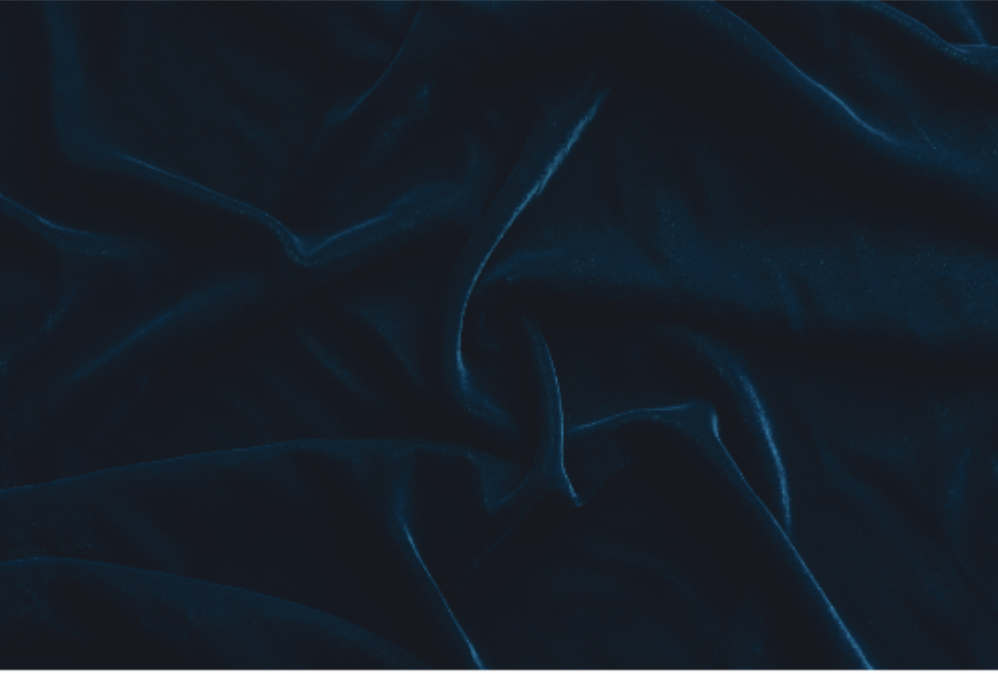
Velvet is unique among fabrics because of its pile weave structure. Unlike flat weaves such as plain or twill, velvet is woven on a special double cloth loom that produces two layers of fabric simultaneously. A series of warp threads runs between them, which are then cut to create a short, upright pile of evenly distributed fibers. This dense pile gives velvet its signature soft texture and luminous appearance. The pile height and fiber type influence the final look; short piles create a subtle luster, while longer piles produce a plush, dramatic sheen.
The properties of velvet make it both visually captivating and sensually appealing. It is soft, warm, and drapes beautifully, with a surface that catches light in different directions, creating depth and movement. Silk velvet is the most luxurious variety, offering unparalleled sheen and fluidity. Cotton velvet, introduced in the 19th century, is heavier and more structured, ideal for upholstery and tailored garments. Synthetic velvets, such as those made from polyester or nylon blends, offer affordability, durability, and easier care while mimicking the appearance of silk velvet.
Velvet is widely used in fashion, home décor, and performance costumes. In apparel, it appears in evening gowns, jackets, skirts, and accessories, lending a rich, tactile quality. In interiors, velvet is a favorite for sofas, curtains, and cushions, where its texture adds warmth and elegance. Designers also use crushed and stretched velvet to bring modern versatility to a traditionally conservative textile. Variants such as velveteen (a cotton-based material) and velour (a knit version) have expanded velvet’s reach beyond luxury, offering similar aesthetics for both casual and functional uses.
Culturally, velvet has carried enduring symbolic weight. In medieval Europe, it represented wealth and divine power, often appearing in royal robes and religious vestments. In the 20th century, velvet gained popularity in mainstream fashion, particularly during the 1970s and 1990s, when designers embraced its romantic and bohemian qualities. Today, velvet continues to balance its aristocratic heritage with modern interpretations, appearing in minimalist fashion, avant-garde design, and sustainable luxury collections alike.
From a sustainability standpoint, the environmental impact of velvet varies depending on its fiber composition. Silk velvet is renewable and biodegradable, but costly and labor-intensive to produce. Cotton velvet, although natural, relies heavily on high water use and pesticides unless sourced organically. Synthetic velvet offers affordability and ease of care, but it contributes to microplastic pollution and is not biodegradable. Innovations in recycled polyester velvet and plant-based alternatives are helping reduce the environmental footprint of this traditionally opulent fabric.
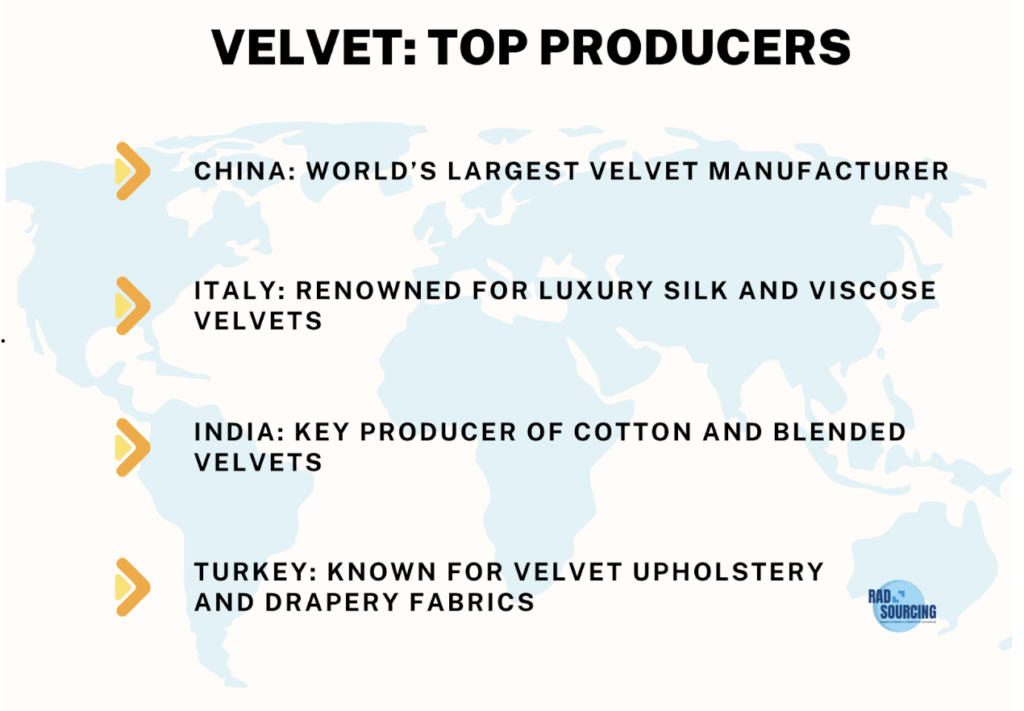
Global production of velvet is concentrated in Italy, India, China, and Turkey, with Italy’s Como region leading in high-end silk and rayon velvets. India has a rich tradition of handmade and embroidered velvets, particularly in regions like Varanasi, where velvet is still crafted for ceremonial and bridal wear. China dominates mass-market production, offering cost-efficient synthetic and cotton velvets for both fashion and furnishings.
Velvet’s allure lies in its tactile and visual richness, a material that feels as indulgent as it looks. From its origins in ancient trade routes to its presence in contemporary fashion and design, velvet remains a symbol of timeless sophistication. Its ability to transform light, texture, and emotion has secured its place as one of the most enchanting fabrics ever created.