Virgin wool is a premium natural fiber made from the first shearing of a sheep, prized for its softness, elasticity, and warmth. The term “virgin” refers to wool that has never been processed or recycled from existing textiles, distinguishing it from reclaimed or reused wool fibers. Known for its purity and resilience, virgin wool embodies the natural comfort and quality that have made wool a cornerstone of textile craftsmanship for centuries.
The history of virgin wool is inextricably linked to that of wool itself, a material humans have used for clothing for over 10,000 years. Ancient civilizations, from Mesopotamia to Egypt and Greece, valued wool for its insulation and versatility. Over the centuries, selective breeding improved fleece quality, and by the Middle Ages, wool production had become central to Europe’s economy, particularly in England and Spain. Today, virgin wool remains a vital raw material in the global textile industry, valued for both traditional and modern applications, ranging from fine tailoring to technical outerwear.
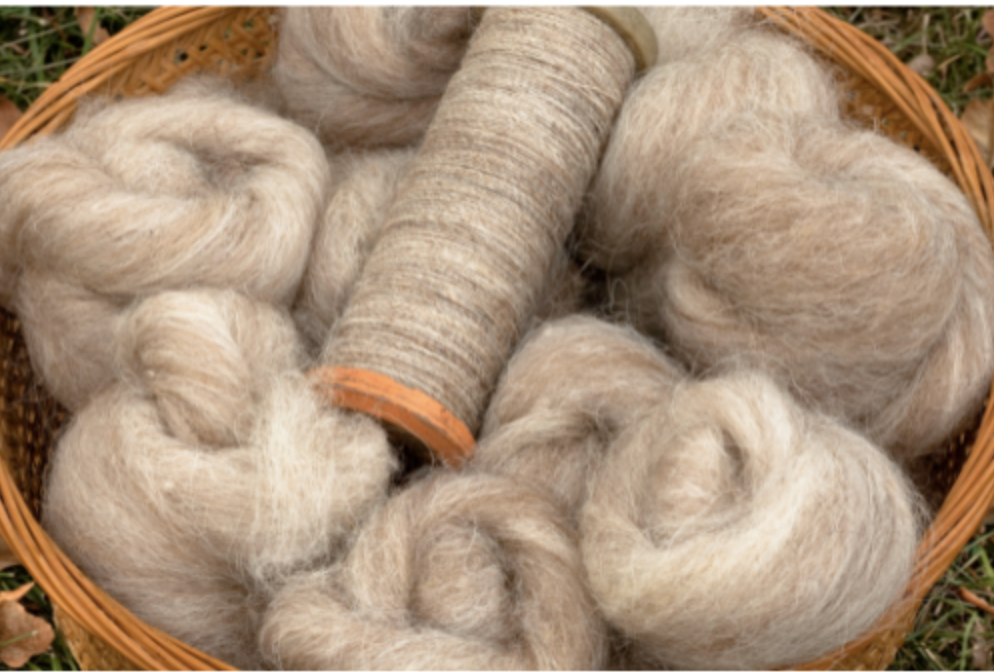
The production process begins with the shearing of live sheep, typically done once a year in the spring or early summer. The fleece is sorted, cleaned (a process called scouring), and carded to align the fibers before spinning. Because virgin wool is sourced directly from the animal, it retains its natural lanolin, a waxy substance that enhances softness, luster, and water repellency. Unlike recycled wool, which is made from shredded and respun fabric waste, virgin wool fibers are long, strong, and uniform, resulting in smoother, higher-quality yarns and fabrics.
Virgin wool’s properties make it exceptionally versatile. It is soft, elastic, and warm, with natural crimp (waviness) that helps trap air for insulation. Wool fibers can absorb up to 30% of their weight in moisture without feeling damp, allowing garments to remain comfortable across a range of changing temperatures. The material is also naturally odor-resistant, flame-retardant, and wrinkle-resistant, making it both functional and luxurious. Virgin wool drapes beautifully and retains its shape over time, making it a staple in premium tailoring and knitwear.
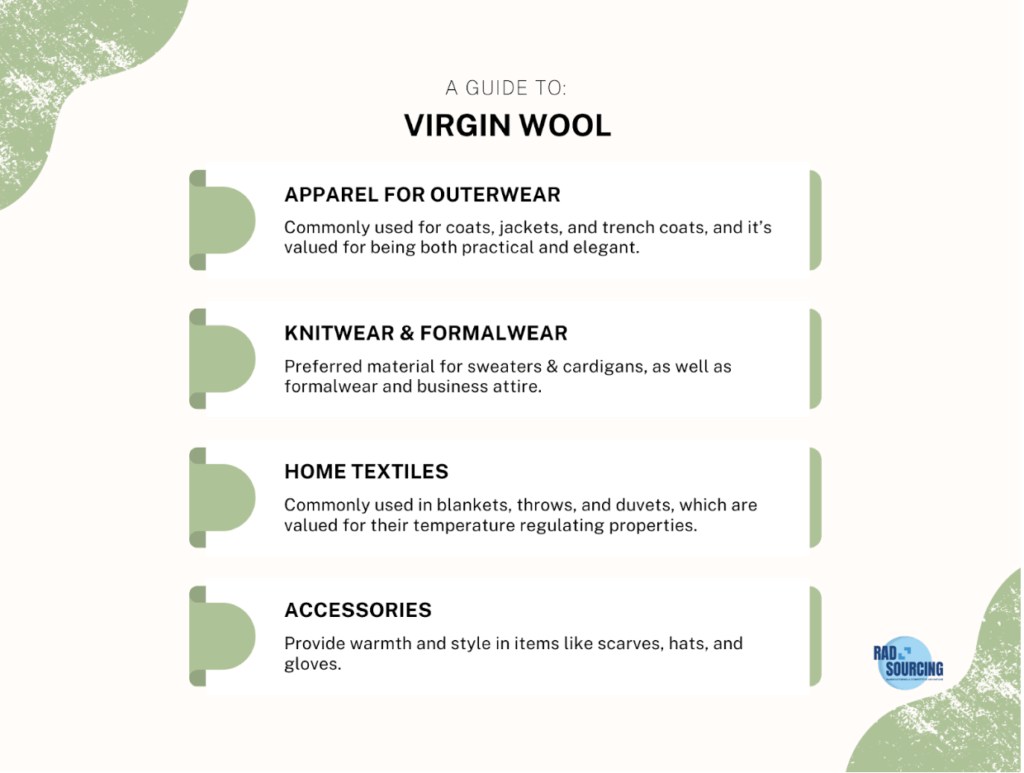
In fashion and interiors, virgin wool is used across a wide range of applications. It is the foundation for suiting fabrics, coats, sweaters, and scarves, as well as blankets, carpets, and upholstery. Merino virgin wool, sourced from Merino sheep, is particularly renowned for its fine texture and is used in next-to-skin garments, such as base layers and activewear. Blends with cashmere, silk, or synthetic fibers are also common, combining the warmth and resilience of virgin wool with the lightness or luster of other materials.
Culturally, virgin wool represents both heritage and quality. In European tailoring, it has long been a mark of craftsmanship, appearing in the finest Italian and British suiting fabrics. Luxury fashion houses, from Armani and Zegna to Loro Piana, have built reputations on their mastery of virgin wool textiles. Beyond fashion, wool holds symbolic importance in many cultures as a material of protection, tradition, and comfort, passed down through generations.
From a sustainability perspective, virgin wool presents both benefits and challenges. As a renewable, biodegradable, and long-lasting fiber, it is one of the most sustainable animal-based materials available. Wool production supports rural economies and can contribute to regenerative grazing practices when responsibly managed. However, environmental concerns include methane emissions from sheep, water use in scouring, and chemical treatments for mothproofing or shrink resistance. Certifications such as the Responsible Wool Standard (RWS) and ZQ Merino ensure that wool is produced ethically, with high standards for animal welfare, land stewardship, and traceability.
The world’s leading producers of virgin wool include Australia, New Zealand, China, the United Kingdom, and South Africa, with Australia alone supplying over 25% of global output, particularly fine Merino wool. European manufacturers, particularly in Italy and the UK, continue to lead the way in spinning, weaving, and finishing high-quality virgin wool fabrics. These mills often combine traditional techniques with modern sustainability initiatives to produce textiles that strike a balance between luxury and responsibility.
Virgin wool embodies the essence of natural luxury, a material that seamlessly combines comfort, performance, and tradition. Its softness, warmth, and durability have made it a timeless favorite across cultures and centuries. As the fashion and textile industries shift toward circular and ethical practices, virgin wool remains a standout as a renewable, responsible, and enduring fabric, one that seamlessly blends nature’s intelligence with human craftsmanship.