
Wool is one of humanity’s oldest textile fibers, with archaeological evidence showing its use dating back more than 10,000 years in regions such as Mesopotamia. Derived primarily from the fleece of sheep, as well as from animals such as alpacas, llamas, goats (which produce cashmere and mohair), and rabbits (which yield angora), wool has been an essential material for warmth, durability, and cultural expression throughout history. Wool’s ability to insulate even when wet, its natural elasticity, and its luxurious texture have made it a cornerstone of both traditional and modern textile industries.
Wool production begins with shearing, typically done once a year. After shearing, the raw wool undergoes a series of cleaning and processing steps. First, it is washed (a process called scouring) to remove lanolin, dirt, and vegetable matter. The cleaned fibers are then carded to align them into a continuous web, spun into yarn, and woven or knitted into fabric. Depending on the breed of sheep and the intended use, wool can range from coarse, durable fibers used in carpets and outerwear to superfine merino wool prized for next-to-skin comfort.
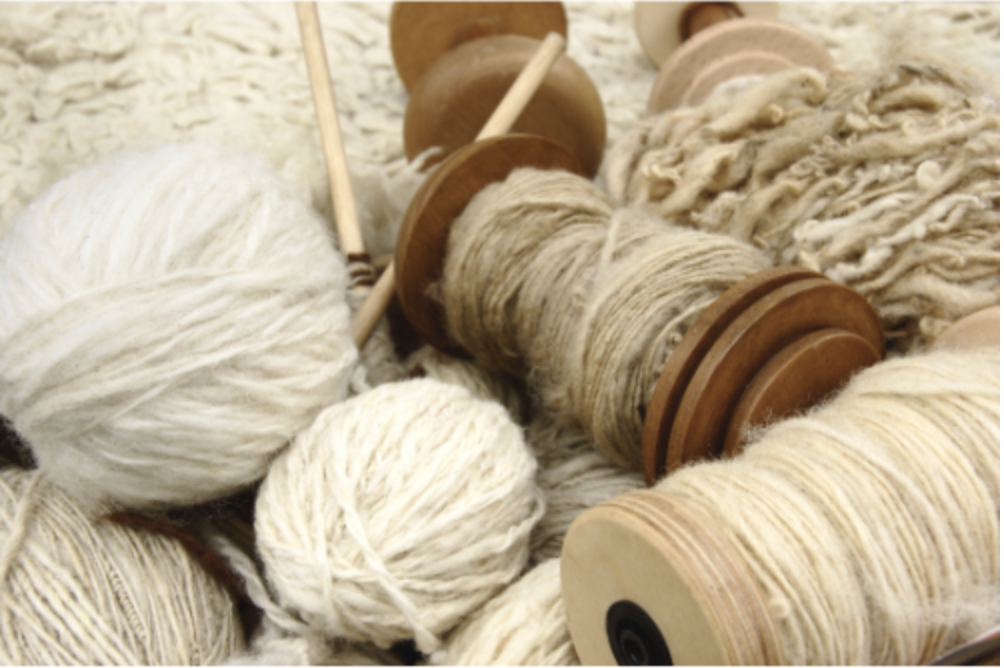
Wool possesses unique properties that distinguish it from other natural fibers. It is naturally crimped, giving it elasticity and resilience. Wool fibers are coated with microscopic scales, which help them interlock, giving wool fabrics warmth, loft, and the ability to be felted. Wool is also hygroscopic, capable of absorbing up to 30% of its weight in moisture without feeling wet, which helps regulate body temperature and makes it comfortable across a wide range of climates. Additionally, wool is naturally flame-resistant, odor-resistant, and biodegradable.
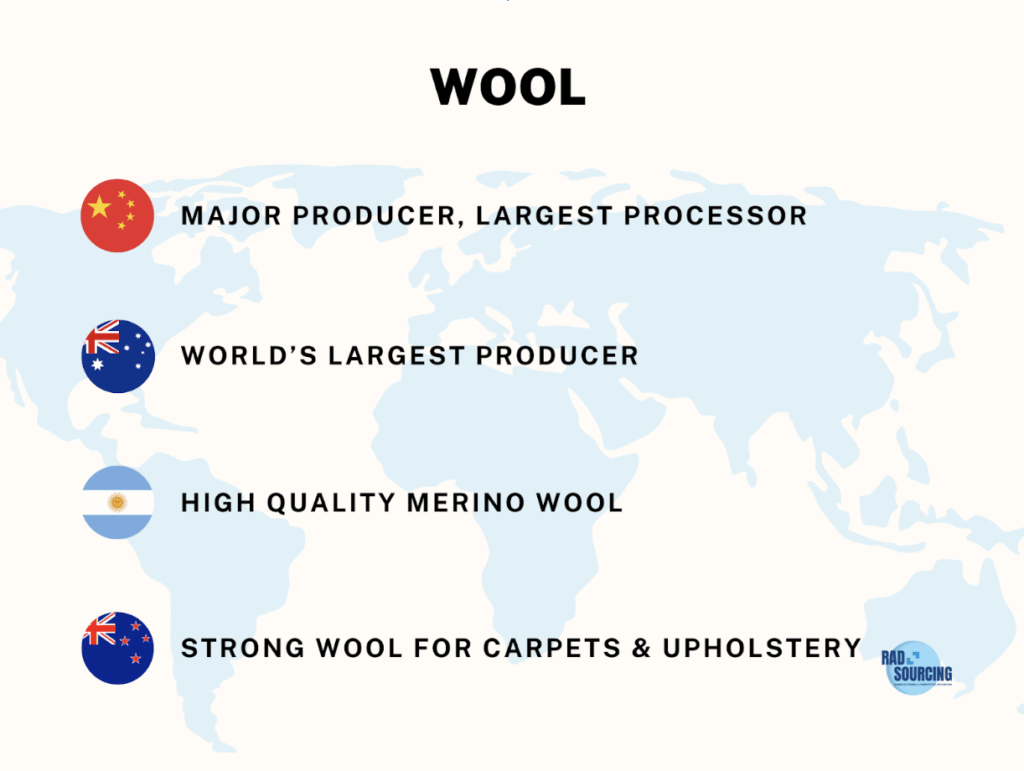
The global wool industry is centered in countries with large sheep populations. Australia is the world’s leading producer of merino wool, renowned for its fine quality. New Zealand is another major producer, renowned for its strong and versatile wool. Other significant contributors include China, Argentina, South Africa, and the United Kingdom. Different regions have developed wool traditions suited to their local breeds and needs, from the tweeds of Scotland to the soft alpaca textiles of Peru.
From a sustainability standpoint, wool offers both advantages and challenges. On the positive side, wool is a renewable, biodegradable fiber that requires less frequent washing than many other textiles due to its natural resistance to odor. Wool garments often last for decades, contributing to durability and slow fashion. However, wool production raises concerns related to land use, methane emissions from sheep, and animal welfare. Practices such as mulesing (a controversial method used to prevent flystrike in sheep) have been criticized, leading to demand for certified non-mulesed wool. Certification schemes, such as the Responsible Wool Standard (RWS) and ZQ Merino, aim to enhance animal welfare, improve land management, and increase supply chain transparency.
Wool’s applications are diverse. In apparel, it is used for suits, sweaters, coats, socks, and activewear, particularly in the outdoor industry, where merino wool is valued for thermal regulation and comfort. In home goods, wool is common in blankets, upholstery, and carpets. Technical uses of wool include insulation, soundproofing, and the production of fire-resistant fabrics for protective clothing. The versatility of wool ensures it remains relevant across both traditional and modern contexts.
Wool is more than just a textile fiber; it is a cultural and economic pillar that has shaped clothing traditions worldwide. Its balance of natural performance, comfort, and sustainability makes it a vital fabric, though its future will depend on continued progress in animal welfare and environmental stewardship. Wool’s timelessness ensures it will remain woven into the story of human life for centuries to come.